PM urges continued efforts to maintain macro-economic stability, control inflation, promote growth

Vietnam aims to maintain macroeconomic stability, control inflation below the target, achieve growth of 8.3-8.5%, ensure major economic balances, surpass budget revenue estimates by 25%, and control public debt, government debt, foreign debt, and budget deficit.

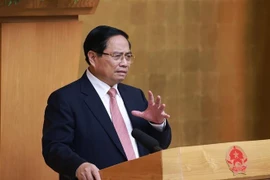
Despite global difficulties and limited opportunities, Vietnam’s economy continued to show positive signs (Illustrative image: VNA)

Hanoi (VNA) – Prime Minister Pham Minh Chinh has issued Official Dispatch No. 165/CD-TTg on continued efforts to maintain macro-economic stability, control inflation, foster growth, ensure economic balances, and improve citizens' living standards.

The dispatch was sent to ministers, heads of ministries and Government bodies, as well as the Chairpersons of People’s Committees in provinces and cities, and leaders of State-owned corporations and commercial banks.

The document noted that on September 12, 2025, PM Chinh chaired a meeting to discuss the ongoing efforts to ensure macroeconomic stability, control inflation, and promote growth. After reviewing reports from ministries and hearing Deputy Prime Minister Ho Duc Phoc’s comments, the PM gave a number of directions.

He recognised the socio-economic challenges outlined in the Government’s August meeting. Despite global difficulties and limited opportunities, Vietnam’s economy continued to show positive signs. Under the strong leadership of the Party, led by General Secretary To Lam, the monitoring of the National Assembly, and the proactive approach of the Government, ministries, local authorities, businesses, and citizens, the socio-economic situation in August remained positive.

The macro-economy was stable, inflation was under control, growth expanded, and major economic balances were guaranteed. The labour market remained stable, public debt and budget deficits were contained, while social welfare and citizens' living standards improved.

While these results are positive, issues such as exchange rates, the stock market, real estate, credit growth, and cybersecurity need careful management.
kich-cau-tieu-dung.jpg
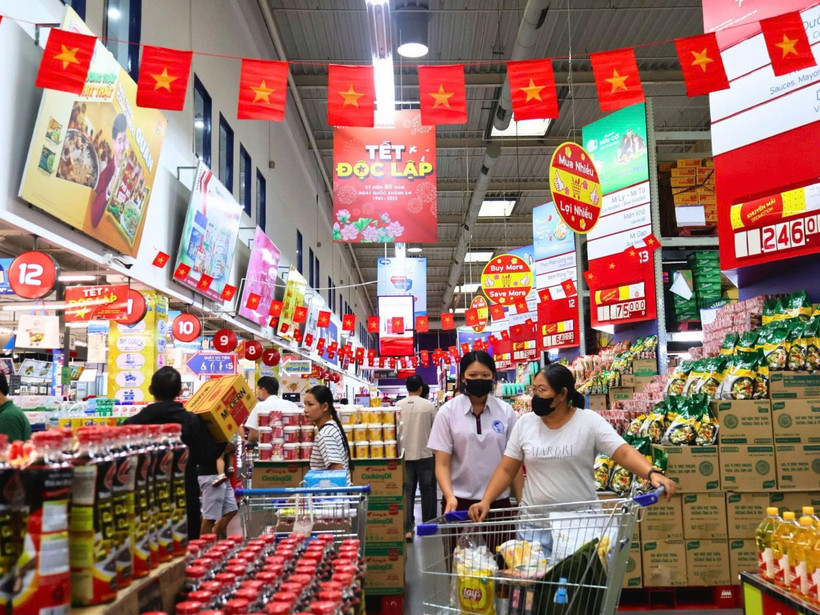
Vietnam aims to achieve growth of 8.3-8.5% this year. (Photo: VNA)

The targets for 2025 are ambitious, given global economic challenges. The overarching goal is to maintain macroeconomic stability, control inflation below the target, achieve growth of 8.3-8.5%, ensure major economic balances, surpass budget revenue estimates by 25%, and control public debt, government debt, foreign debt, and budget deficit. The country must also ensure food security and cybersecurity, and increase exports, while aligning strategic commodity prices with the economy and citizens’ incomes.

To achieve these goals, the PM called for strong commitment and coordinated efforts from ministries, agencies, and local authorities. All actions must be effective, focused, and responsive to real-world conditions. Collaboration among the central authorities, local leaders, and private sector resources is essential. Key actions include the Ministry of Finance implementing timely fiscal policies to support monetary policy, with a focus on public investment disbursement and mobilising capital. Tax relief measures will continue to stimulate business activity.

The Ministry of Industry and Trade will work to expand export markets, diversify trade channels, and stabilise energy markets to prevent shortages of electricity, oil, and essential goods. The State Bank of Vietnam will adopt flexible monetary policies to control inflation and promote sustainable growth. Lending rates will be reduced, and credit flow will be directed to priority sectors.

The Ministry of Construction was tasked to ensure the real estate market remains balanced, with an emphasis on affordable housing and addressing supply-demand mismatches. The Ministry of Science and Technology will foster a transparent, sustainable market for science and technology, implementing the Party’s Resolution on technological innovation. Local authorities are tasked with ensuring efficient governance, reducing administrative burdens, and fostering innovative, people-focused service delivery.

The public information campaigns will continue to promote positive narratives that inspire confidence and unity, focusing on motivating the public and supporting national development. The Government will monitor critical sectors like the stock market, foreign exchange, and gold, taking immediate action when necessary to stabilise these areas. Strict enforcement of legal compliance will be prioritised to prevent speculative practices that could disrupt the market.

Finally, the PM assigned specific tasks to Deputy PMs to coordinate with ministries and agencies to ensure the effective implementation of these strategies./.

VNA

See more

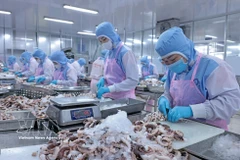
Processing octopus for export to the Japanese market at Huy Nam Company in An Giang (Photo: VNA)

Squid, octopus exports pick up early in 2026

In terms of product structure, squid has emerged as the main growth driver. Export turnover of squid exceeded 64 million USD, rising nearly 30%, while octopus exports brought in more than 47 million USD, up over 16%. The development indicates that demand for squid products is recovering faster in the short term.

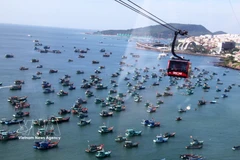
The world’s longest over-sea cable car to Hon Thom Island in the Phu Quoc special zone, An Giang province. (Photo: VNA)

An Giang steps up tourism development ahead of APEC 2027

Tourism in the province has recorded strong growth, affirming its position as one of the region’s leading destinations. Phu Quoc Island continues to attract the majority of international travellers, receiving more than 817,660 visitors, accounting for over 98.5% of total foreign arrivals to the province.

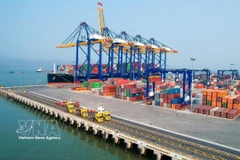
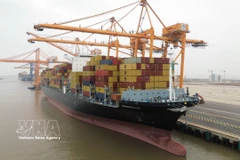
Import-export activities at Lach Huyen international port in Hai Phong (Photo: VNA)

Reducing risks, removing logistics bottlenecks amid Middle East volatility

According to Truong Xuan Trung, Trade Counsellor of Vietnam in the UAE, the Middle East serves not only as a consumption market but also as a key global transhipment hub, meaning instability in the region creates ripple effects across intercontinental transport networks. Shipping route adjustments and airspace restrictions have lengthened transit times, increased costs and disrupted delivery schedules, with some Vietnamese shipments forced to reroute or seek alternative markets.

Cargo is handled at container terminals No. 3 and No. 4 of Hai Phong International Gateway Port. (Photo: VNA)

Businesses seek “survival momentum” amid global geopolitical turbulence

This is an urgent move as the challenges of 2026 differ markedly from previous ones, shaped by overlapping external shocks ranging from geopolitical tensions disrupting supply chains to surging logistics and raw material costs, exchange-rate pressures, and increasingly complex tariff barriers in global markets.

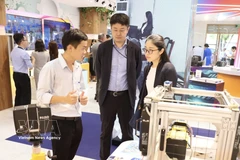
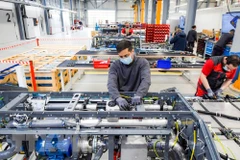
At the 2025 trade connectivity week for mechanical, electrical and digital industries. (Photo: VNA)

Ho Chi Minh City gives boost to supporting industry firms

Supporting industry firms in Ho Chi Minh City are scrambling to embed themselves more deeply into both global and domestic supply chains, backed by a suite of local incentives that are speeding up their tech upgrades and market access.

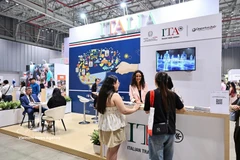
Italy's national pavilion at the ongoing Food & Hospitality Vietnam 2026 exhibition at Ho Chi Minh City's Saigon Exhibition and Convention Centre (SECC) draws visitors for hands-on experiences. (Photo: IVNA)

Italian food firms eye opportunities in Vietnam

Italy’s exports of food and beverages to Vietnam reached 105.1 million EUR in 2025, up 4% year-on-year, positioning the country among the leading EU suppliers to the Vietnamese market.

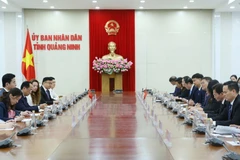
An overview of the working session (Photo: baoquangninh.vn)

Quang Ninh promotes all-round cooperation with Guangxi Zhuang Autonomous Region

Quang Ninh encourages Guangxi enterprises to invest in high-tech marine aquaculture and expand aquatic product exports in China. At the same time, the province aims to develop livestock farming in line with international standards and attract investment in deep-processing plants for agricultural products such as cinnamon, star anise and tea, linked with traceability systems at border gates.

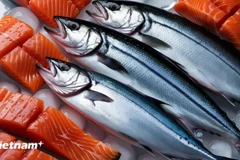
Illustrative image (Source: VNA)

Vietnam becomes fastest growing market for Norwegian salmon in Southeast Asia

The Norwegian Seafood Council (NSC) reported at the “Norwegian seafood industry in Vietnam market 2026” event held in Ho Chi Minh City on March 25 that fresh Norwegian salmon exports to Vietnam jumped 16% in volume in the first two months of 2026 compared with a year earlier, while frozen salmon shipments surged about 37%.

At a petrol station (Photo: VNA)

Energy giants work hard to roll out E10 RON95 sale ahead of schedule

Petrolimex and PVOIL, are in a strong position to accelerate the transition toward cleaner fuels. These companies have been actively preparing infrastructure, upgrading blending systems, and coordinating supply chains to ensure the availability of E10 RON95 across their nationwide retail systems.

Deputy Prime Minister Nguyen Chi Dung visits Bosch Industrial in Stuttgart, Germany. (Photo: VNA)

Vietnam, Germany boost innovation, startup ecosystem connectivity

Deputy PM Nguyen Chi Dung highly valued CfE’s reputation and pioneering role in building Germany’s innovation-driven startup ecosystem, and called for stronger cooperation with NIC to support Vietnamese universities, research institutes and organisations in training and scientific research.