Hanoi (VNA) – Prime Minister Pham Minh Chinh on August 4 issued Dispatch No. 127/CD-TTg urging faster reduction and simplification of administrative procedures and business conditions, as outlined in Government Resolution No. 66/NQ-CP dated March 26, 2025.
The dispatch is addressed to ministers, heads of ministry-level agencies, chairpersons of provincial and municipal People’s Committees, and secretaries of provincial-level Party Committees, emphasising the need for coordinated leadership.
As of August 1, ministries and agencies had cut 115 administrative procedures, 118 business conditions, and simplified 691 others in line with the 2025–2026 reform agenda.
Five ministries have approved reform plans, while seven have submitted reform proposals to the PM. Four others are finalising their submissions.
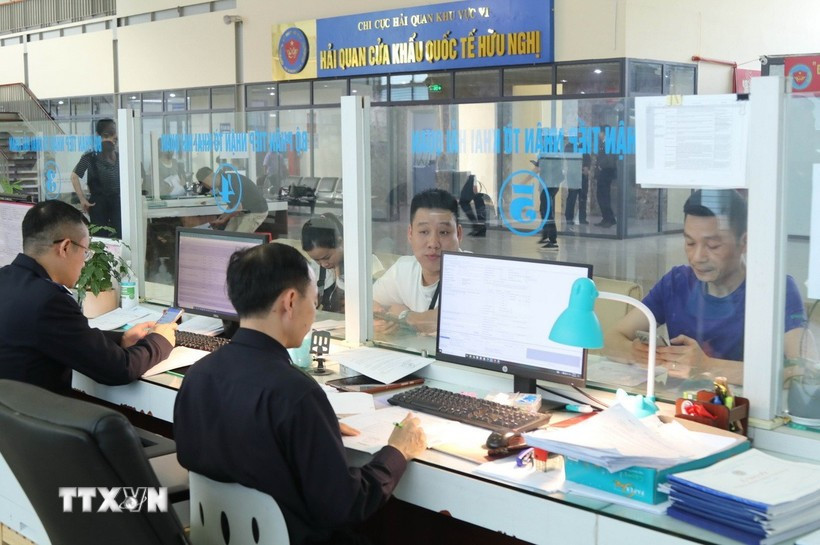
At the local level, 34 provinces and cities handled 3.4 million administrative dossiers in July 2025, including 2.5 million at the communal level, amid the rollout of the two-tier local government model.
Despite these achievements, several shortcomings persist. Six ministries missed the June 30 deadline for submitting reform plans. Some proposals fall short of the 30% reduction target.
Key information systems such as those for civil registration, business and tax licensing remain outdated or poorly integrated with the national administrative procedure information system. Many national and sectoral databases see slow progress and lack accuracy and real-time updates.
Localities continue to face difficulties in implementing newly delegated responsibilities, especially at the grassroots level. Staff qualifications, technical support, and IT infrastructure – including digital signatures and seals – remain inadequate in many areas, while public communication and citizen support are still limited, the dispatch noted.
To ensure timely reform in line with Resolution 66/NQ-CP, the PM outlined a number of urgent tasks.
Ministries lagging behind, including Ministries of Finance, Home Affairs, Justice, Health, Industry and Trade, and the State Bank of Vietnam (SBV), must immediately review and reduce at least 30% of business conditions under their jurisdiction. The Ministries of Science and Technology, Education and Training, and Construction, and the SBV must finalize and submit reform plans by August 15.
Additionally, eight ministries are required to update and publish reform outcomes on the National Administrative Procedures Database by August 10.
At the provincial level, local administrations must review local legal documents to ensure consistency following administrative restructuring and approve reform plans for procedures under local council and committee authority by August 30.
All ministries must standardise and publish administrative procedures delegated to local levels, especially those involving investment, imports/exports, land use, and planning by August 15. Any outdated or conflicting legal requirements must be revised to reflect the principle of intra-provincial location-independent service.
Internal procedures and nationwide guidelines for newly delegated functions must be issued by August 30. Ministries are also required to accelerate the development of national and sectoral databases to ensure integration with the National Public Service Portal and provincial systems, in accordance with Resolution No. 214/NQ-CP dated July 23, 2025.
The PM also asked ministries to address system-level issues, particularly in civil registration, tax, and business registration, and ensure integration with local platforms by August 15. Provincial authorities are tasked with upgrading IT systems to support the two-tier model, adjusting workflows, reallocating and training staff, and improving public outreach and service delivery. These tasks must be completed by mid-to-late August.
Ministers, agency heads, and provincial chairpersons are directly accountable to the Government and the Prime Minister. They must submit progress reports by the 25th of each month. The Government Office will oversee implementation, compile results, and report unresolved or cross-sectoral issues to the PM.
Calling the reform a matter of national urgency, the PM emphasised the need for unwavering leadership at all levels, ensuring a modern, efficient, and citizen-centred administrative system./.