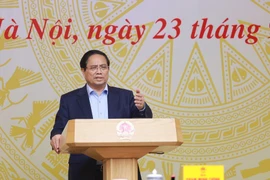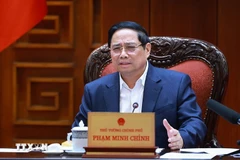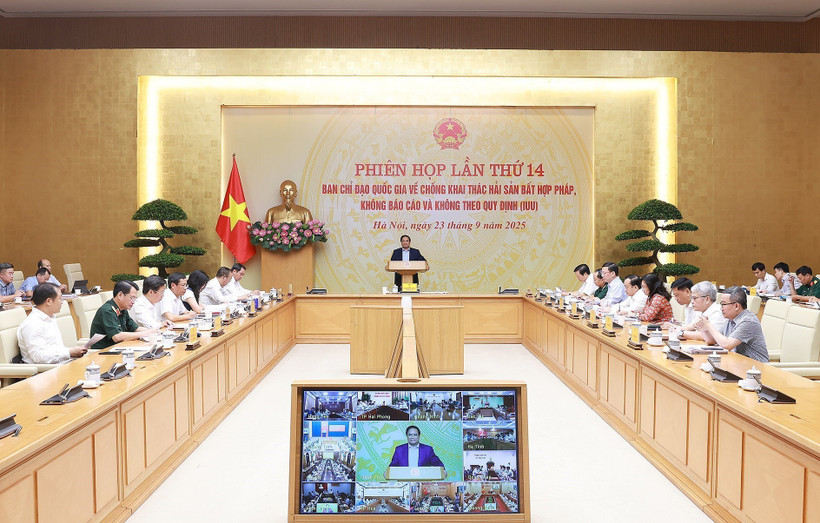
Hanoi (VNA) – Efforts to combat illegal, unreported, and unregulated (IUU) fishing must go beyond lifting the European Commission (EC)’s “yellow card” warning to develop a sustainable fisheries sector and protect Vietnam’s reputation, Prime Minister Pham Minh Chinh stressed at a meeting on September 23.
Addressing the 14th meeting of the National Steering Committee for IUU Fishing Prevention and Control, PM Chinh stated that combating IUU fishing is not merely about having the “yellow card” removed but about enforcing strict management of the fishing fleet and laying the groundwork for sustainable development.
He underscored the need to build a sustainable, safe, and law-abiding fisheries sector tied to production, business, and livelihoods for the community. He demanded a shift from deep-sea fishing to aquaculture and seafood processing based on Vietnam’s strengths and, at the same time, protecting the nation’s reputation and national independence and sovereignty at sea.
The fight against IUU fishing must go hand in hand with building a fisheries sector that serves the long-term interests of the nation and its people, he said, requiring strong resolve, decisive action, and a reformed, comprehensive, and long-term approach.
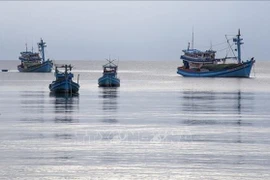
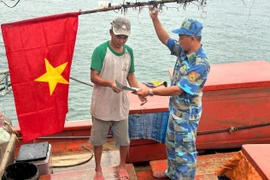
The Government leader noted that shortcomings in the IUU fishing combat stem from weak leadership and enforcement, particularly at the grassroots level; poor legal compliance by some fishermen; inadequate infrastructure, monitoring, and traceability systems; vessels lacking proper equipment; and irregular enforcement efforts.
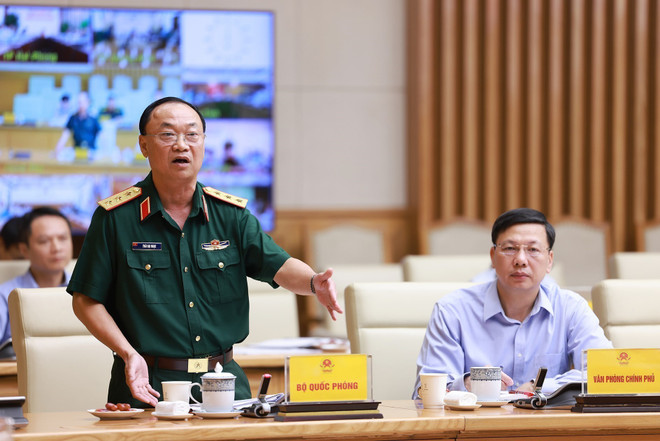
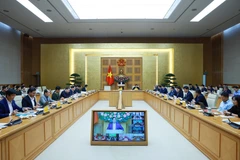
Senior Lieutenant General Thai Dai Ngoc, Deputy Chief of the General Staff of the Vietnam People's Army, speaks at the meeting. (Photo: VNA)
Combating IUU fishing is an urgent and also long-term task for the sector, he said, asking for the overhaul of relevant legal frameworks, the consolidation of all-level steering boards for anti-IUU fishing, and the establishment of a task force headed by a Deputy Minister of Public Security to work with the Supreme People’s Procuracy, the Supreme People’s Court, and local authorities to thoroughly resolve related cases.
Stressing the goal of having the "yellow card" lifted this year, he demanded the Steering Committee closely monitor and conduct weekly reviews of IUU fishing prevention efforts, digitise the management of all fishing vessels and their operations, and link the database with the Ministry of Public Security’s resident database, with completion required by October 15 at the latest.
Chairpersons of provincial and municipal People’s Committees were directed to review and license over 9,000 unauthorised fishing vessels by October 15.
The Ministry of Agriculture and Environment, along with relevant ministries, sectors, and coastal localities were demanded to seriously implement Directive No. 32-CT/TW of the Party Central Committee’s Secretariat, the Government’s Resolution No. 52/NQ-CP, and relevant document and instructions on the issue. He also requested thorough preparation of reports and a delegation be sent to work with the EC to clarify and agree on measures for fully meeting the EC's requirements.
The PM also requested stronger coordination among ministries and sectors to inspect and guide localities to promptly and thoroughly address IUU fishing violations, especially serious cases involving vessels in such localities as Quang Ninh, Thanh Hoa, Nghe An, Da Nang, Quang Ngai, Dak Lak, Lam Dong, Ho Chi Minh City, Vinh Long, Ca Mau, and An Giang.
PM Chinh asked industry associations and businesses to strictly follow anti-IUU fishing regulations, prohibiting the purchase, processing, or export of illegally caught seafood. He called for their close cooperation with authorities to investigate and stringently handle violations, including record falsification and abetting IUU fishing. Besides, it is necessary to honour association members and fishermen who set good examples in compliance./.