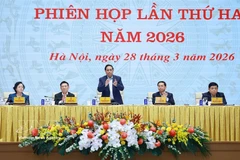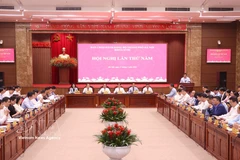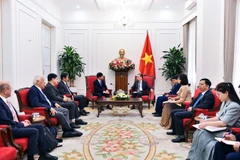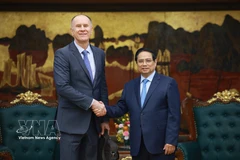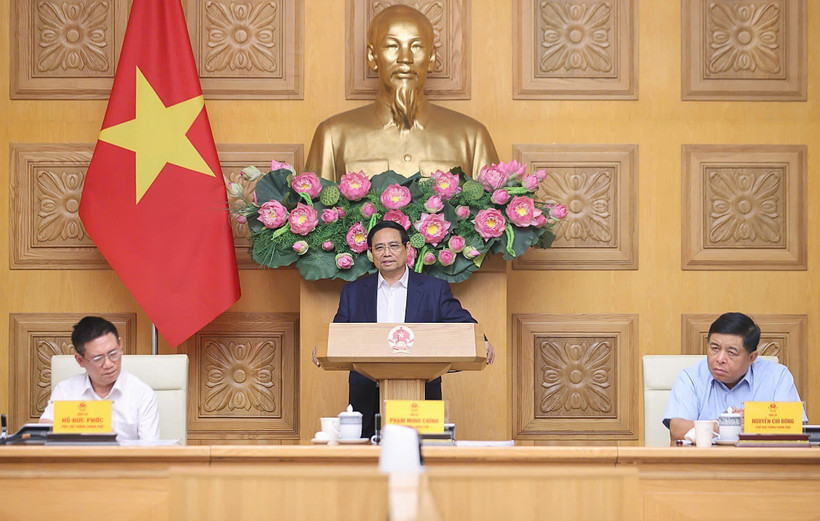
Hanoi (VNA) - Prime Minister Pham Minh Chinh on September 7 held a working session with the Policy Advisory Council to discuss macroeconomic stability, stimulating consumer demand, and the operation of the two-tier local government system.
At the event, the PM briefed the council on the international situation, especially the developments in major economies and their impacts on Vietnam. He noted that, in order to achieve the country’s two centennial goals, Vietnam has implemented and will continue to implement numerous important programmes and strategies such as reorganising administrative units, operating a two-tier local government system, and enforcing key resolutions.
In addition, transformative and strategic projects are being carried out, such as high-speed railways, intermodal rail systems, nuclear energy, an international financial center, and a free trade hub, he said.
Social welfare policies have been implemented to ensure all citizens have housing, children receive education, and no one is left behind. They include constructing 1 million social housing units, eliminating makeshift and dilapidated homes, building schools in border areas, offering free tuition, and providing lunch support for students, he added.
Highlighting the 2025 goal of achieving 8.3-8.5% growth and aiming for double-digit expansion in the following years, the Prime Minister acknowledged the immense challenge and emphasised the need for high-quality, breakthrough solutions, with the Policy Advisory Council serving as a vital channel for input.
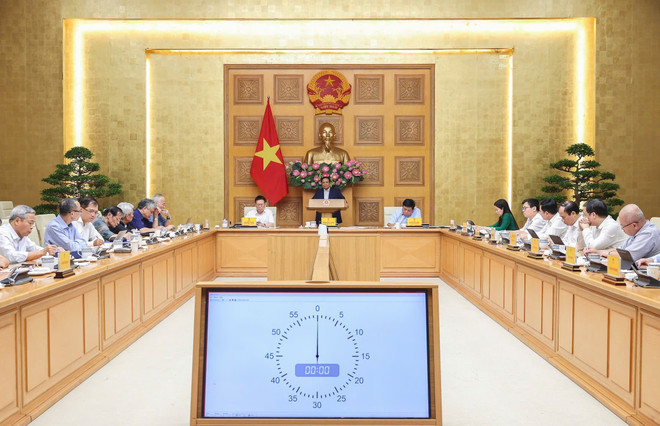
During the session, council members engaged in vibrant discussions, analysing the situation and offering assessments and proposals to stabilise the macro economy, boost consumer demand, and improve the efficiency and effectiveness of the two-tier local government system.
They acknowledged current macroeconomic stability, but noted certain sectors such as exchange rates, gold prices, the stock market, and real estate require greater attention. They recommended maintaining a balance between growth and risk control, emphasising safety, inclusiveness, sustainability, and the quality of growth.
Growth drivers from both the supply and demand sides need to be renewed and utilised effectively, at least equivalent to or higher than the level before the COVID-19 pandemic. Therefore, it is necessary to stimulate consumption with fiscal, monetary and other solutions, he noted.
Regarding the two-tier government model, the council proposed establishing clear workflows, issuing training materials for commune- and ward-level officials, and creating citizen-oriented procedural guides. It also recommended piloting inter-commune/ward administrative models in some former urban areas to coordinate and maintain essential services designed at that scale.
The council members also highlighted household businesses as an indispensable pillar of the economy, contributing nearly 25% of GDP, creating millions of jobs, and fostering local consumption while preserving traditional cultural values. Any policy shifts affecting this sector, therefore, must be gradual, well-supported, and aim to earn voluntary compliance.
In conclusion, PM Chinh praised the council’s thoughtful, heartfelt, and responsible input, commending their scientific and practical approaches.
He agreed with the council’s assessment of the potential impact of US tariff policies and their implications for Vietnam, supporting recommendations for safe and flexible adaptation, including strengthening relations with the US, diversifying markets and products, restructuring exports, promoting outbound investments, retaining and attracting investors, and facilitating Vietnamese enterprises’ participation in global supply chains.
On real estate, the Government leader acknowledged it as a key growth driver, but noted the need for comprehensive solutions involving supply, fiscal policy, and land use, especially amid underwhelming sector performance. The government is actively addressing legal frameworks, incentives, and administrative reforms to ease luxury property overstock and promote social housing supply.
He endorsed proposals for high, sustainable growth through expanded fiscal policies, flexible and effective monetary policies grounded in reality, and for increased productivity via science, innovation, digital transformation, and domestic demand stimulation.
He also mentioned diversifying credit sources and raising bond funding by 20-25% to finance major projects.
Regarding interest and exchange rate balance, the Prime Minister emphasised the difficulty in managing the exchange rate, particularly amid USD appreciation. He expressed hope for a depreciation of the USD with interest rate cuts but stressed proactive risk prevention. He called for aggressive public investment, targeting 100% disbursement of public funds.
The cabinet leader agreed with experts on preventing hoarding and speculation, combating smuggling, and increasing gold supply, while assigning the State Bank of Vietnam to take prompt and effective action, ensuring policy measures are not misused under the guise of inspection and oversight.
The Prime Minister urged calm, firmness, and preparedness in responding to unexpected developments while avoiding complacency. He advocated for stabilising VND interest rates, boosting exports to maintain trade surpluses, growing services like logistics and tourism, and cracking down on gold and USD speculation and smuggling.
He also stressed stimulating consumption, expanding domestic production and business, reducing input costs, and enhancing product competitiveness. He encouraged organising trade fairs to connect supply and demand and adjusting tax policies to better suit Vietnam’s context, including tax and fee reductions.
Acknowledging the pressures faced at commune-level agencies, the Prime Minister called for increased staff capacity, accelerated digital transformation, especially in administrative services, and proper staffing based on capability. He stressed shifting from management to service-oriented governance.
He emphasised ongoing training, resource allocation aligned with decentralisation, enhanced monitoring and evaluation, and strengthening local administrative centres.
He called on efforts to foster innovation and digital transformation in both institutions and workforce, while promoting grassroots-level digital literacy campaigns.
“A digital government and digital administration must be accompanied by digital citizens,” the Prime Minister stressed../.