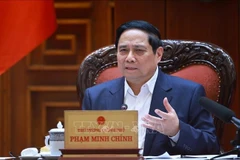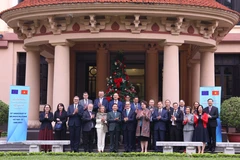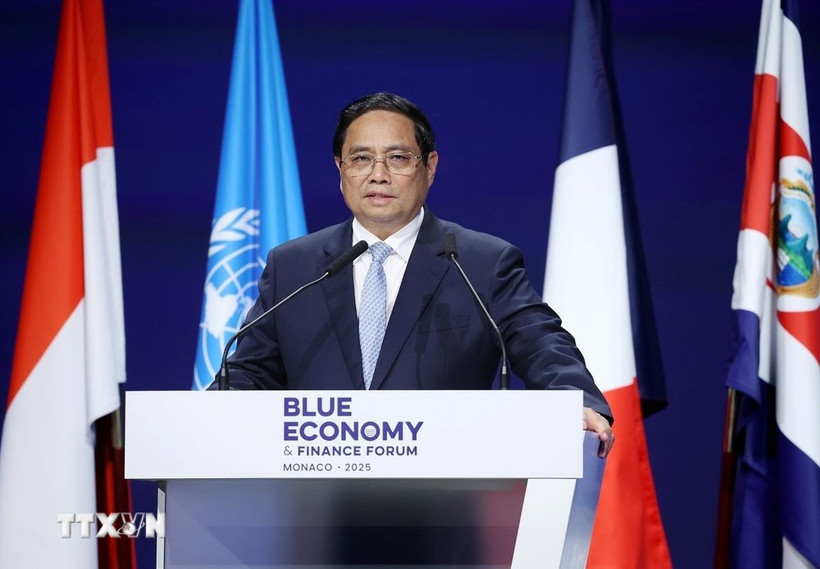
Hanoi (VNA) – Prime Minister Pham Minh Chinh’s tour to Europe from June 5-14, encompassing official visits to Estonia and Sweden, attendance at the third United Nations Ocean Conference (UNOC 3) and bilateral activities in France, underscored Vietnam’s strong determination and aspirations for global integration and development.
The trip, described by Deputy Prime Minister and Minister of Foreign Affairs Bui Thanh Son as a milestone, highlighted Vietnam’s commitment to leveraging international partnerships to fuel national development while promoting peace and stability.
PM tour's outstanding outcomes
Talking with the press, Son stressed the trip’s role in advancing Vietnam’s foreign policy of independence, self-reliance, multilateralisation and diversification, as well as proactive, extensive, and comprehensive global integration.
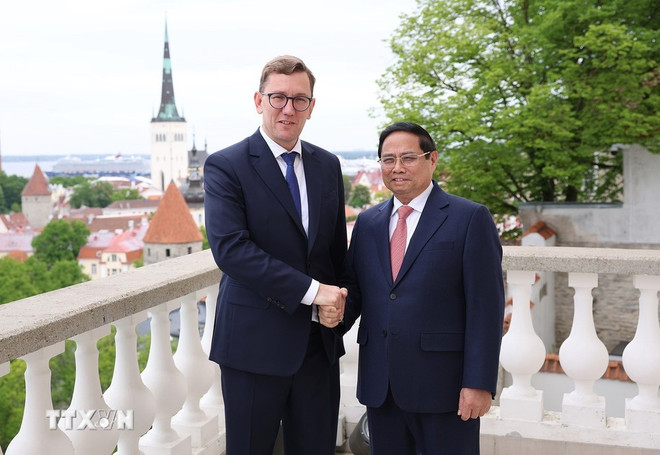
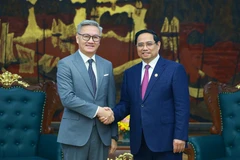
PM Chinh held extensive meetings and discussions with leaders of the host countries, representatives of various circles, businesses, and the Vietnamese communities, while accompanying ministers and local officials also had productive sessions with international counterparts.
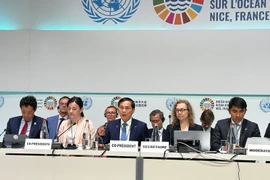
At UNOC 3 in Nice, PM Chinh represented both Vietnam and the 10-member Association of Southeast Asian Nations (ASEAN), delivering keynote addresses that drew widespread praise. Vietnam’s active participation, including co-chairing the Deltas of the World Summit and pledging 15 voluntary commitments on marine governance, cemented its reputation as a proactive player in global ocean sustainability. These pledges, among the highest at the conference, reflected Vietnam’s dedication to the United Nations’ Sustainable Development Goals, earning accolades from world leaders and international organisations for its progress in sustainable maritime development.
The trip achieved outstanding results: PM Chinh’s visit to France was the first by a Vietnamese government leader since the two nations elevated their ties to a Comprehensive Strategic Partnership in October 2024, his visit to Sweden was the first by a Vietnamese PM in six years, and his trip to Estonia was the first by a key Vietnamese leader since the two nations established diplomatic relations in 1992. These milestones, Son said, reinforced political trust and set the stage for deeper ties with France, Sweden, and Estonia, while strengthening Vietnam’s role as a bridge between the European Union and the Indo-Pacific.
Economically, the trip injected fresh momentum into traditional cooperation frameworks, with leaders vowing to capitalise on the EU-Vietnam Free Trade Agreement (EVFTA) and improve business climates for sustainable market access. Major directions for stronger cooperation were also agreed upon across a wide range of areas, including national defence - security, energy, infrastructure, education - training, culture, sports, tourism, people-to-people and locality-to-locality exchanges.
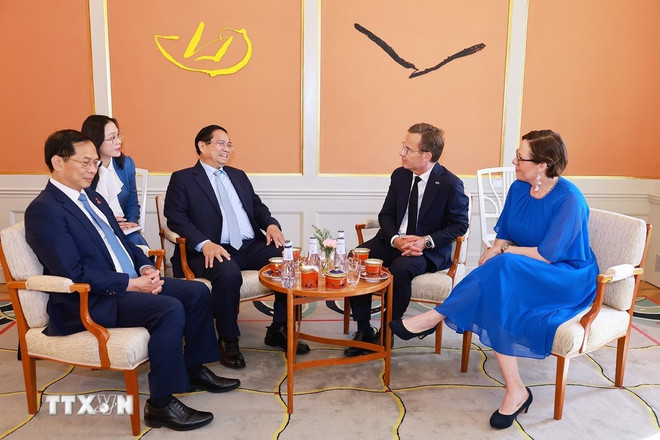
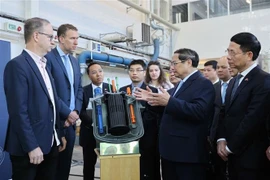
Leaders of all the three countries expressed their admiration for Vietnam’s rising global influence and signaled eagerness to expand cooperation. France, a leader in telecommunications, aerospace, and renewable energy, manufacturing technologies, and high-speed rail, committed to supporting Vietnam’s digital transformation, innovation, green and circular economic development. Sweden, a hub for innovation and circular economy expertise, formalised a sectoral strategic partnership with Vietnam in sci-tech, innovation and digital transformation. Estonia, a pioneer in e-government, pledged collaboration in digital transformation. These partnerships aim to harness the host countries’ strengths to meet Vietnam’s growing needs in emerging fields.
A key focus was Vietnam’s push for peace, security and stability in each region. There was a strong consensus on the need to resolve disputes through peaceful means, in accordance with the United Nations Charter and international law, particularly the 1982 United Nations Convention on the Law of the Sea (UNCLOS).
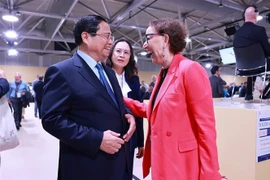
While at UNOC 3 in Nice, the Vietnamese PM held a series of bilateral meetings with heads of states and governments, and leaders of international organisations, including French President Emmanuel Macron and UN Secretary-General António Guterres.
Vietnam takes pride in being recognised by other countries and international organisations for its remarkable socio-economic achievements, improvements in living standards, and rapid transformation as the country steps confidently into a new era of growth, Son said.
On the occasion, PM Chinh also met with the Vietnamese communities in the host countries, showcasing the consistent support of the Vietnamese Party, State, and people for them.
Tasks set out for coming time
According to Deputy PM Son, with 84 intensive activities, the PM’s recent working trip has achieved significant, substantive results. These outcomes have contributed to refreshing and deepening Vietnam’s bilateral relations with European partners, fostering mutual benefit and promoting peace, cooperation, and development in the region and globally. The trip lays an important foundation and provided fresh momentum and inspiration for Vietnam to continue pursuing its national development aspirations. It also reaffirms the country’s commitment to mobilising international resources to serve its long-term development goals, positioning Vietnam as a trusted partner and a responsible member of the international community.
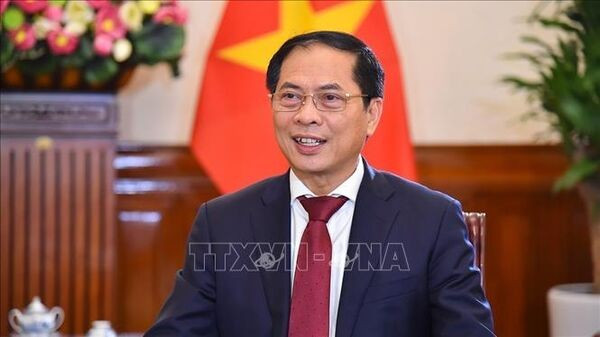
Looking ahead, Son said, Vietnamese ministries, sectors, and localities will proactively and closely coordinate with partner countries to implement the cooperation agreements reached during the visit. The two sides will increase high-level exchanges across all Party, State, Government, parliamentary, and people-to-people channels to further deepen political and diplomatic ties and strengthen the friendly and cooperative partnerships with key European nations.
Efforts will also be made to effectively implement existing cooperation mechanisms and agreements. During talks with senior European leaders, PM Chinh prioritised emerging sectors where Vietnam has demand and partners have expertise, such as science and technology, energy, infrastructure, digital transformation, innovation, IT, green economy, digital economy, circular economy, and artificial intelligence. The PM has tasked ministries and local authorities with defining concrete measures to turn these fields into new pillars of bilateral cooperation.
At the same time, both sides will expand existing collaborative projects in traditional areas like defence, security, economy, trade, investment, education, culture, and tourism. In particular, in economic, trade, and investment cooperation, Vietnam and its partners will work together to maximise shared interests in free trade, increase market access, reduce dependence on third parties, and maintain global supply chain stability. It is hoped that, with the effective implementation of the EU-Vietnam Free Trade Agreement (EVFTA), Vietnamese businesses will diversify and expand exports to France, Sweden, Estonia, and the EU more broadly, while also creating long-term, sustainable investment opportunities in each other’s markets, Son said.
Vietnam has also made 15 voluntary commitments on sea governance, including promoting the implementation of the 1982 United Nations Convention on the Law of the Sea (UNCLOS), establishing marine protected areas, modernising fishing vessel management, and applying science and technology to marine environmental protection. The country will continue to actively pursue these commitments, working closely with partners to advance Sustainable Development Goal 14 (SDG 14), and to uphold the principle, voiced by the PM at the recent summit, that the oceans must remain a space of peace, cooperation, and shared responsibility, in line with ASEAN’s common stance./.