Positive mindset shift seen in law building: PM

The PM reaffirmed that the building and perfection of the legal and institutional system is one of the three strategic breakthroughs identified by the Party and State.

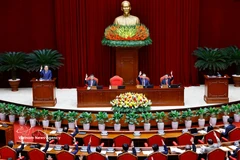
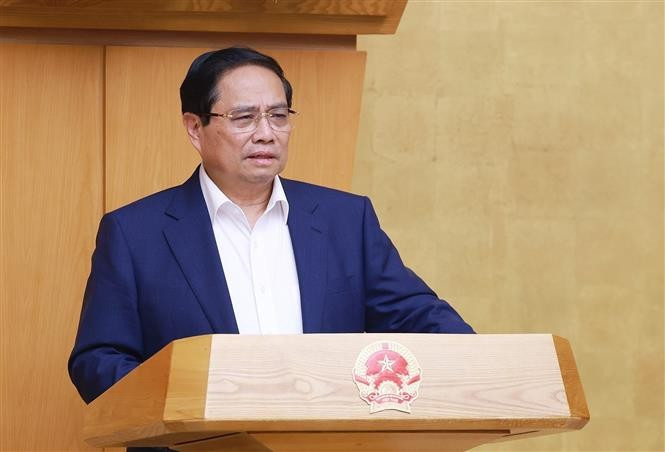
Prime Minister Pham Minh Chinh addresses the meeting on May 22. (Photo: VNA)

Hanoi (VNA) – There has been a mindset shift in law-making from a State control, where matters not explicitly regulated were often prohibited, to one of facilitation and service, aiming to support both citizens and businesses, said Prime Minister Pham Minh Chinh while chairing the Government’s law-building session for May on May 22.

The PM reaffirmed that the building and perfection of the legal and institutional system is one of the three strategic breakthroughs identified by the Party and State.

While many positive results have been recorded, institutional reform remains, as he described, the “bottleneck of bottlenecks.” This is especially evident in complex areas such as land management, site clearance, and food safety, he said.

PM Chinh noted that the Politburo has recently issued Resolution No. 66 on reforming law-making and law enforcement to meet the developmental demands of the country in a new era. The National Assembly has passed Resolution No. 197, while the Government has adopted Resolution No. 140 to promptly implement and bring Resolution 66 to life, thereby enhancing its effectiveness.
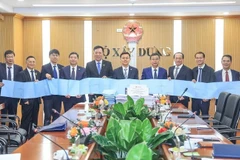
vna-potal-thu-tuong-chu-tri-hop-chinh-phu-chuyen-de-ve-xay-dung-phap-luat-thang-5-nam-2025-8046751.jpg
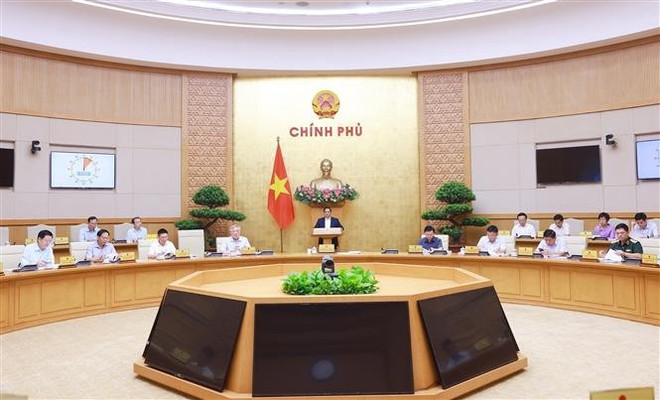
Prime Minister Pham Minh Chinh chairs the Government’s law-building session on May 22 (Photo: VNA)

He commended ministries and sectors for their efforts in drafting and submitting resolutions related to legislative work and preparing documents for the 9th session of the 15th National Assembly. He noted that from an institutional perspective, law and policy are both a driving force and a source of development, while the process of developing institutions and legal frameworks is being renewed.

The Government leader outlined six principles for revising laws, including clearly stating which provisions are kept, revised, added, or removed, along with justifications, while clarifying decentralisation and unresolved issues needing higher-level direction.

He also required the legislative process to reflect seven aspects, such as translating Party guidelines into law, addressing real-life gaps, simplifying procedures, and resolving legal inconsistencies.

The PM stressed that only well-established, widely supported issues should be codified, while complex or controversial matters should be studied further. Discussions must be realistic, evidence-based, and problem-focused, said the PM.

As schedule, participants will give opinions on six legislative items. These included the Law on Enforcement of Custody, Temporary Detention and Travel Bans; the amended Law on Enforcement of Criminal Judgements; the amended Law on Thrift Practice and Wastefulness Combat; the amended Law on Food Safety; the Law on Population; and the amended Law on Judicial Assessment.

In addition, they will listen to reports and provided feedback on how to address difficulties and obstacles encountered during the drafting of decrees relating to decentralisation and the delegation of authority, particularly in connection with the organisation of local administrations at two levels.

This marked the fifth thematic session on law-making held by the Government since the beginning of the year. Across these sessions, the Government has reviewed and approved 30 important legislative and resolution drafts./.
VNA

See more

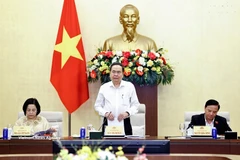
Politburo member, Standing member of the Party Central Committee’s Secretariat Tran Cam Tu attends the rehearsal. (Photo: VNA)

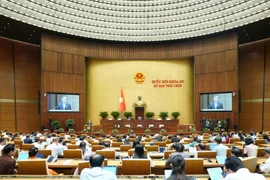
Security forces stage rehearsal for 14th National Party Congress

The People’s Public Security forces have been praised for their core role in closely working with the army and relevant ministries and agencies, with success in thwarting hostile plots at an early stage, drastically combating fake news and disinformation surrounding the 14th National Party Congress.

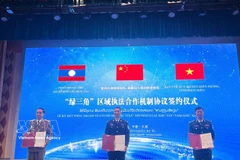
Senior Lieutenant General Le Quoc Hung (L), member of the Communist Party of Vietnam (CPV) Central Committee and Deputy Minister of Public Security, and General Vilay Lakhamfong, Politburo member and permanent member of the Secretariat of the Lao People’s Revolutionary Party (LPRP) Central Committee. (Photo: VNA)

Deputy Minister of Public Security congratulates Lao officials following succesful 12th National Party Congress

Deputy Minister of Public Security Senior Lieutenant General Le Quoc Hungconveyed the warmest congratulations of the Central Public Security Party Committee, the Ministry of Public Security leadership, and the Vietnamese People’s Public Security Forces to Lakhamfong and other Lao public security leaders on the congress’s success and their election to key leadership positions for the new term.

A session of the National Assembly Standing Committee. (Photo: VNA)

NA Standing Committee's key work agenda for 2026 approved

A major focus will be preparations for the election of deputies to the 16th NA and to People’s Councils at all levels for the 2026–2031 term. The NASC will coordinate with the National Election Council, the Government, the Vietnam Fatherland Front Central Committee, and relevant agencies and organisations to continue implementing the election plan, organise oversight of the electoral process, and carry out its duties and powers as prescribed.

Party General Secretary To Lam receives US Ambassador Marc Evans Knapper in Hanoi on January 9, 2026. (Photo: VNA)

Party leader receives outgoing US Ambassador

Vietnam always values its relationship with the US and looks forward to continuing close cooperation with the US government to deepen bilateral relations based on mutual respect for each other’s independence, sovereignty, territorial integrity, and political institutions, contributing positively to peace, stability, cooperation, and development regionally and globally.

Vietnamese Ambassador to the US Nguyen Quoc Dung (Photo: VNA)

Foreign affairs contribute to enhancing Vietnam’s international standing: Diplomat

Foreign affairs played an important role in maintaining a peaceful and stable international and regional environment; expanding friendships and partnerships without creating adversaries; deepening international integration to attract and effectively utilise external resources for development, including markets, investment, science and technology, and human resources training; and promoting the image of a confident, resilient Vietnam actively contributing to global affairs, Vietnamese Ambassador to the US Nguyen Quoc Dung highlighted.