Hanoi (VNA) - Vietnam’s press industry is at a historic turning point with sweeping restructuring that includes ending operations, merging, streamlining, digital transformation, and a shift toward financial self-reliance, for sustainable development and enhancement of competitiveness in an evolving information landscape.
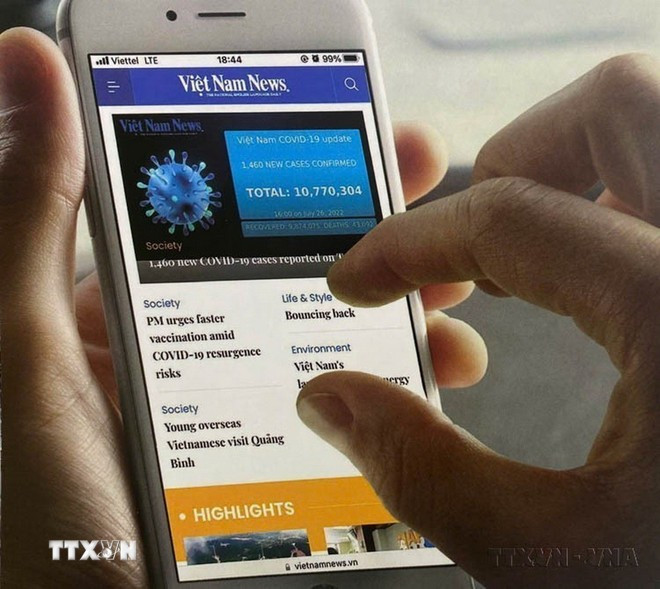
In this era of global integration and digitalisation, the press must adopt modern multimedia models to not only meet increasing information and communication demands but also align with the broader socio-economic development of the country.
Upholding the role of the "gatekeeper" in the information age
In the face of false advertising, unverified claims, and rampant misinformation on social media, which pose serious risks to economic stability and could become a “national crisis,” the press is called to strengthen its role as an independent verifier. In the digital age, where information, true or false, spreads at lightning speed, the media plays a crucial role in countering disinformation and mitigating multimedia communication crises.
Speaking with the Vietnam News Agency, Nguyen Thanh Dao, Chairman of the Ho Chi Minh City Advertising Association, emphasised that the press must maintian its role as an independent fact-checker, avoid sensationalism and work closely with relevant agencies to disseminate accurate and verified information. To fulfil its “gatekeeper” mission and guide public opinion, the press must adhere strictly to professional ethics and contribute to regulatory frameworks in the advertising sector. Media outlets should also work with businesses and authorities to establish crisis communication protocols, addressing shortcomings in content oversight and digital media regulation.
Nguyen Thi Minh Nham, Director and Editor-in-Chief of the Binh Phuoc Radio-Television and Newspaper, highlighted the effectiveness of her province’s integrated newspaper-broadcast model, which has been in place for several years. This integration requires journalists to develop multi-platform skills, producing content for print, radio, television, online news, and digital media.
Given the current context, merging newspaper and radio-television operations must go beyond administrative formalities; it must demonstrate real operational efficiency in line with the times. While renaming press agencies can support strategic repositioning, the focus should be on transforming mindsets, restructuring content production, and innovating newsroom management under a convergence model.
Mai Ngoc Phuoc, Editor-in-Chief of the Law newspaper of Ho Chi Minh City, noted that integration and digitalisation bring pressure, but also opportunities, for journalists to be more versatile, taking on roles such as writing, photography, and videography. While technology can assist the newsroom, it should not replace the human element, emotion, viewpoint, and journalistic integrity remain irreplaceable.
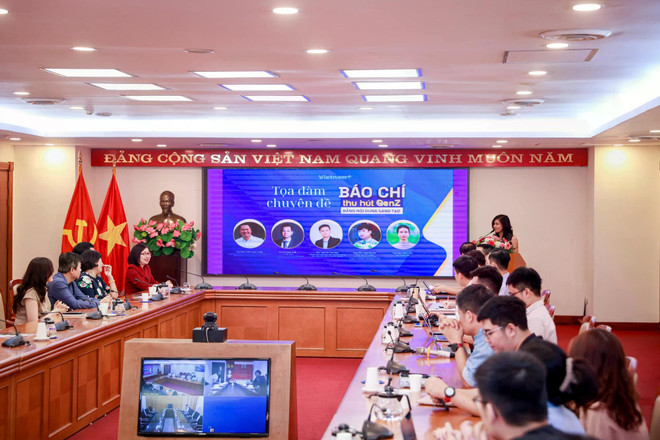
Building an economic mechanism for multimedia journalism
Leaders from various press organisations stressed the “dual role” of press agencies, as public service units fulfilling political missions and as competitive entities in a crowded digital media landscape. This reality calls for updated legal frameworks and policies that enable greater autonomy, particularly in financial management. The revised Press Law must define new operational models and provide supportive mechanisms, covering taxation, revenue, and legal status, for press organisations, media conglomerates, and communications groups.
Media organisations are also encouraged to invest in in-house training, improve operational structures, and diversify revenue streams, including event organisation, digital communications, and other media services. Local authorities can support this transition by helping train personnel and facilitating digital transformation.
Nguyen Thanh Quang, Acting Director of Binh Duong Radio-Television, underscored the need for clear economic development strategies within press agencies. Many have adopted ordering mechanisms, hosted events, sought sponsorship, and leveraged digital platforms like YouTube, TikTok, and other social media as new revenue channels, all part of the broader newsroom convergence model.
Journalist To Dinh Tuan, Editor-in-Chief of the “Nguoi Lao dong” (Labourer) newspaper, recalled that digital transformation has been a key agenda item since 2021. The newspaper has since launched a VIP section, integrated voice technology into its e-newspaper, and explored new tech innovations. With 20 social media channels already active, the outlet is poised to further advance its digital transformation efforts.
Experts agreed that while the press must remain politically committed, it must also ensure the livelihoods of its staff. Economic operations must never compromise editorial independence. Achieving this delicate balance requires strong and principled leadership, capable of steering the press through the challenges of digital integration while continuing to support national socio-economic development./.