Prime Minister requests synchronous site clearance for railway projects

The government leader reiterated that the land clearance work has been separated from the investment projects and assigned to localities.

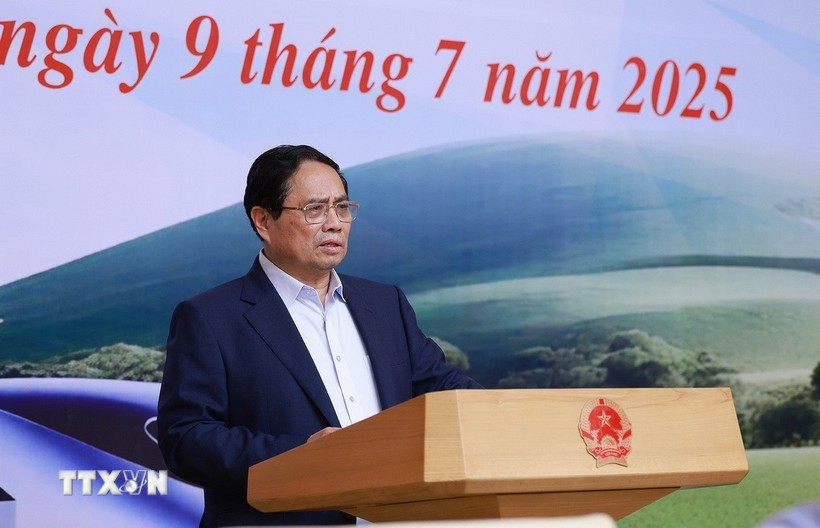
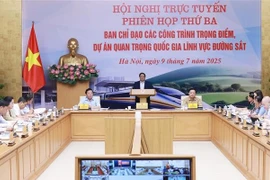
Prime Minister Pham Minh Chinh speaks at the third meeting of the steering committee for national key railway projects on July 9, 2025. (Photo: VNA)

Hanoi (VNA) – Prime Minister Pham Minh Chinh has requested the simultaneous implementation of land clearance for the North–South high-speed railway and Lao Cai–Hanoi–Hai Phong railway projects, with the goal of completing this critical phase by the end of 2026.

Chairing the third meeting of the steering committee for national key railway projects on July 9, the PM commended the proactive efforts of committee members, ministries, sectors, and localities, especially the Ministry of Construction, in carrying out assigned tasks. However, he also noted that several tasks have failed to meet the requirements.

PM Chinh stressed the need for the steering committee to hasten the direction and for ministries, sectors and localities to issue documents to concretise decisions so as to ensure progress, efficiency and timely implementation. Matters beyond their jurisdiction should be promptly reported to competent authorities for consideration.

PM Chinh called on Hanoi and HCM City to actively implement their respective urban railway projects in accordance to special mechanisms previously approved by the National Assembly. If difficulties arise beyond their jurisdiction, they must be reported to the Government for resolution.

The PM highlighted the transformative potential of railway infrastructure, which not only unlocks new development space but also improves logistics capacity, reduces input costs, lowers goods prices, and contributes to national modernisation, economic growth, job creation, and improved livelihoods.

Given these far-reaching impacts, all stakeholders must remain committed to the overarching objectives, he said, emphasising the need for a flexible, phased approach grounded in scientific evidence, safety, and efficiency, while firmly upholding integrity, transparency, and accountability. He stressed the importance of structured, sequenced implementation to ensure quality and effectiveness.

To expedite progress, the PM designated July 20 as the deadline for submitting technical standards, conditions, and procedures to relevant authorities for approval. On that basis, under the direction of Deputy PM Tran Hong Ha and Deputy PM Ho Duc Phoc, investment methods will be considered and proposed according to the provisions of the current laws.

The government leader reiterated that the land clearance work has been separated from the investment projects and assigned to localities. Accordingly, provinces and cities must proactively finalise route planning, ensuring alignment with long-term development strategies and facilitating subsequent implementation phases, he noted.

The Ministry of Science and Technology was assigned to complete and issue related construction standards by August 10, while the Ministry of Foreign Affairs was requested to accelerate the organisation of the Vietnam – China Intergovernmental Committee's meeting on railway cooperation.

In terms of financing, PM Chinh tasked ministries and sectors with developing resource mobilisation strategies to support the implementation of the projects. Any remaining institutional or regulatory bottlenecks must be reported to competent authorities for consideration.

Deputy PM Bui Thanh Son was assigned to resolve issues related to ODA loans, including a shift from pre-inspection to post-inspection procedures to enhance flexibility.

Vietnam is currently advancing several major railway infrastructure projects, including the Lao Cai–Hanoi–Hai Phong route, the Hanoi–Lang Son and Hai Phong–Mong Cai railway lines, the North–South high-speed railway, and urban metro lines in Hanoi and HCM City./.

VNA
See more

Airlangga Hartarto (fifth from right), Indonesian Coordinating Minister for Economic Affairs, and CEO of VinFast Asia Pham Sanh Chau (sixth from right) at the plant opening ceremony on December 15. (Photo: VinFast)

VinFast inaugurates EV plant in Indonesia

The VinFast Subang plant was completed and put into operation just 17 months after groundbreaking, demonstrating the company's rapid execution capability and strong implementation capacity. This is VinFast's fourth operational facility worldwide, and its first plant in Indonesia and Southeast Asia outside of Vietnam.

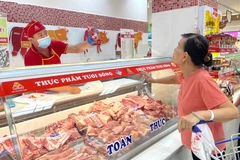
From early December, major retail chains in Ho Chi Minh City have recorded a noticeable increase in shoppers seeking Tet products. (Photo: VNA)

HCM City businesses ramp up production to meet Lunar New Year demand

From early December, major retail chains in the city have recorded a noticeable increase in shoppers seeking Tet products. Many consumers are taking advantage of promotional programmes to purchase gift items with long shelf lives, such as confectionery, soft drinks and processed foods, well ahead of the holiday peak.

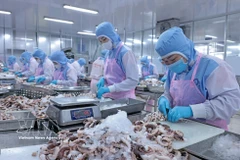
Workers process fish to be tinned for export at KTC Canned Food Factory under Kien Giang Trading JSC. (Photo: VNA)

Vietnam to host seminar on export growth strategies

Vietnam's exports rose 16.1% to 430.2 billion USD in the first 11 months of 2025, while total trade hit 839.8 billion USD during the same period. This strong performance shows that exports remain a key driver of economic growth, boosting Vietnam's standing on the world stage in recent years.

The vessel carrying the 2 millionth TEU arrives at Hai Phong Port. (Photo:VNA)

Hai Phong Port reaches 2-million-TEU milestone

Handling the 2 millionth TEU in 2025 not only demonstrates Hai Phong Port’s operational capacity and the collective efforts of its workforce, but also highlights its increasingly important role in regional and global supply chains, the confidence of shipping lines, logistics firms and the business community, and the effectiveness of policies to improve the investment climate and strengthen maritime infrastructure and services.

Melons labelled with traceability codes on display at the Song Van agricultural produce store in Ninh Binh city, Ninh Binh province. (Photo: VNA)

Tracing origins hindered by fragmented data systems

As the Government accelerates the digital economy, establishing a unified national traceability system has become a crucial move to end data fragmentation and disconnection among ministries, sectors and localities.

Hyundai unveils its new Avante Hybrid model in Seoul, the Republic of Korea, on August 13, 2020. (Photo: Yonhap/VNA)

Tax cuts poised to ignite Vietnam’s hybrid vehicle boom from 2026

Experts forecast that 2026-2030 will mark a period of strong growth for hybrid vehicles in Vietnam, a trend that will invigorate the automotive sector while supporting national objectives on emissions reduction, sustainable development and the broader transition to green mobility.

Illustrative image (Photo: VNA)

Vietnam targets 1 billion USD in banana exports

Bananas have been identified as a priority product under the Project for the Development of Key Fruit Crops to 2025, with a vision to 2030, approved in October 2022. Under the plan, banana acreage is projected to reach 165,000–175,000ha by 2030, with output of 2.6–3 million tonnes.