PM urges swift, accountable implementation of key railway projects

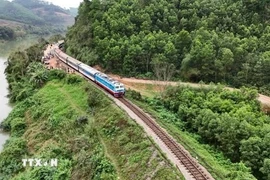
As head of the steering committee, PM Chinh reiterated the strategic direction outlined in the 13th National Party Congress, which emphasises the need to continue three strategic breakthroughs, with priority given to railway development and starting work on several sections of the North–South high-speed railway, improving transport connectivity with economic zones, industrial parks, seaports, and airports, and accelerating the pace of urban railway projects in Hanoi and Ho Chi Minh City.

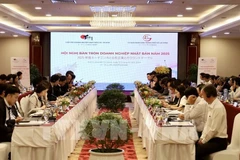
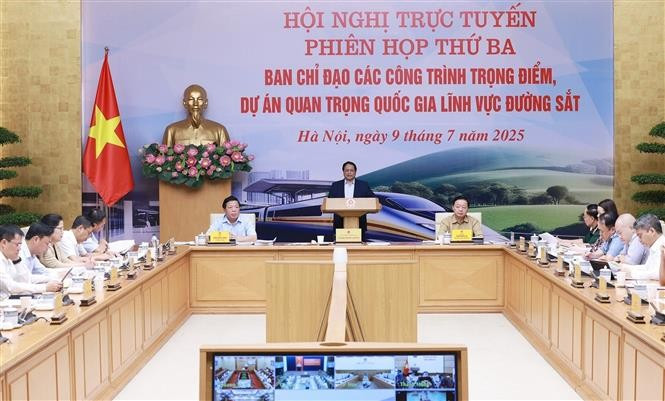
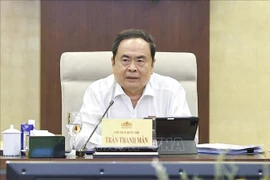
Prime Minister Pham Minh Chinh chairs the third meeting of the steering committee for national key railway projects. (Photo: VNA)

Hanoi (VNA) – Prime Minister Pham Minh Chinh on July 9 called on ministries, sectors, and local authorities to take active and responsible roles in carrying out national key railway projects, stressing the need to avoid relying on others, delaying or evading responsibility to ensure that assigned tasks are swiftly translated into concrete actions and legal documents.

Chairing the third meeting of the steering committee for national key railway projects, held both in-person and via videoconference with nine involved localities, the PM reviewed the progress made in the first half of 2025 and assessed the implementation of directives issued at the committee’s previous session.

As head of the steering committee, PM Chinh reiterated the strategic direction outlined in the 13th National Party Congress, which emphasises the need to continue three strategic breakthroughs, with priority given to railway development and starting work on several sections of the North–South high-speed railway, improving transport connectivity with economic zones, industrial parks, seaports, and airports, and accelerating the pace of urban railway projects in Hanoi and Ho Chi Minh City.

This approach is consistent with the Politburo's Conclusion No. 49, which charts Vietnam’s railway transport development through 2030 and envisions a modern, synchronised network by 2050 to support rapid, sustainable socio-economic growth and help Vietnam achieve the status of high-income developed country by 2045.
vna-potal-thu-tuong-chu-tri-phien-hop-thu-ba-cua-bcd-cac-cong-trinh-trong-diem-du-an-quan-trong-quoc-gia-linh-vuc-duong-sat-8138561.jpg
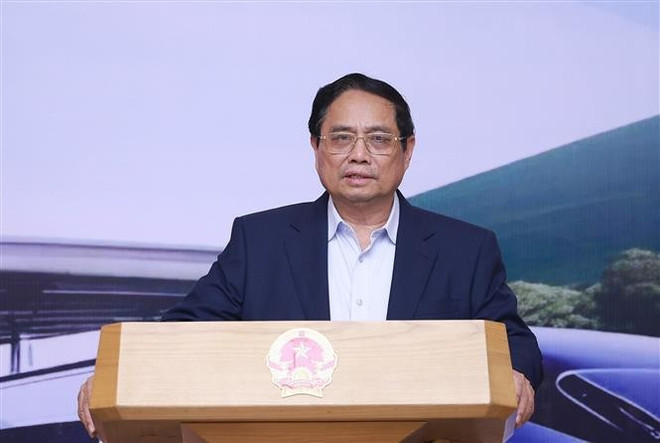
Prime Minister Pham Minh Chinh speaks at the third meeting of the steering committee for national key railway projects. (Photo: VNA)

Highlighting the strategic importance of railway transport in the North–South economic axis, East–West corridors, and urban transit systems, the PM welcomed recent resolutions passed by the National Assembly (NA), including investment policies for the North–South high-speed railway and the Lao Cai–Hanoi–Hai Phong route, as well as pilot mechanisms for expanding urban rail systems in Hanoi and HCM City. He also noted the significance of the revised Railway Law, recently adopted by the 15th NA at its 9th session, which introduces breakthrough policies to attract investment and resources.

PM Chinh stressed that the implementation must be timely, coordinated, and guided by the interests of the Party, State, and people, while ensuring transparency and accountability to prevent corruption, waste, and vested interests.

Since the steering committee’s second meeting, the Government has assigned 48 tasks to relevant ministries, agencies, and localities aimed at addressing obstacles and expediting project preparations. To date, 23 tasks have been completed on schedule, 17 are underway as part of routine operations, seven are lagging behind, and one has yet to reach its deadline./.
VNA

See more

Vietnamese Ambassador to Brazil Bui Van Nghi speaks at the seminar. (Photo: VNA)

Vietnam, Brazil seek ways to promote trade, investment cooperation

Vietnamese Ambassador to Brazil Bui Van Nghi informed that two-way trade reached 4.22 billion USD in the first six months of 2026, up 16.8% year-on-year. Brazil's exports to Vietnam exceeded 2 billion USD, rising 16.6%, while its imports from Vietnam totalled about 2.11 billion USD, an increase of 17%.

Wave Alpha, Honda Vietnam’s best-selling manual motorcycle model each month. (Photo: Bnews/VNA)

Honda Vietnam posts strong car sales growth, leads motorcycle market

The company sold 172,299 motorcycles in June, up 4.7% from the same month last year, highlighting steady consumer demand even as the market gradually shifts towards greener transport options. For the first six months of 2026, motorcycle sales reached 515,743 units, up 0.6% year-on-year.

Rice harvest in Xuan Giang commune, Ninh Binh province. (Photo: VNA)

Plan issued to develop agricultural logistics system

A key target is that by 2030, all concentrated agricultural, forestry and fisheries production areas will have access to essential services, including product traceability, quarantine, testing, quality certification, processing and market development. The move reflects growing international demand for stricter food safety, quality and traceability standards, which have become increasingly important for agricultural exports.

Delegates at the signing ceremony (Photo: VNA)

Vietnam, RoK boost micro-business cooperation

Vietnam's young population, dynamic market, and big growth potential are a perfect fit for the strengths that Korean micro-businesses bring in K-brands, technology, and service expertise, said KFME President Song Chi Young.

Cars at a public parking lot in Hai Phong city. (Photo: VNA)

Vietnam's auto sales rise 15%, hybrid, imported vehicles continue to outperform

With auto loan interest rates remaining competitive, stable vehicle supply, and an increasingly diverse product range, Vietnam's automotive market is expected to maintain its growth momentum through the remainder of 2026. SUVs, MPVs, and hybrid vehicles are likely to remain the main drivers of overall market sales.

The MoU signing ceremony between Becamex VSIP Binh Dinh and PV Gas CNG in Gia Lai province on June 26, 2026 (Photo: nhandan.vn)

Gia Lai positions itself as magnet for sustainable investment

Vice Chairman of the provincial People's Committee Nguyen Huu Que said ESG is no longer a communications message or a cost burden, but an essential requirement for accessing global capital. Gia Lai has chosen ESG as a pillar for building new competitive advantages and achieving sustainable development.

Chairman of the Tay Ninh provincial People's Committee Le Van Han delivers remarks at the inauguration ceremony. (Photo: VNA)

Suntory PepsiCo inaugurates 300-million-USD plant in southern Tay Ninh province

Built on nearly 20 hectares at Huu Thanh Industrial Park, the facility is the company's largest and most advanced plant in Vietnam and the biggest production site in Suntory PepsiCo's Asian manufacturing network. The factory has a designed annual production capacity of over 1.24 billion litres and is equipped with highly automated production, filling and warehousing systems.

Ho Chi Minh City inaugurates a UAV postal route linking Can Gio commune and Vung Tau ward on February 12, 2026. (Photo: VNA)

Ho Chi Minh City promotes UAV applications to develop low-altitude economy

With its enlarged development space, Ho Chi Minh City now combines strengths in urban development, industry and services with high-tech agriculture, the marine economy, logistics and diverse ecological areas. These conditions provide an ideal testing ground for UAV applications in urban management, land administration, environmental monitoring, disaster prevention and response, agriculture, logistics and public services.