Proactive security crucial in response to more sophisticated cybercrimes: Experts

In response to the evolving threat landscape, the Politburo’s Resolution No. 57-NQ/TW, issued on December 22, 2024, regarding breakthroughs in science, technology, innovation, and national digital transformation, highlighted cybersecurity as a core priority.

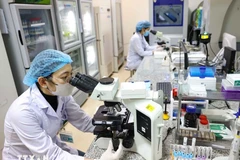
Illustrative image (Source: Viettel Security)

Hanoi (VNA) – Amid more sophisticated cybercrimes, the building of a safer cyber space and more proactive security methods are becoming more urgent to ensure a sustainable digital economy, protecting national security and solidify people’s confidence in digital technologies.

More sophisticated, professional cybercrimes

At a recent event hosted by the National Cybersecurity Association (NCA), experts warned that cybercrime today is largely orchestrated by well-organised, professional groups that operate similarly to businesses. While traditional attacks often aim to profit from data theft or ransomware, newer methods are more calculated.

A 2024 survey by the association revealed that, on average, one in every 220 internet users in Vietnam fell victim to online scams, a rate of 0.45%. The total estimated financial loss due to scams in 2024 exceeded 18.9 trillion VND (731.42 million USD). The three most common types of scams included fake investment opportunities promising high returns, impersonation of authorities, and fraudulent prize or promotion announcements.

Viettel Cyber Security reported that in 2024 alone, encrypted data breaches caused losses totalling 11 million USD, and more than 14.5 million user accounts were compromised. While the number of fake domains recorded dropped by around 30% compared to 2023, fraudulent websites impersonating legitimate brands tripled, with nearly 1,200 cases documented.

Hackers are increasingly leveraging artificial intelligence (AI) to automate and enhance attacks, including the creation of fake emails and websites. The banking and financial sector remains the most targeted, accounting for 71% of all cyberattacks. Distributed denial-of-service (DDoS) attacks also surged, with over 924,000 recorded incidents, up 34% from the previous year.

Reports from Vietnam Cybersecurity JSC highlight new attack trends for 2025, such as intrusions into cloud services, supply chains, large language models, and AI applications. These are expected to dominate the cybersecurity landscape in the coming years.

Experts from Viettel and the NCA agreed that cyber-criminal will continue to integrate AI to craft more evasive malware and deploy deepfake technologies to mimic voices, images, and videos with alarming precision.

A shift towards proactive cybersecurity

In response to the evolving threat landscape, the Politburo’s Resolution No. 57-NQ/TW, issued on December 22, 2024, regarding breakthroughs in science, technology, innovation, and national digital transformation, highlighted cybersecurity as a core priority.

abca133ca9d14655927933b0bcb17c39.jpg
nCademy is a national e-learning platform that offers certification and training in cybersecurity (Source: National Cybersecurity Association)

To address escalating cyber threats, Prime Minister Pham Minh Chinh has signed a dispatch urging all ministries, localities, and agencies to step up preventive measures against cyber-enabled fraud and online asset theft.

Vietnam Cybersecurity JSC recommends that instead of reacting after incidents occur, organisations and individuals should adopt a “proactive cybersecurity” posture, anticipating threats, detecting them early, and minimising potential damage.

The NCA also stressed the need for governments, businesses, and individuals to enhance digital defences by adopting advanced technologies and adhering strictly to legal regulations on data protection.

It advised institutions to ensure regular updates of software and systems, and equip basic cybersecurity measures such as firewalls, antivirus software, and data backups. Where possible, organisations should implement advanced protections such as Security Operations Centres (SOC) and Endpoint Detection and Response (EDR) systems, it said, adding that continuous training and cybersecurity drills are vital to strengthening response capabilities.

For individual users, experts advise using updated antivirus programmes on computers and mobile phones, creating strong, unique passwords with a mix of characters, and enabling multi-factor authentication on critical accounts like banking, email, and social media. They are also advised not to reuse passwords across platforms, avoid clicking on unknown links, and refrain from using public Wi-Fi for sensitive transactions.

A NCA survey indicated that over 20% of Vietnamese organisations have no dedicated cybersecurity staff, and 35.56% lack the necessary headcount to meet demands. The country is expected to face a shortfall of over 700,000 cybersecurity professionals in the near future.

To address the skills gap and raise cybersecurity awareness, the association has launched nCademy, a national e-learning platform that offers certification and training in cybersecurity. Available on both web and mobile, the platform features courses ranging from beginner to advanced levels, complete with engaging visuals, videos, and interactive materials.

nCademy aims to bridge the technology and resource divide between institutions, offering accessible, high-quality training to learners nationwide. It supports both professionals and everyday users, providing general awareness modules alongside specialist training to help create a culture of regular cybersecurity learning.

Course content is verified by experts from the Cybersecurity Research Institute (CRI) and the Vietnam Academy of Science and Technology. A pilot version is currently available at nCademy.vn, with official launch set for May 6./.


VNA

See more

Experience virtual reality technology at Nha Trang Center shopping mall (Khanh Hoa). (Photo: VNA)

Experts give ideas to build AI economy from data

Vietnam’s economic growth over past decades has largely relied on labour expansion, capital accumulation, export promotion and deep global trade integration, but as the country enters a higher development stage, this model is showing limitations.

VINASA Vice Chairwoman and Secretary General Nguyen Thi Thu Giang (right) and SEPC General Director Abhay Sinha sign the MoU on cooperation in New Delhi on March 25. (Photo: VNA)

Vietnam, India ink deal to step up IT cooperation

Under the terms of the MoU, the two sides will jointly push trade and investment in IT and services, arrange business delegations and business-to-business meetings, share market and policy information, and help companies access partnership opportunities and expand into new markets.

The Ninh Thuan 1 Nuclear Power Plant project is planned to be built in Khanh Hoa province (Photo: VNA)

Vietnam approves atomic energy development strategy, targeting civil applications

Tran Chi Thanh, Director of the Vietnam Atomic Energy Institute under the Ministry of Science and Technology, underscored that in the coming period, the institute and its affiliated units will continue promoting their strengths to promote the safe and secure application of atomic energy, contributing effectively to socio-economic development goals.

Students at FPT Ha Nam Inter-level High School practice their lessons directly by applying digital technology software (Photo: VNA)

FPT joins top 35 global AI application development service providers

The recognition reflects FPT’s end-to-end AI capabilities, spanning strategic consulting, solution design, application development, and the integration and deployment of AI systems in real-world operations. Notably, the company has developed IvyHub, an integrated agentic AI platform that enables enterprises to design, deploy and manage AI agents at scale.

The High-Frequency Systems and Microchip Laboratory at Ho Chi Minh City University of Technology, Vietnam National University, Ho Chi Minh City. (Photo: VNA)

Ho Chi Minh City sets sights on becoming semiconductor hub

A central component of the plan is expanding cooperation with global technology leaders such as AMD, NVIDIA and Qualcomm. These partnerships are expected to support technology transfer, strengthen chip design capabilities and help the city move further up global semiconductor value chains.

The modern nanotechnology research laboratory of Vietnam National University, Ho Chi Minh City. (Photo: VNA)

Resolution 57 delivers tangible outcomes from local practice

In the course of implementing this resolution, the northern province of Quang Ninh has emerged as one of the early movers in translating strategic orientations into comprehensive development models linked to innovation and digital transformation.

Delegates at the launch of the new version of Ho Chi Minh City technology exchange platform. (Photo: VNA)

Ho Chi Minh City launches upgraded technology exchange platform

The upgraded platform represents a comprehensive shift from a simple information-sharing model to a managed online technology trading system, enabling monitoring and measurement of real transaction outcomes. It is built on three pillars, namely new tradable technology products, a modern digital platform, and an improved operational model.

A Viettel 5G base station provides coverage at the April 16 Square area in Dong Hai ward, Khanh Hoa province. (Photo: VNA)

Conquering 6G networks helps Vietnamese businesses master strategic technologies

The global 6G alliance marks not only a technological milestone but also an opportunity for Vietnamese enterprises to strengthen their position on the global technology landscape. With the involvement of FPT, Viettel and VNG, Vietnam is gradually emerging as an early mover in the development and application of 6G technology.

At the Online Product Safety Summit in Hanoi on March 18. (Photo: dms.gov.vn)

Hanoi summit advances operation of ASEAN product safety portal

The Online Product Safety Summit in Hanoi on March 18 focused on practical enforcement solutions for identifying and removing non-compliant goods from online marketplaces, thereby strengthening consumer protection amid the rapid growth of e-commerce.

Illustrative image (Photo: VNA)

Resolution 57 charts directions for Vietnam’s technology ecosystem

Vietnam's sci-tech sector must evolve from a manufacturing base toward mastering technologies and ultimately developing original products independently, which requires shifting away from outsourcing and assembly models to one where domestic scientists lead in design, development and ownership of core technologies.

Party General Secretary To Lam (centre), Prime Minister Pham Minh Chinh (left), and Chairman of the Party Central Committee’s Commission for Internal Affairs Phan Dinh Trac mark the start of work on a high-tech semiconductor manufacturing plant in Hanoi on January 16, 2026. (Photo: VNA)

Resolution 57 refines technology priorities for new growth phase

The Ministry of Science and Technology is seeking feedback on a draft Prime Minister decision outlining four key categories: priority high technologies for investment, encouraged high-tech products, strategic technologies, and strategic tech products. The move is intended to capture emerging technology trends while strengthening the policy framework for high-tech development.

Professor Geert Angenon of Vrije Universiteit Brussel (Photo: VNA)

European experts highlight potential for AI cooperation with Vietnam

Experts believe that as demand for technological innovation grows and international partnerships expand, Vietnam has big opportunities to deepen cooperation with European partners in high-tech agriculture, healthcare, digital transformation and artificial intelligence.