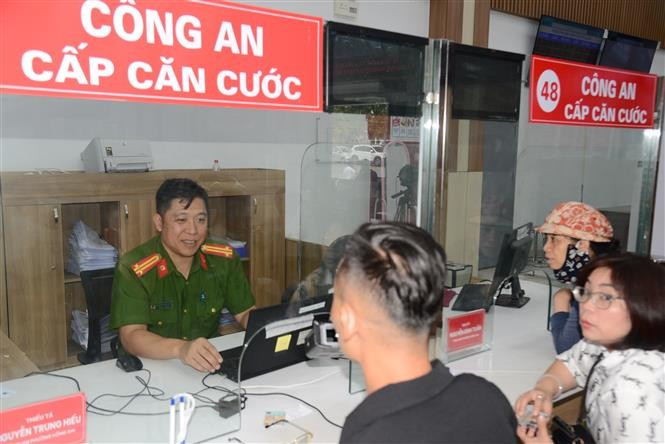
Quang Ninh (VNA) – All 54 wards, communes, and special administrative zones across the northern province of Quang Ninh have officially entered the pilot phase of a new two-level local government model, which is considered a critical rehearsal for the locality’s full transition to a structure designed to deliver more streamlined, effective, and accountable governance.
Prepared to apply new model
Quang Ninh is among the first localities nationwide to pilot the two-tier model, ahead of the full national roll-out scheduled for July 1. The pilot runs from June 15 to 30, providing a window to test operational mechanisms, identify potential challenges associated with removing the district level, and make timely adjustments before the official launch.
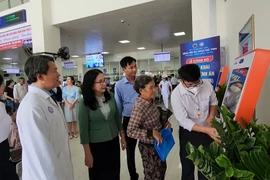
At the Hon Gai Public Service Centre, formerly under Ha Long city’s administration, on the first day of the pilot model on June 16, residents continued accessing services without disruption. Both the existing and trial systems are currently operating in parallel to ensure a smooth transition.
Pham Van Tien, a resident of Zone 4 in Hung Thang ward, reported no difficulties while submitting a land parcel division request at the Hon Gai centre. Similarly, Tran Trong Quy from Zone 3, Ha Lam ward, noted that his previously submitted paperwork was processed quickly and efficiently, despite it being the first day of the new model.
To support the pilot, Quang Ninh has implemented wide-ranging measures, including upgrading infrastructure, refining administrative processes, and restructuring personnel. A particular focus has been placed on comprehensive training for key leaders, civil servants, and administrative centre staff at all levels.
Nguyen Bao Phuong, Director of the Ha Long city branch of the Public Service Centre, said the initial day of operations went smoothly. She explained that the Hon Gai centre is continuing to run both legacy and pilot systems simultaneously. Since early this year, ward-level officials have already been stationed at the centre to assist residents of Hon Gai ward, which has helped prevent confusion. However, as the centre handles about 40% of the province’s administrative caseload, occasional queues and early ticketing are to be expected.
Proactive adaptation at all levels
Under the new model, local-level officials are now taking on responsibilities previously handled at the district level. Many civil servants have responded with flexibility and a readiness to adapt.
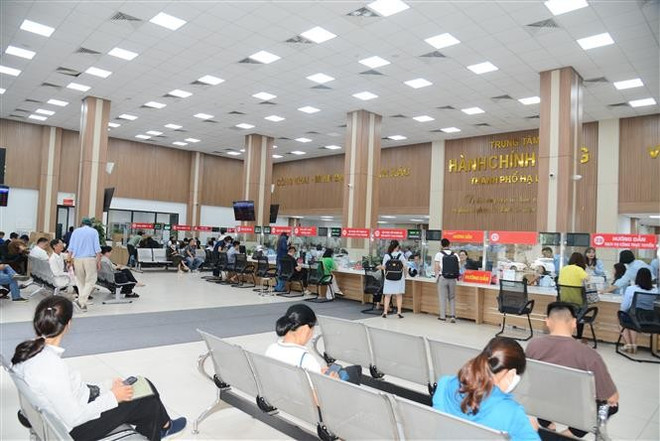
Hoang Thi Thu Hoa, a civil servant at the Cao Xanh ward Public Service Centre, formed from the merger of Cao Xanh and Ha Khanh wards, said that she is reassigned in early June to the new office to manage cultural and social services. Former residents of Ha Khanh have been successfully served at the new location. She acknowledged the increase in workload but expressed her commitment to improving her skills to better serve the public.
To avoid disruption during the transition, the former offices of both wards continue to process applications. Public awareness campaigns are also under way to inform residents of the new locations and procedures in the lead-up to the full implementation on July 1.
Nguyen Hai Ngoc, recently appointed Vice Chairman of the newly formed Cao Xanh ward, praised the dedication and cooperation of staff from both former wards throughout the merger and trial period. He noted that in addition to administrative duties, the new ward authority is working to resolve inherited issues such as localised tidal flooding.
Nguyen Thi Ngoc Linh, Vice Director of the Quang Ninh Public Service Centre, confirmed that the first day of the pilot saw no disruptions or complaints from the public or businesses.
One of the key reforms in the two-tier model is the adoption of non-jurisdictional administrative processing, allowing citizens and businesses to complete procedures regardless of geographical boundaries. This reform is expected to reduce travel, cut costs, and enhance accessibility.
So far, 1,509 out of 1,823 administrative procedures (around 83%) have been approved for non-jurisdictional processing. Of these, 1,255 are at the provincial level and 254 at the commune level. According to Linh, even when a request does not fall under a centre’s local jurisdiction, staff are fully trained to accept and forward it to the appropriate authority.
Quang Ninh aims to have 100% of its administrative procedures handled non-jurisdictionally by the end of 2025. Achieving this will require a highly skilled civil service, and the province is currently conducting intensive training to ensure all officials involved in the process are fully prepared.
Despite positive early outcomes, implementing the two-tier governance model comes with challenges. These include ensuring seamless coordination between provincial and local levels, redefining staff roles, and upgrading infrastructure to support the changes. As with any major reform, initial difficulties are expected, but strong commitment from local authorities and the support of citizens will be essential for success, paving the way for sustainable socio-economic development in the years ahead./.