RCEP creates new impetus to China-ASEAN cooperation: Singaporean scholar
The signing of the Regional Comprehensive Economic Partnership (RCEP) has injected new momentum into the economic and trade cooperation between ASEAN and China, a Singaporean scholar told Xinhua News Agency.
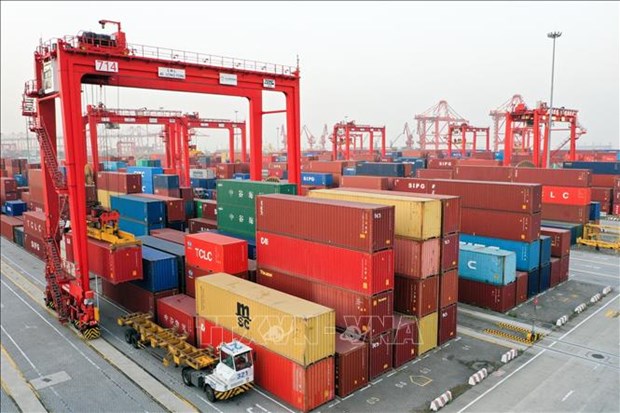 A port in Jiangsu province of China (Photo: VNA)
Singapore (VNA) – The signing of the Regional Comprehensive Economic Partnership (RCEP) has injected new momentum into the economic and trade cooperation between ASEAN and China, a Singaporean scholar told Xinhua News Agency.
The Chinese news agency quoted Yu Hong, a senior research fellow of the East Asian Institute of the National University of Singapore, as saying that the economic and trade cooperation between ASEAN member states and China remains strong despite the impacts of COVID-19. He believed that the collaboration will be boosted by the signing of RCEP, the world’s largest trade deal so far.
In the first three quarters of 2020, the two-way trade volume topped 481.8 billion USD, making ASEAN the largest trade partners of China.
“This has demonstrated the resilience of China-ASEAN economic and trade ties, as well as the huge potential of economic and trade cooperation between the two sides”, Yu was quoted by Xinhua as saying.
Yu pointed out that ASEAN and China are highly complementary in their industries, and enjoy huge potential for cooperation in the fields of infrastructure, digital economy, manufacturing upgrading, and trade in services.
The signing of RCEP will help ASEAN countries with advantageous natural resources and labor forces to undertake the transfers of manufacturing industries, so as to accelerate their industrialisation processes, he said.
Therefore, ASEAN countries will better integrate into the regional and global industrial chains, and strengthen regional economic integration, he added.
According to Yu, RCEP has injected "strong impetus" for Chinese and ASEAN companies to cope with the COVID-19 pandemic by enabling them more access to the markets in the region.
Yu said ASEAN countries, being optimistic about China's economic prospects and the business opportunities given its vast market, will play an increasingly important role in China's economic and trade relations./.





You should also see
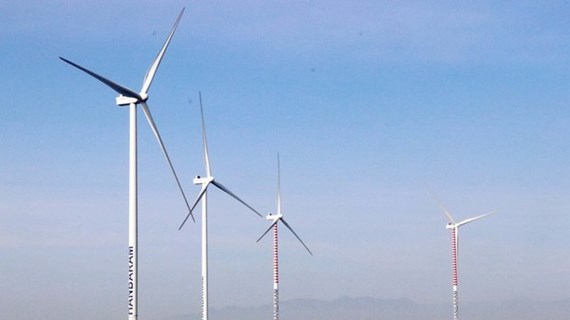
Energy industry needs nearly 5 trillion VND of investment in 2021-2030
The total investment capital demand for the whole energy sector in the 2021-2030 period is between 4.13-4.8 trillion VND (163.01-189.46 million USD), according to a plan to implement the National Power Planning in the 2021-2030 period with a vision to 2050.


See more
 World
World
Indonesia’s coffee exports surpass imports
Indonesia’s coffee exports have surpassed imports for 47 consecutive months since May 2020, the Central Statistics Agency (BPS) has reported.
 World
World
Thailand expects wave of tourists during Golden Week
The Tourism Authority of Thailand (TAT) estimates that about 996,000 foreign tourists will visit the Southeast Asian country between April 26 and May 5, known as the Golden Week holidays in Japan, during which Chinese tourists also prefer to travel overseas.
 World
World
Argentinian media praises Dien Bien Phu Victory
Argentinian newspapers have called Vietnam's Dien Bien Phu Victory (May 7, 1954) a symbol of the national liberation movement of oppressed and colonialised peoples worldwide.
 World
World
Laos speeds up granting licences to foreign workers
Laos's Ministry of Labour and Social Welfare plans to issue visas to illegal foreign workers and extend permits to legal ones so that they can continue to work in the country.
 World
World
Argentinian scholar praises Vietnam’s April 30, 1975 victory
The complete reunification of Vietnam on April 30, 1975 was an extremely significant event in the history of the country and the world, opined a scholar from the Institute for International Relations at the National University of La Plata, Argentina.
