Hanoi (VNA) – Economic experts have proposed fundamental reforms in Vietnam’s industrial policies to make it easier for foreign direct investment (FDI) flows to produce positive impacts in terms of technology and productivity.
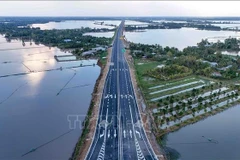
Addressing a seminar themed, “How FDI inflows contribute to the industrialisation in Vietnam” in Hanoi on August 7, Dr. Tran Toan Thang from the National Institute for Economics and Finance stated that the FDI sector has contributed to building a robust industry, facilitating economic restructuring, advancing urban infrastructure, promoting science – technology development and innovation, and improving the quality of human resources in Vietnam.
According to a report on FDI inflow contributions to Vietnam’s industrialisation process, after nearly four decades, Vietnam’s economic structure has shifted significantly toward industry and services. The proportion of these sectors in GDP rose from 73.5% in 2011 to 79.9% in 2024. The country’s Competitive Industrial Performance (CIP) ranking also improved markedly, moving from 95th place in 1990 to 31st in the 2019–2022 period, largely driven by increased manufacturing capacity and export performance.
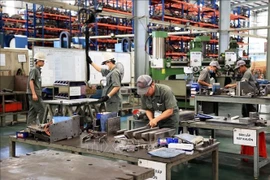
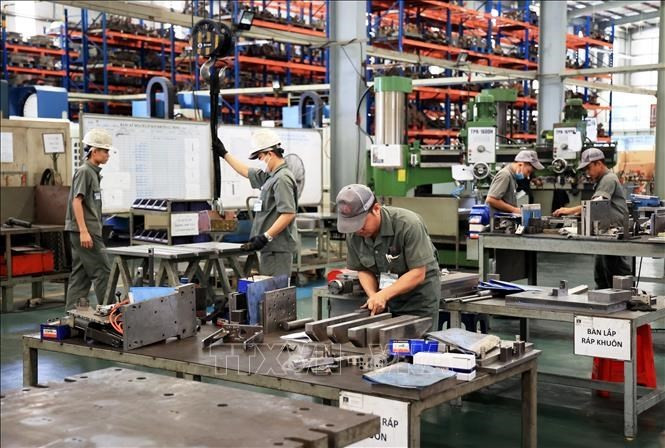
Economic experts said FDI inflows are considered the backbone of Vietnam’s key industrial sectors at present. Although foreign-invested enterprises account for only 8% of the total number of firms operating in the manufacturing and processing industry, they control 56.3% of total investment capital, generate 61.9% of total revenue, and employ 59.7% of the workforce in the sector.
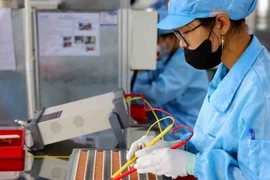
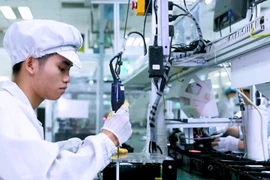
According to Dr. Bui Quy Thuan, head of the research division at the Vietnam Industrial Park Finance Association (VIPFA), the structure of FDI has shifted positively. Between 2010 and 2024, FDI capital moved away from labour-intensive sectors such as textiles and footwear towards hi-tech industries, with the share of electronics rising from 4.1% to 17.8%. Other sectors such as finance, renewable energy, and high-value-added services have also attracted significant investment.
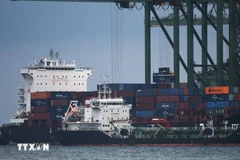
FDI has been a key driver of exports, accounting for around 70% of Vietnam’s total export turnover and helping the country emerge as a hub for manufacturing and export of hi-tech products, Thuan said, noting that corporations like Samsung, Intel, and LG have turned Vietnam into a vital link in the global supply chain.
However, economists predicted that despite Vietnam's growing appeal as an attractive destination for investment, bottlenecks in labour quality and infrastructure remain core weaknesses that could affect future FDI inflows into Vietnam. Additionally, the fourth Industrial Revolution is expected to have both positive and negative impacts on the FDI inflows into the country.
Amid shifting global supply chains and in pursuit of its industrialisation goals, Vietnam needs a fundamental shift in policy mindset, moving away from attracting FDI at all costs toward a more proactive approach that guides and directs foreign investment to national development objectives, said insiders.
To draw more FDI inflows, Vietnam must comprehensively reform its investment incentive policies toward a more targeted, performance-driven, and conditional approach, and put an end to blanket incentives, the report said.
To enhance FDI linkages, it is important to offer tailored support packages that consider the size of enterprises and specific characteristics of their industries. Additionally, significant improvements in human resources development are crucial, particularly in creating a high-quality workforce. This requires strong collaboration between the government, educational institutions, and FDI enterprises through strategic cooperation models.
It is important to establish a governance framework that attracts FDI through coordinated efforts across different sectors and regions. Additionally, a national-level coordination mechanism should define the roles of both central and local authorities to improve the environmental governance capacity associated with FDI.
At the same time, it is necessary to strengthen the capacity of domestic enterprises and develop a truly effective supporting industry, deploying a national supplier development programme to comprehensively support potential supporting industry enterprises in management, technology, and credit access.
Vietnam has so far attracted 43,346 valid FDI projects with a total registered capital of 517.14 billion USD. The accumulated disbursed capital is estimated at nearly 331.46 billion USD, accounting for 64.6% of the total registered capital./.