Russian scholar highlights CPV’s decisive role in victory of Vietnamese revolution

The strength of the Communist Party of Vietnam is based on its creative approach to problem-solving, and in reality, it has always brought victory to the nation.

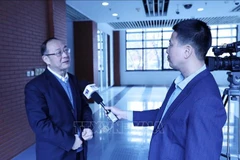
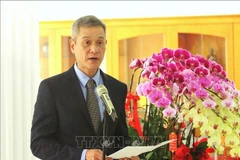
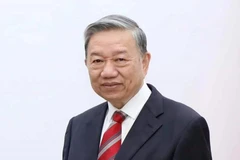
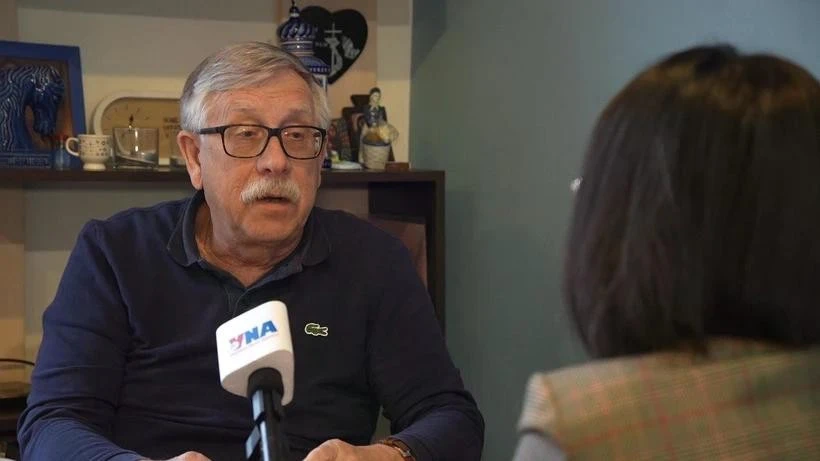
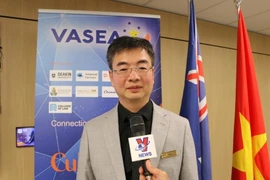
Assoc. Prof. Dr. Petr Tsvetov from the Diplomatic Academy of the Russian Ministry of Foreign Affairs, (Photo: VNA)

Moscow (VNA) - The Communist Party of Vietnam (CPV) has played a decisive role in the success of Vietnam’s revolution and shaped the nation's destiny in various periods, a Russian scholar has said.

In a recent interview granted to a Vietnam News Agency correspondent in Russia on the occasion of the CPV’s 95th anniversary (February 3, 1930 – 2025), Assoc. Prof. Dr. Petr Tsvetov from the Diplomatic Academy of the Russian Ministry of Foreign Affairs, stated that right after its founding, the Party became the vanguard force of the revolutionary movement for national liberation.

Tsvetov emphasised his pride in the fact that Vietnam’s first communists, the founders of the Communist Party of Vietnam, studied in Moscow in the early 1920s.

Nguyen Ai Quoc (later Ho Chi Minh), the first Vietnamese communist, and his comrades—who later became leaders of the CPV, including Le Hong Phong and Tran Phu—spent time learning in Moscow, the scholar said.

A key lesson from the CPV's activities is its flexible application of tactical and strategic methods, taking into account national characteristics and the development level of the working and peasant classes, in its pursuit of national liberation, he stressed.

According to the scholar, under the leadership of President Ho Chi Minh, the CPV adapted to changing circumstances by forming the Viet Minh Front in 1941, uniting people across classes, ethnic groups, and religions to successfully carry out the revolution. This demonstrated the Party's flexibility and focus on national interests in its leadership—one of the most defining characteristics of the CPV.

Assessing the CPV’s leadership in the country’s “Doi moi” (renewal) process, its efforts in combating corruption and streamlining the political system, the Russian scholar noted that the policy of promoting the market economy for national development and improving people's material and cultural well-being introduced at the sixth National Party Congress in 1986, was a transformative approach and an objective the Party has consistently pursued in all policies.

The CPV has not hesitated to open the door to private capital, which has transformed the lives of the people and advanced the country’s development, Tsvetov said, adding that Vietnam has not only recorded high economic growth but also accumulated remarkable economic strength.

He stated that the recent statement by General Secretary of the CPV’s Central Committee To Lam that Vietnam is on the threshold of a new era - the era of the nation's rise is fully grounded, reflecting the collective effort of the entire nation in striving for new heights in production, science, and technology.

Vietnam has caught up with the times, focusing on the fourth Industrial Revolution and implementing policies related to the digitalisation of the entire economy and the social life.

Tsvetov highlighted efforts made by the Party in accelerating administrative reforms, including the streamlining of the state apparatus and the fight against corruption, noting that these directions are crucial, demonstrating the Party's determination.

The CPV has proven itself as an experienced leader and most importantly, over the 95 years of leading the country and the national movement, it has not made any major mistakes, helping strengthen its credibility, he said.

According to the scholar, the Party is constantly striving, always researching and changing methods and strategies. It has actively adapted to both domestic and international changes, seizing favourable opportunities for national development.

The strength of the CPV is based on its creative approach to problem-solving, and in reality, it has always brought victory to the nation, he concluded./.
VNA

See more

Deputy Chief of the Communist Party of Vietnam (CPV) Central Committee's Office Vo Thanh Hung (fifth, right) receives archives on President Ho Chi Minh handed over by the French National Overseas Archives on September 10. (Photo: VNA)

France hands over archival materials for exhibition at Communist Party of Vietnam Museum

The materials include a reproduction of the front page of the August 24, 1945 issue of Cuu Quoc (National Salvation) Newspaper, its first publicly printed edition after previously being secretly circulated in handwritten form, featuring the Vietnamese national flag; and documents and reports on Nguyen Ai Quoc's activities related to the establishment and orientation of the Communist Party of Annam.

General Secretary of the Communist Party of Vietnam Central Committee and President To Lam receives Vietnamese technology experts in France. (Photo: VNA)

Top leader receives Vietnamese technology experts in France

General Secretary and President Lam stressed that while the experts work in different fields, they all share a fundamental common view that Vietnam can achieve rapid, sustainable growth and greater self-reliance only by building robust scientific and technological capacity and fully pooling the brainpower of Vietnamese talents at home and abroad.

Deputy Minister of Foreign Affairs Nguyen Minh Hang (Photo published by VNA)

Vietnam, BRICS partners to push new growth drivers: Deputy FM

Vietnam’s BRICS attendance gives it a platform to engage members and partners, debate global and regional governance, especially economic and development issues tied to emerging and developing economies; and identify directions and solutions. That supports Vietnam’s shift “from engaging in rule-making to contributing to shaping rules”, raising its voice in international frameworks, rules and standards, and cementing its global standing.

Delegations from Vietnam’s Ministry of Finance and France’s Ministry of Economy, Finance, and Industrial and Digital Sovereignty. (Photo: nhandan.vn)

Vietnam, France boost economic and financial cooperation

Economic ties have continued to grow across trade, investment and development cooperation. Bilateral trade surpassed 5 billion USD in the first eight months of 2026, with Vietnam exporting 3.1 billion USD worth of goods to France and importing 1.9 billion USD worth of products from the European country.

Madame Ngo Phuong Ly (L), spouse of General Secretary of the Communist Party of Vietnam Central Committee and President To Lam, meets with French Minister of Culture Catherine Pégard. (Photo: VNA)

Vietnam, France step up cultural cooperation

Following the Vietnamese Film Week in France in 2025, Madame Ly put forth the idea of holding a Vietnamese Theatre Week in France in October, featuring water puppetry, musical theatre, contemporary dance and excerpts from traditional Vietnamese performances.

Standing Deputy Minister of Foreign Affairs Nguyen Minh Vu (Photo: Vietnamese Ministry of Foreign Affairs)

NA President’s official visits to RoK, Mongolia a success: Standing Deputy FM

The discussions showed that both countries attach importance to Vietnam’s role, position, potential and growth prospects, and highly value the Vietnamese Party and State’s vision and recent reforms. Parliaments and political parties of both countries expressed their desire to accompany Vietnam’s development, further tightening the Vietnam-RoK Comprehensive Strategic Partnership and the Vietnam-Mongolia Comprehensive Partnership.

At the Vietnam-Poland Deputy Foreign Minister-Level Political Consultation in Hanoi on September 11. Photo published by VNA

Vietnam, Poland hold deputy foreign minister-level political consultation

Vietnam attaches importance to and wishes to further deepen comprehensive cooperation with Poland, both bilaterally and multilaterally. The country is determined to effectively implementing high-level commitments and agreements to make bilateral ties more substantive and effective and bring them to a new level.

General Secretary of the Communist Party of Vietnam Central Committee and President To Lam meets with representatives of the Vietnamese community in France. (Photo: VNA)

Top leader meets embassy staff, representatives of Vietnamese community in France

The top leader acknowledged and highly appreciated the pioneering and active role played by Vietnamese associations, particularly the Vietnamese Association in France, in strengthening community solidarity and cohesion, promoting Vietnamese culture, maintaining Vietnamese-language teaching and learning among younger generations, and making practical contributions to national development.

General Secretary of the Communist Party of Vietnam Central Committee and President To Lam holds a working session with the CEA. (Photo: VNA)

Top Vietnamese leader visits French atomic commission, Thales R&D hub

General Secretary of the Communist Party of Vietnam Central Committee and President To Lam called for deeper cooperation with France to raise the localisation rate of core technologies in Vietnam’s new-generation Earth observation satellite scheme, as well as for doctoral and supervised master’s training courses to cultivate a generation of Vietnamese scientists able to master quantum technologies.

President of the National Assembly Tran Thanh Man and his spouse Nguyen Thi Thanh Nga leave Ulaanbaatar on September 11, concluding their official visit to Mongolia. (Photo: VNA)

NA President Tran Thanh Man concludes official visit to Mongolia

Seeing off the delegation at Chinggis Khaan International Airport were Mongolian Ambassador to Vietnam Ganbaatar Hulan; Chairwoman of the Mongolia-Vietnam Friendship Parliamentarians’ Group J. Bayarmaa; Vietnamese Ambassador to Mongolia Nguyen Tuan Thanh; and embassy officials and staff.

Hon Khoai Island cluster in Ca Mau province – a key economic connection point for the Mekong Delta region (Photo: VNA)

Resolution opens up development space, creates new momentum for regional growth

Resolution No. 27 on regional development and the organisation of national development space in the new period places regional development as a means of organising national growth and a tool for reorganising development space, allocating resources and enhancing competitiveness. This takes on particular significance following the restructuring of administrative units, as the expanded scale of many localities creates better conditions for integrating urban, industrial, agricultural, maritime, border-gate and logistics spaces.

National Assembly President Tran Thanh Man and his spouse, together with Chairman of the State Great Hural (Parliament) of Mongolia Sandag Byambatsogt and his spouse, present gifts to children performing on horseback at the Chingisiin Khaanii Khuree complex on September 11. (Photo: VNA)

Vietnamese NA President invited to experience Mongolian traditional culture

NA President Man, his spouse and the Vietnamese delegation attended a mini Naadam Festival, which recreated Mongolia's largest and oldest traditional festival and a source of pride for the Mongolian people. The Naadam Festival was inscribed by UNESCO on the Representative List of the Intangible Cultural Heritage of Humanity.