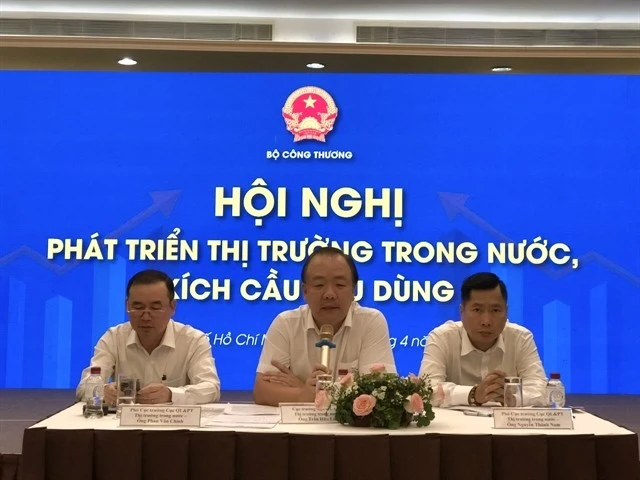
HCM City (VNS/VNA) - With its vast potential, Vietnam's domestic market serves as a crucial “support base” for local enterprises, especially amid increasingly complex and unpredictable global economic fluctuations, delegates said at a seminar in Ho Chi Minh City on April 22.
The event, organised by the Domestic Market Management and Development Department under the Ministry of Industry and Trade, focused on practical solutions to promote domestic market growth and stimulate consumption. It brought together representatives from ministries, local authorities, businesses, and associations to assess ongoing challenges and propose sustainable development strategies.
Tran Huu Linh, director of the department, highlighted that this year the global economy is expected to face persistent difficulties stemming from the Russia–Ukraine conflict, instability in the Middle East, and the US tariff policies. These issues will likely affect global energy prices, inflation, and consumer sentiment.
Against this backdrop, Vietnam’s domestic market emerges as a critical lifeline, helping to maintain growth momentum and provide new opportunities for Vietnamese enterprises.
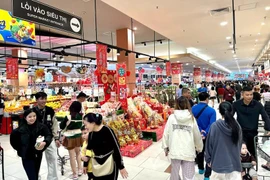
Phan Van Chinh, deputy director of the department, emphasised that with a population of over 100 million and an annual growth rate of 9–10% in total retail sales of goods and services, the domestic market is a ‘gold mine’ of untapped potential.
According to the National Statistics Office, total retail sales of goods and services in the first quarter of 2025 reached 1.7 quadrillion VND, marking a 9.9% increase compared to the same period in 2024. The domestic goods market continues to recover in line with the broader economic rebound.
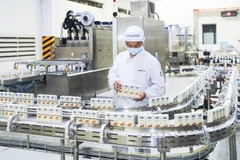
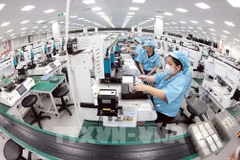
Many key localities nationwide have begun implementing supply-demand connection and market stabilisation programmes, which are expected to enhance consumer confidence. At the same time, the diverse supply of domestically produced goods is meeting the population's shopping needs effectively.
However, Vietnam's distribution infrastructure has not kept pace with the market's rapid expansion. Logistics systems and domestic supply chains remain fragmented and poorly integrated, he said.
Meanwhile, the ongoing shift in consumer shopping habits from offline to online platforms demands that businesses swiftly adapt to digital technologies. Yet, many enterprises still lack the resources and capabilities to invest in modern technologies. Additionally, the rapid rise of cross-border e-commerce, which enables consumers to purchase goods directly from overseas, poses a growing challenge for domestic product consumption.
At the seminar, representatives from business associations and enterprises urged ministries, sectors, and local authorities to intensify trade promotion programmes both at home and abroad, with a particular focus on "Made in Vietnam" products. They also called for stronger efforts to prioritise domestic goods in distribution and retail networks, especially in modern retail formats. Other recommendations included interest rate support for manufacturers and measures to expand the domestic consumption market.
Participants also called for stricter inspection and oversight of low-quality imported goods, counterfeit items, and untaxed cheap products that enter the domestic market through both traditional retail and e-commerce platforms, to safeguard both businesses and consumers.
Nguyen Anh Duc, Chairman of the Vietnam Retailers Association, said that for sustainable development of the domestic trade sector, State agencies must focus on strengthening consumer confidence and supporting the adoption of advanced technologies.
He proposed restructuring the domestic trade ecosystem and leveraging technology to respond to evolving consumer preferences and improve productivity.
Retail businesses also recommended stronger coordination between central and local governments in commercial infrastructure planning, along with enhanced support for developing modern retail systems. They also called on increasing investment in logistics infrastructure, including warehouses, transport networks, and logistics centres, to reduce transportation costs and boost the competitiveness of Vietnamese goods against imports.
Tax and fee policies also play a significant role. The 2% VAT reduction in 2024 clearly helped stimulate consumption and ease cost pressures for businesses.
Many enterprises have called for the extension of this policy and improved access to preferential loans to support the expansion of modern distribution systems, especially in remote and disadvantaged areas.
Linh noted that the Ministry of Industry and Trade has issued Directive No 08, instructing relevant units to implement synchronised measures to stimulate domestic consumption and develop the domestic market through 2025. The goal is to boost total retail sales of goods and services by around 12% this year.
He also called for closer coordination among all levels of government and the private sector to build a dynamic, modern, and resilient domestic market./.
See more
ACV considers fee reductions to ease airline cost pressures
ACV is weighing cuts to aviation service fees as jet fuel prices rise again amid Middle East tensions.
Vietnam emerges as strategic hub for Japanese investment shift
A Japanese expert urged Vietnamese firms to focus on long-term capacity building, raising product quality and strengthening business credibility.
VinFast unveils new 7-seater electric MPV in India
VinFast has launched the all-new VF MPV 7 - a premium electric, seven-seater multi-purpose vehicle engineered for the space and versatility that Indian customers truly need.
Hai Phong - Strategic connectivity anchor in Vietnam–China cooperation
In the first quarter of 2026, two-way trade between Hai Phong and China maintained strong momentum, with imports topping 2 billion USD, up 48.26% year-on-year, and exports surpassing 467 million USD, up nearly 57%.
Vietnam, China aim for more balanced trade growth
Minister of Industry and Trade Le Manh Hung urged China to expand imports of Vietnamese goods, broaden the list of products eligible for tariff preferences, and further open its market.
Quang Ninh, US partner seal pact to advance smart, green port development
The shared ambition is to transform Con Ong – Hon Net into a world-class green port powered by smart operations, with integrated logistics, industry, and offshore services, alongside efforts to cut emissions and protect biodiversity.
Vietnam National Brand Week 2026 opens
Running from April 16 to 23 nationwide, the Vietnam National Brand Week 2026 marks the 18th anniversary of Vietnam Brand Day (April 20, 2008 – 2026).
Vietnam’s competitive investment hubs attract foreign firms
In 2026, Vietnam’s Investment Law and related policies are set for a new round of revisions, expected to reshape the investment landscape and business models.
Ca Mau drives changes among fishermen to tackle IUU fishing
Ca Mau is stepping up communication campaigns to disseminate legal regulations on IUU fishing, highlight recent enforcement results, and convey recommendations from the European Commission (EC)’s fifth inspection mission to fishing communities and relevant stakeholders.
Phu Tho woos Shanghai investors with expanded land, ready infrastructure
The meeting with 39 major Shanghai firms underscored increasingly substantive and effective cooperation between Vietnam and China, as well as Phu Tho’s proactive push for global integration and foreign investment attraction.
Vietnam races ahead with sustainable aviation, marine fuels
Despite their environmental benefits, turning SAF and SMFO into big business faces major hurdles, mainly because making the stuff costs way more than regular fuels.
Construction sector striving for high-growth target
The construction sector faces mounting pressure to keep major projects on schedule while managing costs and stabilising markets. Yet, with gains from institutional reform, infrastructure investment, and growth model transformation, it remains well positioned to serve as a key growth engine.
Fuel taxes cut to 0% from April 16
Accordingly, the environmental protection tax on petrol (excluding ethanol), diesel, kerosene, mazut, and aviation fuel has been cut to 0 VND per litre. These products are also exempt from VAT declaration and payment, while still eligible for input VAT credit.
Reference exchange rates slightly down on April 16
With the current trading band of +/- 5%, the ceiling rate applicable for commercial banks during the day is 26,357 VND/USD, and the floor rate 23,847 VND/USD.
Commercial apartment supply shrinks, social housing gathers pace
If policies are implemented consistently and effectively, social housing could evolve from a short-term remedy into a major driver for a more stable and sustainable property market in the years ahead.
Vietnam, Egypt strengthen cooperation in chemicals and fertilisers
Vinachem signed a Memorandum of Understanding (MoU) on strategic cooperation with Kayan for International Trade, a company accounting for around 40% of Egypt’s apatite mining and export market share on April 14.
Vietnam’s long-term investment appeal remains intact: EuroCham
Up to 93% of European enterprises said they would recommend Vietnam as an investment destination – one of the highest endorsement levels in the history of the BCI survey. This indicates that investors are clearly distinguishing between short-term operational challenges and their long-term strategic outlook.
Quang Ninh drafts plan for Vietnam’s first free digital, knowledge-based economy zone
Unlike existing zones focused on traditional industry and border trade, the new model will be built on four pillars: concentrated digital technology, AI and data centres, an Asia-level disaster recovery data hub, and an education city.
HCMC FOODEX 2026 showcases Vietnam’s food industry potential
Participating businesses are showcasing a wide range of products, from agricultural produce, processed foods, beverages, and spices to equipment and technologies for processing, packaging, and preservation.
Egytian firm to supply apatite ore to Vinachem fertiliser plants
The deal is designed to help Vinachem secure stable raw material supplies for its fertiliser production amid ongoing volatility in global commodity markets.