Singapore exerts efforts to promote public transport

Describing the CRL as Singapore’s next “outer ring” MRT line, Siow emphasised that it will provide commuters with more route options and resilience in case of service disruptions or maintenance.

Singapore (VNA) - Singapore has continued to promote public transport through user-friendly and sustainable initiatives.

Most recently, it broke ground on Phase 2 of the Cross Island Line (CRL), expected to be operational by 2032.

At the groundbreaking ceremony in Clementi early this week , Acting Minister of Transport Jeffrey Siow said technical studies for Phase 3 of the CRL are nearing completion, with detailed plans for future stations, particularly those serving the Jurong Industrial Estate, to be released by late 2025.

Describing the CRL as Singapore’s next “outer ring” MRT line, Siow emphasised that it will provide commuters with more route options and resilience in case of service disruptions or maintenance.

Spanning 50 km with 21 stations, the CRL will be Singapore’s longest MRT line, fully integrated into the current network with eight interchanges. Phase 1, with 12 stations from Aviation Park to Bright Hill, opens in 2030. A four-station extension from Pasir Ris to Punggol follows in 2032. Phase 2 covers 15 km from Turf City to Jurong Lake, including Singapore’s deepest underground station at King Albert Park, 50 metres below ground.

The CRL is part of sustained investment in urban transport. In June, Prime Minister Lawrence Wong marked the opening of Phase 4 of the Thomson-East Coast Line (TEL), noting rail coverage has grown from 67 km to over 240 km. More than 50 stations will be added, including the Jurong Region Line and the CRL. By the 2030s, 80% of households are expected to live within a 10-minute walk of an MRT station.

Like other lines, the CRL is commuter-friendly. It will shorten travel times and handle at least 600,000 daily trips, rising to 1 million over time.

Urban rail is costly. Singapore has committed 16.6 billion USD to the CRL, including 4 billion USD for Phase 2 stations and tunnels. Yet land near MRT stations attracts developers, with above-average rental yields. Car ownership restrictions further drive demand for homes near stations.

Office buildings and malls are investing in direct MRT linkways to enhance convenience and competitiveness. These connections also boost rental value and sales performance.

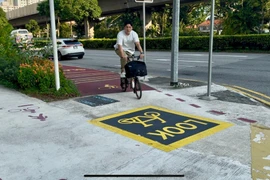
Singapore’s hot, rainy climate makes sheltered walkways especially useful. Linking residential blocks to stations and bus stops, they protect pedestrians from sun and rain while encouraging public transport use. Some feature solar lighting and greenery for urban cooling.

Singapore also maintains high standards across its network. A key feature is its unified contactless payment system. Commuters use Ezlink, SimplyGo, bank apps, cards or smart devices to tap in and out within seconds, with multiple lanes reducing queues.

Singapore’s MRT and bus systems consistently rank among the world’s best for cleanliness, safety and accessibility, offering lifts, escalators, air conditioning and clean restrooms maintained daily./.
VNA

See more

Indonesia bets on AI to drive 600-billion-USD digital economy

Indonesia bets on AI to drive 600-billion-USD digital economy

AI has the potential to generate around 400 billion USD in value for Indonesia’s economy by 2030 under a business-as-usual scenario. If implemented alongside the regional digital economy framework, that figure could climb to 2 trillion USD, an official has said.

Malaysian Prime Minister Anwar Ibrahim (second from left) presents the highest award at the event (Photo: Malaysian Prime Minister's Office)

Malaysia highlights importance of ethical journalism in AI era

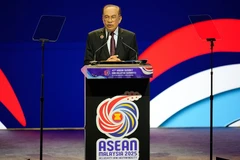
Malaysian Prime Minister Anwar Ibrahim highlighted the importance of ethnical journalism in artificial intelligence (AI) era while addressing the Malaysia Journalism Night 2026 and the MPI-PETRONAS Malaysian Journalism Awards 2025 held in Kuala Lumpur on July 17.

Heads of ASEAN diplomatic missions in Mexico pose for a group photo. (Photo: VNA published)

ASEAN at 59: Growing role and global standing

Thai Ambassador to Mexico Rooge Thammongkol, rotating Chair of the ASEAN Committee in Mexico City (ACMC) for July-December, said ASEAN has grown into one of the world’s most successful regional organisations and plays a central role in promoting peace, stability and cooperation in the Asia-Pacific region.

New Singapore-Malaysia rail link expected to boost cross-border spending

New Singapore-Malaysia rail link expected to boost cross-border spending

Singaporean consumers are expected to spend an additional 1.05 billion SGD (about 810 million USD) annually in Johor Bahru, Malaysia's southernmost city bordering Singapore, according to a study conducted jointly by the Singapore Business Federation (SBF), the Restaurant Association of Singapore, and the Singapore Retailers Association.

Indonesia restarts research reactor after nearly 14 years

Indonesia restarts research reactor after nearly 14 years

Under its national energy development plan, Indonesia aims to commission its first nuclear power plants with a combined capacity of about 500 MW in the early 2030s, before expanding nuclear generation to 7-8 GW in the 2040s and 35-37 GW by the 2060s to diversify energy supplies and meet growing electricity demand.

An article published on July 9, 2026 by Auto Plus, one of France's leading automotive magazines, gives a positive assessment of VinFast's VF 2 mini electric car. (Photo published by VNA)

French magazine highlights VinFast's rapid growth

According to L'Automobile, VinFast sold 115,916 vehicles in the first six months of 2026, its highest figure since the company began operations. The result also made VinFast the first Vietnamese automaker to surpass 100,000 vehicle sales in the first half of a year.

Thailand–EU FTA talks advance in Brussels

Thailand–EU FTA talks advance in Brussels

The two sides agreed to expedite FTA negotiations and work toward resolving outstanding issues in agricultural products, industrial goods, government procurement, energy and raw materials, digital trade, and regulatory matters, including intellectual property.

Indonesia attracts 5.8 billion USD in foreign inflows after rate hikes

Indonesia attracts 5.8 billion USD in foreign inflows after rate hikes

Data from the central bank showed that after recording net foreign outflows in the first quarter of 2026, Indonesia's government bond market rebounded with net inflows of 17.7 trillion IDR. Meanwhile, cumulative foreign investment in Bank Indonesia Rupiah Securities reached 174 trillion IDR.