Malaysian PM welcomes Thailand – Cambodia ceasefire agreement

Earlier, on December 22, in its capacity as ASEAN Chair for 2025, Malaysia held a special meeting of foreign ministers to seek solutions to ease tensions, strengthen trust, and create space for dialogue between Thailand and Cambodia.

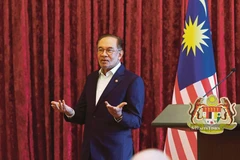
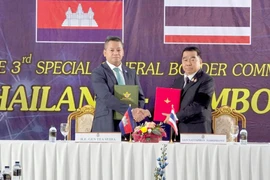
Kuala Lumpur (VNA) - Malaysian Prime Minister Anwar Ibrahim has welcomed the immediate ceasefire agreement between Cambodia and Thailand, which took effect at 12:00 on December 27, following its signing by representatives of the two countries earlier this morning.

In a posting on social network the same day, Anwar said the decision to halt fighting and to hold forces in place reflects a shared recognition that restraint is required, primarily in the interest of civilians.

He said the joint statement of the 3rd Special Meeting of the General Border Committee (GBC) between Thailand and Cambodia on December 26 sets out practical and positive measures, including verification by the ASEAN Observer Team and direct communication between defence authorities.

These measures provide a basis for stability, and he is hopeful that both sides will carry them out faithfully, Anwar said.

As Malaysia hands over the ASEAN Chair to the Philippines at midnight on January 1, 2026, Malaysia will support all efforts to ensure that these undertakings are honoured and that ASEAN’s prestige and credibility as a region of peace are preserved, he added.

Earlier, on December 22, in its capacity as ASEAN Chair for 2025, Malaysia held a special meeting of foreign ministers to seek solutions to ease tensions, strengthen trust, and create space for dialogue between Thailand and Cambodia./.
VNA

See more

BMA Governor Chadchart Sittipunt (Source: pattayamail.com)

Bangkok moves to respond to summer heat

The BMA has identified hundreds of strategic locations to help reduce the risk of heatstroke among residents. More than 600 cooling spots have been set up at parks, BMA-run schools, vocational colleges, health centres and 50 district offices. The city administration has also activated 2,806 clean drinking water stations across all 50 districts of the capital.

Illustrative Image (Photo: nationthailand.com)

Thailand unveils resilience strategy to balance exports

Thailand’s exports reached 339.635 billion USD in 2025, the highest on record and up 12.9% from 2024. In January 2026, exports continued strong growth, rising 24.4% year-on-year to 31.57 billion USD, marking the 19th consecutive month of expansion.

Indonesian Deputy Chair of Commission IV of the House of Representatives (DPR) Alex Indra Lukman. (Photo: ANTARA)

Indonesia’s rice reserve sufficient for nearly one year

Data from the Ministry of Agriculture showed that the country’s total rice reserve stands at nearly 28 million tonnes, including 3.76 million tonnes managed by the state logistics agency Bulog, 12.5 million tonnes held by households, and about 11.73 million tonnes of standing crop awaiting harvest.

Malaysia's Deputy Investment, Trade and Industry Minister Sim Tze Tzin (Photo: www.thestar.com.my)

Malaysia’s investment hits record high

Latest data from the Malaysian Investment Development Authority (MIDA) showed that the country recorded 426.7 billion MYR in approved investments in 2025, the highest level on record and an 11% increase from 2024.

President of the Tourism Council of Thailand Chai Arunanondchai (Photo: nationthailand.com)

Thai tourism to face big challenges due to Middle East conflicts

Thailand’s tourism sector has been directly affected and is facing severe volatility, both in terms of travel costs and tourist numbers after one week of Middle East conflicts, according to President of the Tourism Council of Thailand (TCT) Chai Arunanondchai.

Thai Deputy Prime Minister and Finance Minister Ekniti Nitithanprapas (centre), Commerce Minister Suphajee Suthumpun (left), and Foreign Minister Sihasak Phuangketkeow at the Bhumjaithai Party forum in Buri Ram province on March 8. (Photo: bangkokpost.com)

Thailand unveils “10 Plus” strategy to weather global instability

Deputy Prime Minister and Finance Minister Ekniti Nitithanprapas said the policy package focuses on concrete economic measures, including initiatives to help low-income households, elderly citizens and small businesses reduce debt, thereby supporting national economic growth.

Thailand takes strong action against complicity in cybercrime

Thailand takes strong action against complicity in cybercrime

Airin Phanrit, Deputy Spokesperson for the Prime Minister’s Office, said the damage caused by call centre scams is evident, with some Thais involved in fraudulent activities against their compatriots, including receiving money to open mule accounts. She urged the public, especially young people, not to be tempted by small sums of money to register SIM cards or give personal information to fraudsters for use in online criminal activities.

Indonesian Trade Minister Budi Santoso on the sidelines of the Closing Ceremony of Trade Expo Indonesia (TEI) 2025 at ICE BSD, Tangerang. (Photo:jakartaglobe.id)

Indonesia seeks WTO approval to suspend concessions to EU

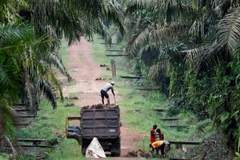
The dispute dates back to 2018, when the EU issued a directive restricting the inclusion of crop-based biofuels in member states’ renewable energy targets and set a roadmap to phase out palm oil-based biofuels by 2030, citing concerns over the sustainability of palm oil production.

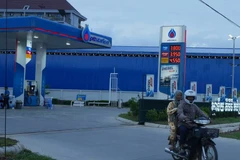
A motorist refuels at a station in Phnom Penh following a Ministry of Commerce warning against domestic fuel stockpiling. (Photo: Khmer Times)

Cambodia strengthens control over retail fuel sales

Cambodia’s Ministry of Commerce has called on the public and fuel station operators across the country to avoid hoarding fuel and to strictly follow technical safety standards in the sale and storage of petroleum products to prevent safety risks and ensure a stable supply.

Lao Prime Minister Sonexay Siphandone (Photo: Xinhua/VNA)

Laos identifies 10 key tasks to build independent, self-reliant economy

Laos will step up agricultural production to ensure food security, meet domestic demand and expand exports; encourage the development of agro-processing industries, including those related to rubber, aquatic products, cassava and sugarcane, as well as fertiliser and animal feed production, in order to increase added value and create jobs in rural areas.