Bangkok (VNA) – Thailand’s exports rose 7.1% in November to 27.45 billion USD, marking the 17th consecutive month of growth, according to the Trade Policy and Strategy Office (TPSO) under the Ministry of Commerce.
Excluding oil-related products, gold and defence items, exports increased 11.8%.
During the same period, imports totalled 30.17 billion USD, up 17.6%, resulting in a trade deficit of 2.73 billion USD.
TPSO Director-General Nantapong Chiralerspong said exports continued to be driven mainly by electronics shipments, in line with the upswing in the computer cycle and the expansion of modern technologies, including AI, which has boosted demand for manufactured goods.
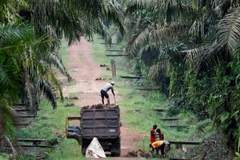
Meanwhile, Thailand’s agricultural exports remain under pressure from natural disasters and rising global competition.
In the January–November period, exports expanded 12.6%. Excluding oil-related products, gold and defence items, the growth rate was 13.7%. Imports during the period reached 315.66 billion USD, up 12.4%, resulting in a trade deficit of 4.96 billion USD.
November’s export growth was driven by industrial products, which rose 12.2%, extending their growth streak to 20 consecutive months.
Key items that increased included computers and parts, gems and jewellery (excluding gold), telephones and components, printed circuit boards, electric transformers and parts, and switchboards and control panels. For January–November, industrial product exports grew 17.1%.
By contrast, agricultural and agro-industrial exports fell 9.5% in November. Overall, these exports declined 0.7% in the first 11 months of the year.
Nantapong said the TPSO estimates December exports at around 25.0–26.5 billion USD. If realised, Thailand’s full-year export value is expected to reach about 335–337 billion USD, equivalent to growth of 11.6–12.1% in 2025. For 2026, the ministry’s preliminary forecast puts export growth in the range of -3.3% to 1.1%.
Growth in 2026 is forecast to slow due to weaker global conditions, softer demand from major trading partners, clearer impacts from US tariff measures, pricing pressures and a stronger baht weighing on competitiveness, as well as ongoing geopolitical risks and severe weather affecting agricultural output./.