Bangkok (VNA) – The latest opinion survey conducted by Thailand’s National Institute of Development Administration (NIDA) shows that 40.6% of respondents said they had yet to identify a suitable prime ministerial candidate, marking the highest level of uncertainty recorded so far this year.
The quarterly poll was conducted nationwide from December 4 to 12, with 2,500 respondents.
Natthaphong Ruengpanyawut, leader of the opposition People’s Party (PP), remained the most popular individual candidate with 17.2% support. However, the rate has continued to decline. After peaking at 31.48% in the second quarter, support fell to 22.8% in the third quarter and dropped further in the latest survey, indicating weakening momentum for the opposition.
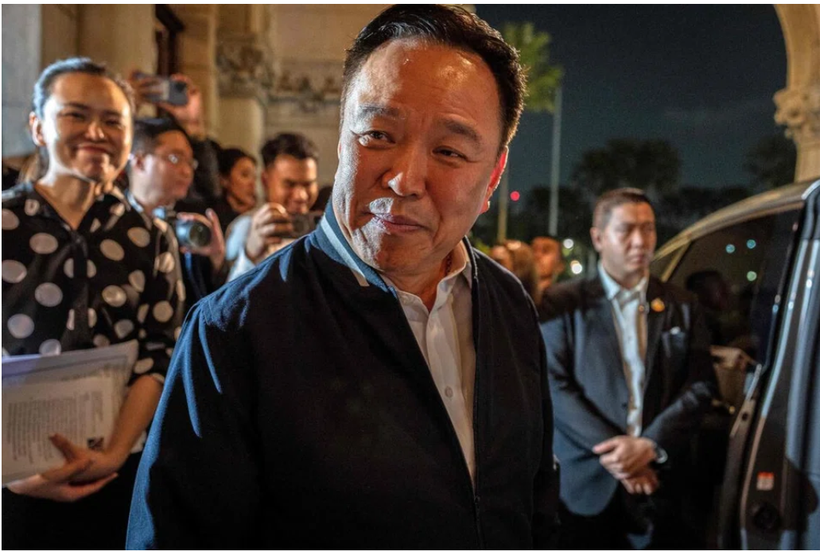
Prime Minister Anutin Charnvirakul, who leads the Bhumjaithai Party, ranked third with 12.32% support. His popularity declined sharply after rising steadily earlier this year, from 2.85% in the second quarter to 20.44% in the third quarter.
According to NIDA, the drop reflects growing public scrutiny of government performance, particularly in economic management and governance.
Former Prime Minister Abhisit Vejjajiva recorded the strongest increase in support, rising to 10.76%, while backing for other candidates remained in single digits.
Party-level support showed similar trends. The People’s Party led among the named political parties with 25.28%, but this represented a significant decline from 46.08% in the second quarter. Support for both Bhumjaithai and the Pheu Thai Party also fell.
Meanwhile, the proportion of respondents who said they could not identify a suitable political party rose to 32.36%, surpassing all parties for the first time.
Findings from a separate survey conducted by the King Prajadhipok’s Institute further indicated public uncertainty, with nearly half of respondents expressing negative views about Thailand’s political situation.
The poll showed that voters prioritise economic performance when choosing the next prime minister, with 36.2% citing the ability to address everyday economic issues as the most important quality. This was followed by integrity (17.8%), willingness to listen to public opinion (9.2%), and having a clear vision (9%)./.