Hanoi (VNA) - Nguyen Thu Oanh, head of the Service and Price Department at the National Statistics Office (NSO), highlighted the positive recovery of domestic consumption and exports in the first half of 2025, as well as measures to address challenges in controlling inflation during the latter half, in an interview with the e-newspaper VietnamPlus.
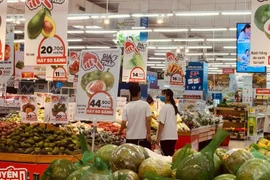
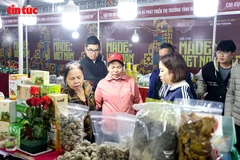
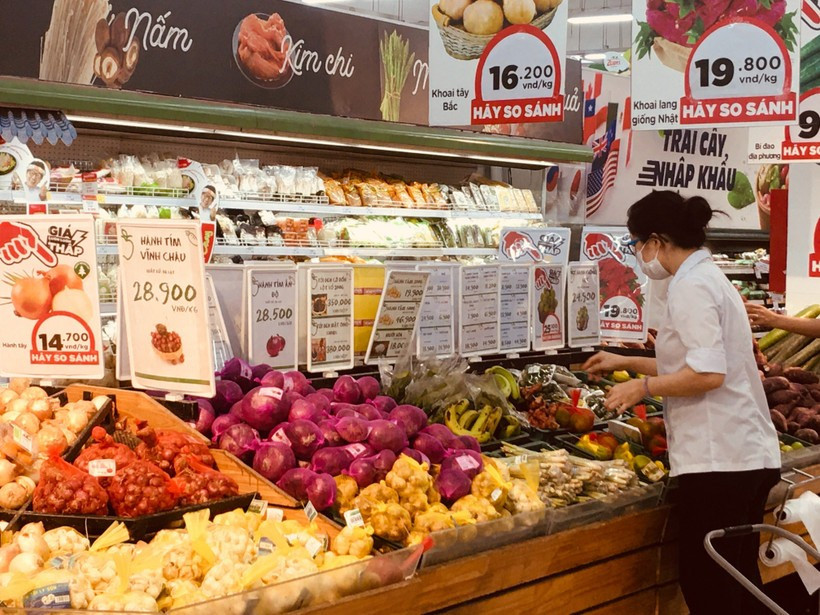
Total revenue from retail sales of goods and consumer services during the January–June period rose by 9.3% year-on-year. Notably, the actual increase still reached 7.2% when excluding the price factor.
“While this growth rate remains below the double-digit levels seen prior to the COVID-19 pandemic, it reflects a positive outcome amid weakened global demand and lingering inflation risks worldwide,” she said, adding that it also underscores the vital role of the domestic market in supporting economic resilience.
According to Oanh, two key trends have emerged in consumption patterns: a shift in consumer spending behavior and a surge in service consumption.

Retail sales of goods—which account for 76.5% of total revenue—grew by 7.9%, indicating that consumers are becoming more cautious with non-essential purchases and increasingly prioritising basic needs.
She noted that in contrast to the belt-tightening on goods, spending on experiences and services has soared, becoming a primary growth driver. Public and Tet (Lunar New Year) holidays saw a vibrant tourism rebound, supported by both domestic demand and a strong recovery in international travel. Vietnam welcomed 10.7 million international visitors in the first six months of this year, up 20.7% from the same period in 2024.
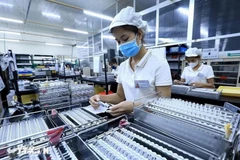
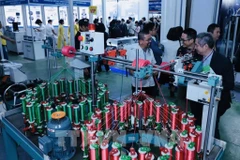
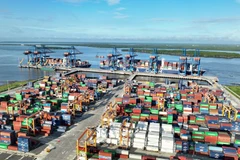
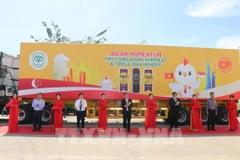
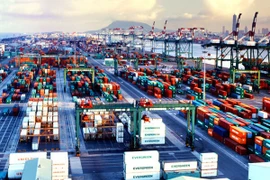
Oanh emphasised that exports were a key growth engine in the first half. The country’s merchandise export turnover reached 219.8 billion USD, up 14.4% year-on-year. More significantly, Vietnam maintained a trade surplus of 7.63 billion USD, contributing to stabilising the overall balance of payments, strengthening foreign exchange reserves, and easing pressure on the exchange rate—all of which indirectly support inflation control.
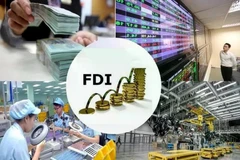
The foreign direct investment (FDI) sector also played a pivotal role, with major global corporations continuing to expand operations and boost exports. Additionally, Vietnam is benefiting from new-generation free trade agreements (FTAs) such as the Comprehensive and Progressive Agreement for Trans-Pacific Partnership (CPTPP), and the Regional Comprehensive Economic Partnership (RCEP).
Despite strong trade performance, Oanh warned that global trade is becoming increasingly complex. The recently signed tariff agreement with the US is a positive sign but also raises the risk of trade defence investigations. To ensure sustainable import–export growth, it is necessary to restructure the country’s trade strategy to be more proactive and adaptable, she stated.
She said that the NSO proposed several measures, including proactively securing supply sources and increasing added value. Transparency in supply chains and strict origin controls are crucial to mitigating the risks of trade fraud.
Exporters are urged to diversify markets and reduce dependence on a few partners, fully leverage FTAs, and explore potential new destinations such as India, the Middle East, South Asia, Eastern Europe, and Africa.
The NSO also highlighted the need to boost trade defence capabilities. This includes strengthening bilateral dialogues with key partners such as the US, EU, and China, improving businesses’ legal literacy, and guiding them in working with international legal teams to prepare documentation for potential trade disputes.
Macroeconomic policies, inflation control
To maintain competitiveness, Oanh stressed that macroeconomic policies, particularly exchange rate and interest rate management, must remain flexible and stable to foster a favourable business climate for exporters.
Regarding the National Assembly’s inflation control target - a key issue closely monitored by the Government and regulatory agencies, she noted that inflationary pressure in the second half stems from both external and internal sources.
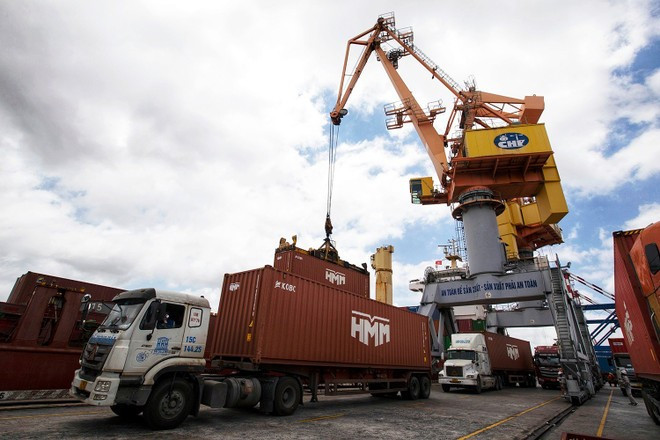
Externally, global commodity prices remain unpredictable. Although inflation has cooled since the 2022-2023 peaks, the threat of a resurgence persists. Rising shipping costs due to geopolitical tensions and climate-related threats to food supply add to the uncertainty. Meanwhile, reshoring trends and protectionist policies are driving up global production costs.
Domestically, Vietnam’s high level of economic openness means it relies heavily on imported raw materials, energy, and inputs. As such, any global price fluctuations quickly affect production costs and, in turn, domestic consumer prices. Additionally, the strong US dollar continues to inflate import costs and exert pressure on domestic price levels.
To proactively manage inflation and fulfill the target set by the National Assembly, the NSO suggested a range of coordinated measures, including strengthening price monitoring and scenario planning. Authorities should closely track global price and inflation trends, particularly for strategic commodities, to issue timely warnings and prepare flexible price regulation scenarios, Oanh said.
She further stated that it is necessary to ensuring the steady supply and smooth circulation of goods as it is fundamental for price stabilisation. Plans must be in place to guarantee adequate supplies of key commodities, particularly fuel, electricity, food, and construction materials, to avoid local shortages or disruption in goods circulation.
Oanh stressed the significance of tightening control over prices of state-regulated items. Ministries and local authorities should monitor essential goods such as pork, fuel, and gas, and prepare reserves ahead of year-end holidays to prevent price surges. Inspections and enforcement must be strengthened to deter hoarding, speculation, and unreasonable price hikes, while ensuring transparency in public service pricing.
She also underscored the need for the State Bank of Vietnam to manage interest and exchange rates in a coordinated and flexible manner to meet inflation targets while supporting business operations and promoting growth.
Finally, timely and transparent dissemination of government price management decisions is vital to foster public confidence, maintain social consensus, and stabilise inflation expectations, thereby avoiding overreactions that could destabilise markets./.