Solutions sought to lure international film producers to Vietnam

Experts from France, Australia and Singapore noted that Vietnam lacks a formal policy framework for filmmakers and recommended establishing a centralised film commission — a model widely adopted in other markets for feature film, television and commercial production.

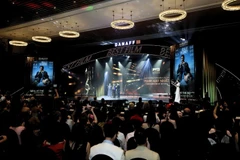
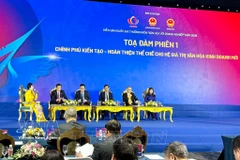
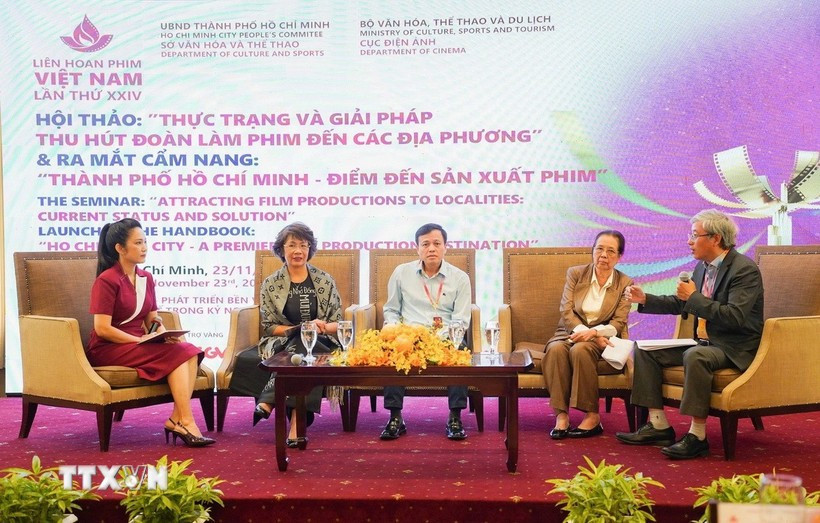
Speakers and experts share their views at the seminar in Ho Chi Minh City. (Photo: VNA)

HCM City (VNA) – Solutions to attract film producers to localities were the focus of a seminar jointly organised on November 23 by the Cinema Department under the Ministry of Culture, Sports and Tourism, the Department of Culture and Sports of Ho Chi Minh City, and the Ho Chi Minh City Institute for Development Studies.

The event was part of the 24th Vietnam Film Festival, which is being held in Ho Chi Minh City.

Speakers and industry experts discussed international experience in developing film-friendly environments, support policies for production crews, regional coordination and cross-border partnerships in the film industry.

Nguyen Thi Thu Phuong, Director of the Vietnam Institute of Culture, Arts, Sports and Tourism, said Vietnam must quickly address bottlenecks in regulatory procedures, incentives and taxation to draw international producers. She added that linking cinema with tourism and other art forms would broaden the industry’s reach.

For HCM City specifically, Phuong suggested adopting a model similar to Hanoi, which has issued a dedicated resolution for the film sector to create an open investment environment, nurture creative talents and build a one-stop film production centre.

Phan Thanh Hai, Director of the Department of Culture and Sports of Hue city, said the city has streamlined support procedures for film crews, usually completing administrative steps within one to two days. Authorities assist with location scouting, security at heritage sites and local publicity to promote shoots and destinations.

Experts from France, Australia and Singapore noted that Vietnam lacks a formal policy framework for filmmakers and recommended establishing a centralised film commission — a model widely adopted in other markets for feature film, television and commercial production.

Singapore-based producer Andy Ho of Rice Content and Media said Vietnam holds strong advantages in terms of landscape, cost and culture, but standardised services remain a key concern for international producers. A transparent, unified system for information, permitting and production services would make the market more competitive for major commercial projects, he stated.

Australian director Paul Brenner said local production capacity needs to be stepped up, as international crews often hesitate due to limited technical personnel, specialised equipment and on-set coordination standards. He further added that investment in training, technical and logistical ecosystems, and professionalised workflows would help Vietnam compete with regional production hubs.

The seminar also saw the launch of the “Ho Chi Minh City – A Premier Film Production Destination” handbook — the city’s first major initiative since being recognised as a UNESCO Creative City of Cinema. The 64-page, full-colour English-language guide was produced with technical support from the French Embassy in Vietnam and international film experts. It provides information on locations, services, infrastructure, support processes, contact networks and available resources for production in the city.

Vice Chairwoman of the municipal People’s Committee Tran Thi Dieu Thuy said the handbook not only offers practical value for film crews but also marks the city’s first step towards building a dynamic, efficient regional production hub.

Paul Abela, Audiovisual Attaché at the French Embassy, said the handbook will give filmmakers clearer insights into producing films in Vietnam. He highlighted the long-standing cinema ties between France and Vietnam and noted that France’s extensive industry experience and festival network shaped its contribution to the guide’s development./.


VNA

See more

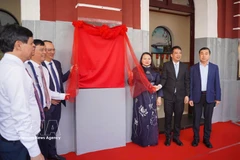
Delegates cut the ribbon to launch the 46th Spring Flower Festival at Tao Dan Park. (Photo: VNA)

Festive activities herald Lunar New Year of the Horse

A vibrant array of cultural and media events has been launched across Vietnam to welcome the Lunar New Year of the Horse 2026, highlighting both the country’s enduring traditions and its dynamic socio-economic progress.

A calligraphy booth at the festival (Photo: VNA)

Spring Calligraphy Festival 2026 opens in Hanoi

A central attraction remains the traditional New Year calligraphy request activity, featuring 35 booths staffed by calligraphers selected through a rigorous, transparent evaluation process.

A ritual to welcome new year of Muong people in Phu Tho (Photo: nhandan.vn)

Unique Lunar New Year traditions on display

Each ethnic group brings its own unique Tet customs to the Vietnam National Village for Ethnic Culture and Tourism on the outskirts of Hanoi, creating a rich and colourful cultural mosaic.

Polish Ambassador to Vietnam Joanna Skoczek (R) attends a cultural event in Vietnam (Photo: VNA)

Cultural, people-to-people interactions anchor Vietnam–Poland relations: diplomat

Skoczek also pointed to striking similarities between Vietnam’s Tet and Poland’s Christmas Eve traditions, particularly the emphasis on family reunions, symbolic meals and shared rituals passed down through generations. Despite differences in customs and cuisine, she said the essence of the celebrations remains universal: bringing loved ones together to welcome a new start.

A Tet flower street is held for the first time at the Thang Long Imperial Citadel during the Lunar New Year 2026. (Photo: VNA)

Tet flower street held for first time at Thang Long Imperial Citadel

More than a seasonal attraction, the flower street also functions as a formal cultural venue for receiving ambassadors, their spouses and representatives of diplomatic missions attending the Vietnam Discovery Day 2026 programme. Its linkage with an external event further reinforces the Thang Long Imperial Citadel’s position as a key platform for introducing Vietnam’s cultural identity to international friends.

The recreation of Tien lich (calendar presentation ceremony), an important year-end ritual in which the royal court presented the new calendar for the coming year to the king, within a programme at the Thang Long Imperial Citadel in Hanoi on February 10. (Photo: VNA)

Hanoi recreates Lunar New Year court ritual at Thang Long Imperial Citadel

Organised by the municipal People’s Committee in coordination with the Vietnam National Commission for UNESCO, the programme recreated a range of ceremonial practices once performed in the royal court. These included the Tien lich ritual, in which calendars were formally distributed to the court and the public; the Thuong tieu ceremony featuring the ceremonial New Year pole erected to ward off evil spirits and welcome spring; the ritual release of carp to send the Kitchen Gods to heaven; and the solemn changing-of-the-guard ceremony inside the imperial citadel. Together, the activities helped audiences better understand the cultural, spiritual and ceremonial order of Vietnam’s feudal past.

Illustrative image (Photo: VNA)

Fireworks, festive events usher in Year of the Horse across Vietnam

Local residents and visitors can enjoy spectacular fireworks displays at locations like the Hanoi Post Office in Hoan Kiem ward; Coconut island in Thong Nhat park, Hai Ba Trung ward; the F1 racetrack area in Tu Liem ward; Lac Long Quan flower garden in Tay Ho ward; Van Quan lake in Ha Dong ward; and the Son Tay Ancient Citadel in Son Tay ward.

People visit the Spring Fair 2026. (Photo: VNA)

Spring Fair 2026: Celebration of Vietnamese Tet flavours, cultural memory

Food has long occupied a central place in Vietnamese Tet culture, symbolising abundance, harmony and gratitude. At the Spring Fair 2026, traditional Tet delicacies are presented in a modern setting while retaining their familiar essence, allowing visitors to experience both nostalgia and renewal.

(Photo: baoquocte.vn)

Spring Fair 2026 features imperial spring colours, heritage imprints

Beyond cultural impressions, the fair created tangible opportunities for Hue enterprises and artisans to promote brands, connect partners and expand markets, laying foundations for deeper participation in value chains and long-term sustainable development aligned with Hue’s green growth and international integration strategy toward 2030, with a vision to 2045.

The horse-themed stamp set and commemorative coin. (Photo: VNA)

Stamp set, coin issued to mark Year of the Horse

In traditional beliefs, the horse is a sacred animal symbolising loyalty, vigour, patience and perseverance, and is also believed to bring good fortune and prosperity. Drawing on this symbolism, the stamp set is presented in a contemporary folk-art style and, for the first time, features the image of the “Nine Red-Maned Horse” on Vietnam’s Tet stamps.