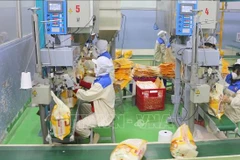
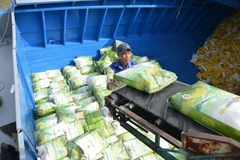
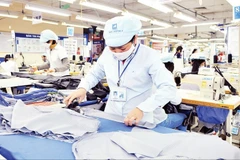
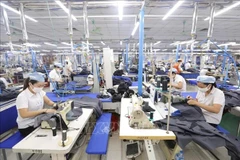
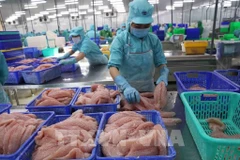
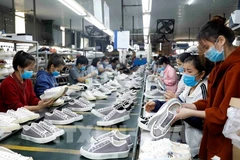
Domestic consumption stimulation programmes have created conditions for production and business activities to bounce back. (Photo: VietnamPlus)
Hanoi (VNA) - With purchasing power gradually recovering and new policies geared towards stimulating consumption, the domestic market is expected to serve as a driver for economic growth in the remaining months of 2023.
Growth momentum regained
The Ministry of Industry and Trade reported that total retail sales of consumer goods and services rose 7.1% in July and 10.4% during the first seven months of 2023 compared to the same periods last year.
Many localities recorded high increases such as Quang Ninh 12%, Hai Phong 10.5%, Binh Duong 9.7%, Can Tho 8.6%, Dong Nai 8.3%, Da Nang 6.5%, Hanoi 5.9%, and Ho Chi Minh City 3.8%.
Economist Nguyen Trong Thinh said foreign trade has declined since the fourth quarter of 2022. During January - July, exports fell 10.6% while imports down 17.1% from a year earlier.
Imports and exports form a very strong impetus for economic growth and development. Given this, bolstering foreign trade is a highly critical task from now to the year’s end, he noted.
Meanwhile, the slowdown in foreign trade has led to an increase in unsold inventory, forcing businesses to scale down production. Therefore, it is necessary to grasp domestic consumption trends to promote manufacturing and other economic activities in efforts to achieve a high growth rate, he pointed out.
Thinh said total retail sales of consumer goods and services in July went up in comparision to June, an encouraging sign that will fuel production and business activities and subsequently contribute to economic growth.
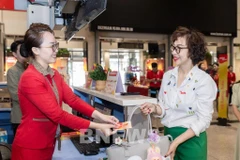
 Businesses have actively taken part in market stabilisation programmes. (Photo: VietnamPlus)
Curbing price hikes
To stimulate domestic consumption to help with economic recovery and development, the Government has launched policies to foster production, business, and consumption.
Notably, the 2% cut in value added tax (VAT) from July 1, 2023, has substantially helped stabilise prices of many goods.
Thinh said that this policy has helped businesses bring down input costs so as to lower goods prices and step up promotional activities to boost sales.
The base salary hike from July 1 is also an encouragement for consumption. In addition, the reduction, exemption and payment deadline extension for many charges, fees, and taxes have also helped decrease expenses for companies.
An array of programmes supporting product advertising and connectivity have also been carried out to assist businesses to minimise expenses and subsequently selling prices, the expert went on.
All of these solutions are meant to aid production and business activities as well as goods circulation to promote domestic consumption in order to aid economic growth in the remaining months, he added.
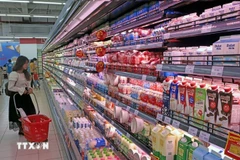
 Prices of many essential goods have been stabilised, thus spurring purchasing power. (Photo: VietnamPlus)
Echoing the view, some other experts said Vietnam’s export revenue dropped during the first seven months of 2023 due to wearker demand for non-essential products caused by surging inflation in many countries.
Therefore, they said, to ease external impacts, apart from fostering export under free trade agreements, another useful measure is to stimulate domestic consumption. Particularly, if businesses manage to capitalise on the domestic market, which has 100 million people with rising income, they will be able to weather the global market’s volatility.
Thinh recommended that to make stronger improvements, a long-term policy should be issued to help enterprises further cut down production and business expenses, including circulation expenses at supermarkets and shopping centres, to keep slashing selling prices and encourage consumption.
More measures should also be taken to better connect manufacturers with consumers to lower storage costs and other costs. Programmes also need to be held continuously to encourage Vietnamese to prioritise locally made goods, according to the economist./.