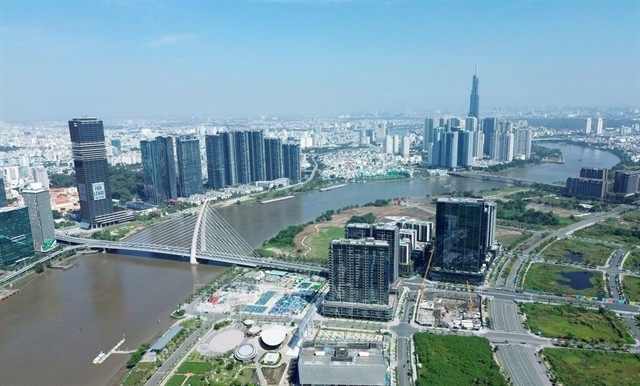
HCM City (VNS/VNA) - The merger of Ho Chi Minh City with the neighbouring provinces of Binh Duong and Ba Ria-Vung Tau marks not just an expansion of administrative management, but a historic turning point in Vietnam’s urban development.
This bold move is paving the way for the creation of a multi-centred “mega-city”, built upon a modern, compatible infrastructure network that aims to reduce the current pressure on the overloaded inner-city districts and reshape the region's socio-economic landscape.
The new administrative structure took effect July 1, bringing HCM City, Binh Duong and Ba Ria-Vung Tau under a unified metropolitan governance.
This restructuring opens a historic opportunity for long-term spatial planning, redefining not only boundaries but also the growth model of the largest southern economic hub.
According to urban experts and planners, the enlarged HCM City must operate with a bold vision and identify key growth drivers that go beyond the limitations of provincial divisions.
Architect Ngo Viet Nam Son said that this would be a rare chance to rethink the entire planning mindset, no longer restricted by fragmented local interests but instead aiming for a coherent regional strategy.
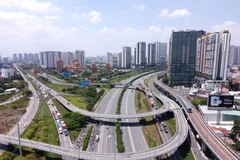
For years, the city has faced challenges from rapid urbanisation, especially in its inner districts where population density is extremely high.
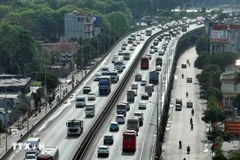
With limited land availability and consistently overloaded traffic, the need to expand and restructure the urban space has become urgent.
The mega-city model offers a new urban structure where the core no longer bears all the pressure.
Experts advocate for building a "multi-centre" urban city instead of the conventional "single-centre" model, where public services, transport and economic activity are concentrated in the city centre.
Under this strategy, satellite urban centres in the east, west, south and north would be developed, ensuring that every resident has access to essential services — schools, hospitals, green parks, sports and cultural facilities — within a 15-minute walk or cycling.
This approach not only relieves central congestion, but also promotes environmental sustainability and equal quality of life across the entire metropolitan area.
Truong Minh Huy Vu, PhD, director of the city’s Institute for Development Studies, said that planning for the future must begin with a clear understanding of the present.
"We must measure our current position using concrete indicators, benchmarking ourselves not only against other cities but also against international urban standards," he said.
The challenges are significant: unlocking potential without waste, concentrating resources in strategic areas, and preventing fragmented or unfocused investments.
Towards a sustainable mega-city
Architect Ngo Viet Nam Son stressed the importance of using smart technology and digital governance as the operational backbone of the newly merged city.
Although HCM City and the two merging provinces have already deployed some information technology solutions, their effectiveness still lags far behind that of advanced cities worldwide, according to Son.
Equally crucial is public-private collaboration. Take, for example, the Transit-Oriented Development (TOD) model: while urban planning authorities can prepare the zoning and infrastructure, private investors can build and operate the facilities.
Citizens also play a part — by choosing to use public transport more often, the pressure on the State to subsidise these services is reduced.
Such models can only succeed when private gains are aligned with public interests.
Vietnam’s mega-city project must also be grounded in pragmatic planning. According to experts, no strategy should be implemented without a corresponding funding plan, feasible timelines, and realistic mechanisms to handle delays or cost overruns.
“Planning should not stop at drawings and visions — it must involve implementation strategies, financing models, and operational readiness,” Sơn said.
An integrated transport system remains at the heart of the development strategy. Public transport, particularly urban rail, will play a pivotal role. High-capacity, high-speed transit modes such as MRT (Mass Rapid Transit) and suburban railway lines will form the backbone of connectivity across the city-region.
Nguyen Trong Hoai, editor-in-chief of the Asian Journal of Economic and Business Research, said that for the mega-city to reach global standards, it must strengthen its service economy.
“Services create high added value and attract international capital, which will help boost GRDP levels,” he said.
With the combined potential of HCM City, Binh Duong and Ba Ria-Vung Tau, future strategies must embrace digitalisation, green growth, and maritime-oriented development — all of which should be embedded into the new city’s action plans.
Balancing growth with heritage
Urban growth, however, should not come at the expense of cultural identity. Architect Sơn underscored the need to preserve the city’s urban heritage, which spans over 300 years.
The new city must integrate modernity with tradition, ensuring that future generations inherit a vibrant but culturally rooted urban space.
The mega-city’s development must also be placed within the context of global integration — learning from international experiences not only in planning and architecture, but also in mobilising investment capital.
With strong regional links, international partnerships and clear, inclusive governance, the new HCM City has the potential to become a driving force for Việt Nam’s economic growth and global competitiveness.
Creating a mega-city of this scale requires massive resources and strategic allocation.
Initial projections suggest that the first phase of infrastructure upgrading across the unified area could cost over 150 trillion VND (5.9 billion USD), with priority given to transport systems, water supply networks, and urban public services.
Experts say that resource mobilisation must be done with precision, ensuring transparency, accountability, and public participation.
In addition, population redistribution will play a critical role. According to a recent report by the city Department of Planning and Architecture, more than 35 per cent of the city’s current inner-city residents are willing to relocate to suburban or satellite areas — provided that infrastructure and services meet minimum quality standards.
This opens the door for new urban zones to be developed in Binh Duong and Ba Ria-Vung Tau, where land availability and planning flexibility are greater.
However, these areas will require robust investment in public transport, healthcare, education, and housing to truly absorb population inflows and ease pressure on the current urban core.
The formation of a mega-city is an ambitious but necessary step in Vietnam’s urban development evolution.
If implemented wisely, it can become a model of smart, green, inclusive development — offering its 20 million future residents a better quality of life, while serving as a regional growth engine for decades to come.
The road ahead is challenging, but the foundation has been laid. What matters now is vision, leadership, and the collective will to build a future where no part of the city is left behind./.
VNA