Thailand stabilises retail petrol, diesel prices

Minister of Energy and Chairman of the Fuel Fund Management Committee (FFMC) Atthapol Rerkpiboon announced the decision after chairing an FFMC meeting the same day. The meeting was convened to discuss solutions to address the potential impact of the US-Iran crisis on domestic fuel prices.

Bangkok (VNA) – The Thai Ministry of Energy decided on February 23 to implement measures to stabilise retail diesel and petrol prices, thereby minimising the impact on the cost of living amid the risk of escalating tensions between the US and Iran.

Minister of Energy and Chairman of the Fuel Fund Management Committee (FFMC) Atthapol Rerkpiboon announced the decision after chairing an FFMC meeting the same day. The meeting was convened to discuss solutions to address the potential impact of the US-Iran crisis on domestic fuel prices.

The FFMC approved a resolution to increase the fuel fund subsidy for diesel by 0.44 THB per litre (about 0.014 USD per litre), while reducing the surcharge on petrol by 0.30–0.80 THB per litre. As a result, retail prices for diesel and petrol at filling stations will remain unchanged for the time being.

Minister Atthapol also instructed the Fuel Fund Office (FFO) to closely monitor developments in the global energy market, promptly assess potential impacts on domestic retail fuel prices, and propose appropriate measures.

As of February 22, the Fuel Fund recorded a positive balance of 2,385 million THB (76.91 million USD). Of that amount, the petroleum account posted a surplus of 40.374 million THB, while the LPG account recorded a deficit of 37.989 million THB./.

VNA

See more

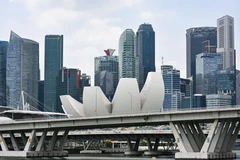
The Singapore Maritime Technology & Research Roadmap is aimed at advancing the sector’s efficiency and sustainability. (Photo: businesstimes.com.sg)

Singapore unveils new roadmap to boost innovation in maritime sector

The Singapore Maritime Technology & Research Roadmap is aimed at advancing the sector’s efficiency and sustainability. It highlights priorities – including digital technologies, decarbonisation and operational integration – to boost resilience, productivity and innovation in Singapore’s maritime ecosystem. It also addresses structural issues such as manpower, land and sea space limitations.

Malaysia considers establishing strategic petroleum reserve

Malaysia considers establishing strategic petroleum reserve

Malaysia, which was previously a net exporter, has now become a net importer due to declining domestic production and rising consumption, with demand estimated at around 800,000 barrels per day compared to production of about 400,000 barrels per day.

Indonesia to halt diesel imports from July

Indonesia to halt diesel imports from July

The move is part of the Indonesian Government’s efforts to strengthen national energy independence by utilising palm oil as an alternative fuel, said Agriculture Minister Andi Amran Sulaiman.

Malaysia’s growing microplastics crisis is largely self-inflicted, driven by domestic waste, weak recycling practices and everyday plastic use, said experts. (Photo: New Straits Times)

Malaysia seeks solutions to microplastic crisis

Microplastics originating from domestic waste and wastewater are increasingly entering the food chain, posing serious threats to seafood safety and the livelihoods of coastal communities.

The new mass emergency alert system SG Alert, which will be used during emergencies such as major fires, chemical or terror incidents, seen on an Apple and Android device on Apr 17, 2026. (Photo: CNA)

Singapore launches new national emergency alert system

SG Alert in Singapore uses cell broadcast technology, enabling alerts to be delivered within seconds without requiring mobile data or collecting personal information. Unlike conventional SMS, which may be delayed during network congestion or depend on internet connectivity, the system ensures fast and reliable message delivery. Alerts can be sent islandwide or targeted to specific affected areas.