Hanoi (VNA) - With its deep focus on character psychology, “Dia dao” (The Tunnel) successfully portrays the survival struggle of patriotic civilians, rather than merely depicting soldiers fighting for victory.
According to Dr. Mai Anh Tuan from Hanoi University of Culture, The Tunnel: Sunlight in Darkness demonstrates a remarkable advancement over many earlier Vietnamese war films.
Through its vivid portrayal of the brutality of war — illustrated by American firepower, its depiction of Vietnamese soldiers as ordinary people rather than heroes, and a more open narrative style — director Bui Thac Chuyen has answered the audience’s long-standing expectation for a truly worthy war film.
- As someone who has closely followed Vietnamese cinema, how would you assess the similarities and differences (in terms of story, narrative, message...) between The Tunnel and earlier Vietnamese war films?
Dr. Mai Anh Tuan: The Tunnel has, to some extent, relieved the frustration and bias audiences often feel toward Vietnamese war films.
Previously, due to various reasons — particularly technical and technological limitations — very few Vietnamese war films were truly "grand" enough to impress audiences with intense, large-scale battle scenes. Even important historical battles were often portrayed through a few modest scenes of explosions and gunfire, which left audiences feeling unconvinced.
With The Tunnel, viewers witness sweeping raids, a diverse range of enemy weaponry, and continuous, realistic scenes of firefights and explosions. The film crew made meticulous efforts to enhance the visual and audio elements of the battles.

This shows that it’s not that Vietnam cannot produce compelling war films — rather, it requires passionate directors who understand the genre deeply, as well as major investment in technology and financing.
- Compared with war-themed films produced by Vietnamese filmmakers in the past 10–15 years, how does The Tunnel stand apart?
Dr. Mai Anh Tuan: Compared to films like Living with History (2014), The Returnee (2015), The Scent of Burnt Grass (2011), Red Dawn (2022), and Peach Blossoms, Pho and Piano (2024), The Tunnel clearly excels in its technical craftsmanship.
Moreover, the film offers a distinctive portrayal of soldiers. The guerrilla fighters are not overly glorified; they endure harsh conditions, sing, joke, tease each other, and share moments of love and intimacy. Even their sacrifices are portrayed with pain and raw humanity, rather than being romanticized.
The Tunnel sees soldiers not as epic heroes but as individuals caught in an everyday, relentless struggle for survival. For them, the tunnels of Binh An Dong represent a battleground for existence before any thought of victory.
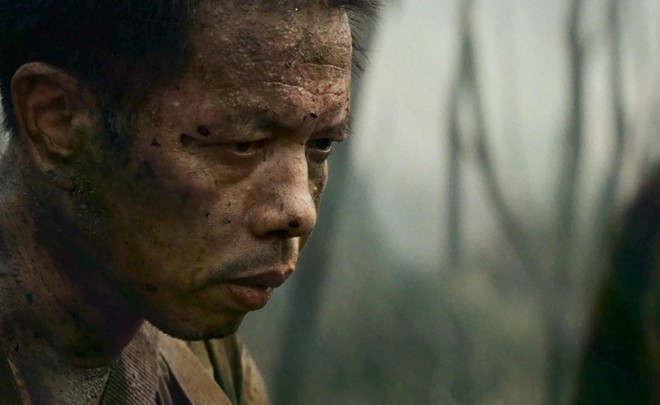
- Audience reactions after the film’s release show mixed feelings, particularly about the inclusion of explicit scenes. While some praised the director’s intent, others found these scenes unnecessary or even offensive. How would you explain this reaction?
Dr. Mai Anh Tuan: In earlier revolutionary cinema, "intimate scenes" were non-existent. Even recent Vietnamese war films only hinted at love and relationships, rarely venturing into actual explicitness like The Tunnel does.
However, what matters is not whether the film includes "hot scenes," but whether those scenes are effective and fit the storyline.
In The Tunnel, the scene where the innocent Ut Kho is assaulted by a comrade — leading to a pregnancy with an unknown father — is heartbreaking and impactful. It reveals how war erases clear moral boundaries, leaving only the stark, painful reality of victims like Ut Kho.
As for the love scene between Tu Dap and Ba Huong, it felt less emotionally charged for me. Though it aligns with the progression of their relationship, showing them making love amid a bomb raid in a trembling bunker felt somewhat excessive.
The scene portrays the guerrillas' fierce will to live and their defiance in the face of death — but I would have preferred a subtler approach rather than such graphic depiction.
- In fact, sensitive topics like this have appeared in films before but were usually addressed indirectly. For example, “Nga ba Dong Loc” (The Girls at Dong Loc Junction) by Luu Trong Ninh included a subplot about a young female volunteer being disciplined for getting pregnant. Does “The Tunnel” represent a rare case of addressing such issues more openly?
Dr. Mai Anh Tuan: Yes, “Nga ba Dong Loc” (1997) already portrayed soldiers with human flaws, without turning them into mythic heroes. Director Luu Trong Ninh did not seek to sanctify them.
The Tunnel continues in that spirit, portraying guerrillas under relentless pressure, where death and loss are daily realities. The film treats love and sexuality as normal parts of human existence during wartime, rather than taboo topics.
In doing so, The Tunnel opens up a broader, more diverse narrative space for Vietnamese war cinema. In reality, international war films have long embraced such complexity. Only by doing so can we capture the full humanity of soldiers — individuals with intricate, conflicted inner worlds — and portray the true nature of war more vividly.
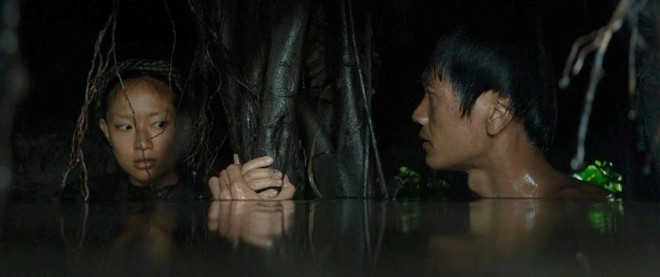
- The film’s ending also sparked debate, particularly concerning Ba Huong’s decision. Do you think the film sufficiently developed this aspect?
Dr. Mai Anh Tuan: I believe the ending is a refined and creative choice by director Bui Thac Chuyen. It avoids presenting a clear-cut victory. Instead, we see Tu Dap and Ba Huong surviving after a brutal assault by enemy forces, exhausted and battered.
The film ends at a historical moment when the southern resistance against American forces was still extremely fierce and uncertain.
Vietnamese audiences often expect war films to conclude with clear victories, but The Tunnel reminds us that real triumphs are never simple and always come with immense pain and sacrifice.
By choosing an open ending, with Tu Dap and Ba Huong surviving, the film suggests that the spirit of the tunnels lives on, and that the guerrilla fighters — even after massive losses — never laid down their arms until peace was achieved.
Ba Huong’s decision to spare the wounded American soldier reinforces this message. Having witnessed firsthand the extraordinary resilience of the Vietnamese fighters, the American's death would have served no purpose.
By leaving his fate open, the film highlights the essence of the guerrillas: they did not fight for the sake of killing, but for the right to survive.
- Thank you very much!