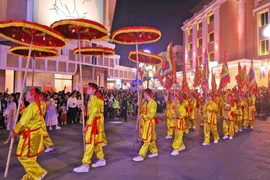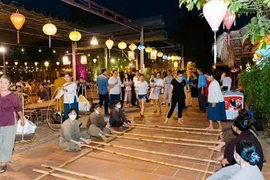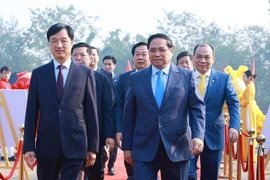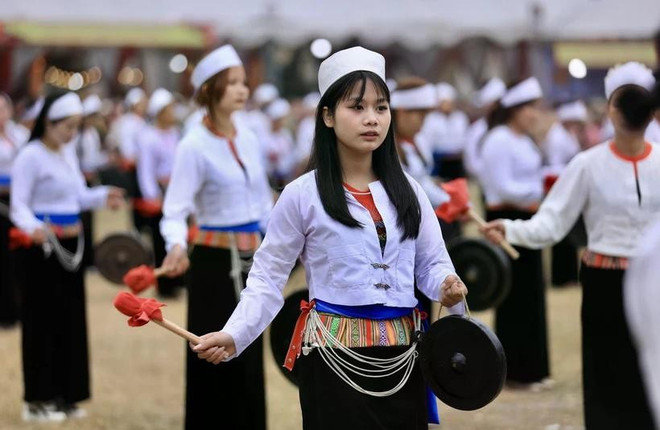
This year, in line with Party guidelines and State laws, localities across the country have organized post-Tet and Spring festivals with many positive changes -promoting civilized practices while preserving traditional culture and the fine customs of the people.
This is seen as a promising sign, as festivals are a key component of cultural tourism - one of the 12 cultural industries that Vietnam is focusing on developing.
On this occasion, Associate Professor Dr. Duong Van Sau from Hanoi University of Culture shared with VietnamPlus his insights on the potential to develop cultural industries through festivals.
“Modern-day equation” for festival development
Reporter: Dear Professor! According to the Ministry of Culture, Sports and Tourism, Vietnam has nearly 8,000 festivals nationwide. Is this a major opportunity for developing cultural tourism, one of the country’s 12 cultural industries?
Assoc. Prof. Dr. Duong Van Sau: First, we need to understand what a festival is. It is a form of community cultural activity that takes place in a defined space and time, aiming to commemorate a historical or legendary figure or event closely tied to the local community.
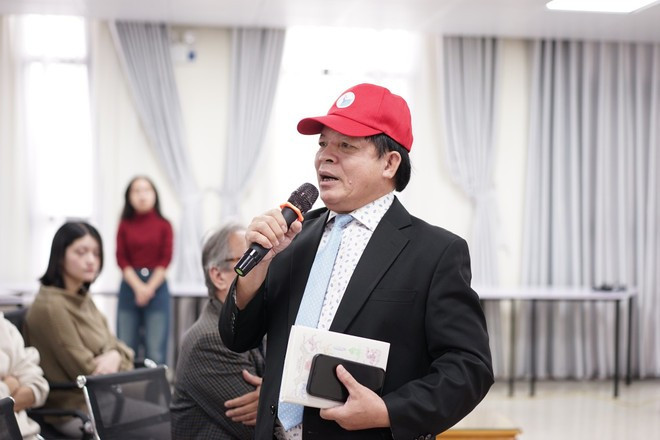
Festivals also reflect how people interact with nature and society. Vietnamese traditional festivals are rooted in village life, reflecting daily practices, agricultural production, and spiritual beliefs in harmony with the universe.
Today, festivals are no longer confined to local communities - they attract tourists from across the country and even internationally. Festival tourism has become a prominent form of heritage and cultural tourism in Vietnam.
Reporter: Given the growing number of attendees, some traditional rituals are now seen as inappropriate or violent, such as buffalo stabbing or pig slaughtering. What is your view on this?
Assoc. Prof. Dr. Duong Van Sau: Traditional festivals reflect the unique cultural identity of each locality. However, as society becomes more open and connected, these festivals are increasingly seen on regional, national, and even global stages. Social change has led to new forms of communication and interaction, prompting reevaluation of certain customs.
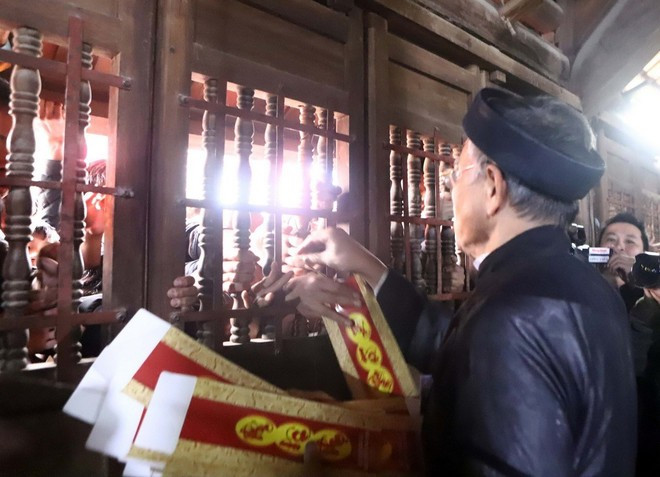
Some once-sacred rites, specific to local festivals, may now appear violent or offensive to a broader audience. Therefore, it’s necessary to study each case carefully, and make appropriate adjustments to preserve heritage while ensuring the festivals remain civilised and respectful.
For example, secret rituals should be kept sacred and performed privately by the local community. In public settings where tourists and outsiders are present, organizers can symbolically represent these acts - for instance, staging a dramatized performance rather than a real pig slaughter. This maintains both the cultural essence and the decorum expected in modern society.
Adding ‘values’ to festivals
Reporter: Since 2023, the Ministry of Culture, Sports and Tourism has introduced a “set of criteria for cultural environment at traditional festivals.” What solutions would you propose to effectively implement this set of criteria, and minimize low-quality services and negative practices such as rampant burning of votive paper or superstitious activities?
Assoc. Prof. Dr. Duong Van Sau: To address these issues at the root, we must first understand the essence of traditional festivals. In my view, Vietnamese traditional festivals are the result of a process I call “three transformations”: historicization, theatricalization, and socialization.
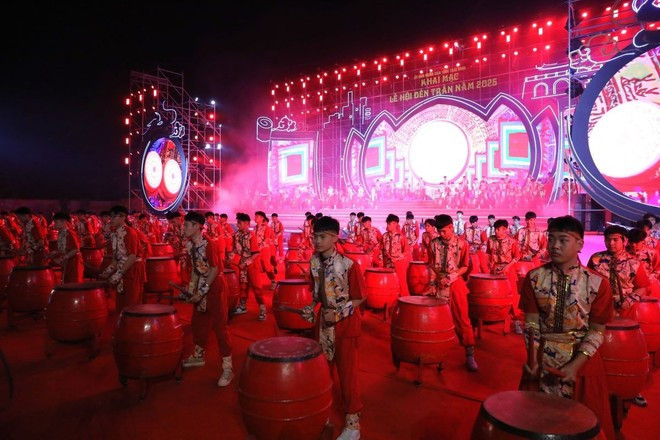
Historicization refers to how historical figures and events evolve over time and are preserved and conveyed through festival practices.
Theatricalization means that the community reenacts these historical narratives in a performative way - complete with scripts, actors, props, directors, main and supporting roles, and audiences. Culturally speaking, a traditional festival is essentially a community-staged “play” that reflects history and showcases local values.
Socialization emphasizes that organizing festivals is both a right and a duty shared by the community. Festivals are by the people, for the people, and should bring social value to the community.
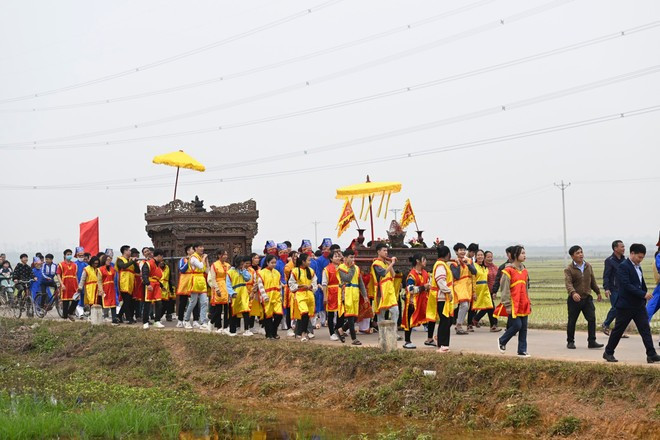
In modern times, festivals have expanded in scale and involvement, attracting businesses and organizations providing services to meet visitor demand. However, this development has also led to problems, such as low-quality services and harmful practices.
To address these challenges, we need a comprehensive, multi-pronged approach:
Infrastructure investment: Local authorities must ensure that festival venues are equipped with adequate infrastructure - especially transportation and service facilities - built in a synchronized and culturally sensitive way.
Inter-agency coordination: Cultural, tourism, public security, and environmental agencies must work closely together to manage and oversee festival activities effectively.
Education and communication: Raise public and visitor awareness about proper cultural conduct. Service providers must be informed of codes of conduct, sign official commitments with authorities, and operate under clear regulations. Regular inspections and enforcement should be intensified to prevent and correct violations.
Reporter: In your opinion, what should be done to develop the cultural industry through festivals?
Assoc. Prof. Dr. Duong Van Sau: A festival can be simply divided into two parts: “Ritual” and “festive activities”. The “ritual” component reflects how people relate to the sacred, while the “festive activities” reflect how people interact with one another.
The “ritual” part creates legitimate and meaningful opportunities for individuals and organizations. To capitalize on this potential, comprehensive research on festival spaces, visitor needs, and community dynamics is essential to design policies that both preserve local cultural values and support service development.
Based on such research, authorities should evaluate the uniqueness and core values embedded in each festival; Conduct market assessments to determine demand; Assess the capacity of organizations and individuals involved in service delivery; and support infrastructure and investment for creative initiatives.
Ultimately, the goal is to develop diverse, high-quality, and culturally respectful services that meet visitor expectations - while upholding local traditions and legal standards. This will allow Vietnam’s festivals not only to honor heritage but also to become a sustainable driver of the cultural economy.
Reporter: Thank you very much!