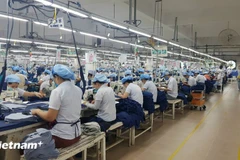
HSBC: Vietnam’s 2025 economic success, upbeat outlook for new year
The 2026 outlook stays broadly favourable, though a mix of risks and opportunities lies ahead.
The 2026 outlook stays broadly favourable, though a mix of risks and opportunities lies ahead.

The US's imposition of reciprocal tariffs, the Thailand – Cambodia border conflict, and the AI race are among the 10 prominent international events in 2025 as selected by the Vietnam News Agency.
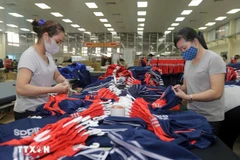
Vu Duc Giang, Chairman of the Vietnam Textile and Apparel Association (VITAS), attributed the 2-billion-USD gap to persistent global headwinds in 2025, including new US tariffs triggered by escalating US-China trade friction, subdued demand in the US and EU, and late-year typhoons that halted factories and snarled domestic logistics.

Thailand's economic growth is expected to slow to 2% next year, primarily owing to accelerated exports in 2025, a measure taken to mitigate the impact of US tariffs.
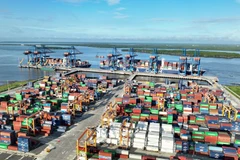
Vietnam has advanced in specialising its industry and services, particularly in higher value-added segments, but institutional reforms and productivity gains are vital to fully capitalise on the global supply chain shifts.

At the regional level, ASEAN continues to support the rule-based multilateral trading system with the WTO principles as core.
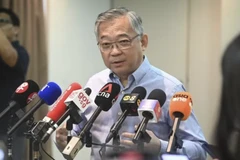
Singapore exports about 4 billion SGD (3.10 billion USD) of pharmaceutical products to the US and most of these exports are branded drugs, said Gan, who is also Minister for Trade and Industry.
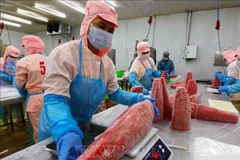
Nguyen Phuong Lam, Director of the Vietnam Chamber of Commerce and Industry’s Mekong Delta branch, noted that the tariff rate is a significant reduction from the previous 46%. He added that the gap between Vietnam and other Southeast Asian nations is now only around one percentage point.
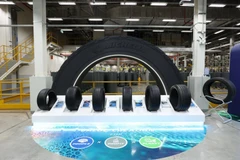
Analysis by an economist found the US tariffs may reduce Thailand's exports by 8.16 billion USD, and when factoring in the trade diversion effect, they could drop by 457 billion THB (14.14 billion USD) this year.
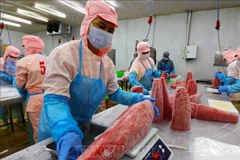
Vietnam’s total seafood exports for 2025 are forecast at 9–9.2 billion USD, slightly below the 10 billion USD target, with shrimp at 3.6–3.8 billion USD, pangasius 1.8 billion USD, tuna 850–900 million USD, and other seafood products close to 3 billion USD.
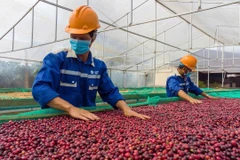
Among the seven countries surveyed by S&P Global in July, Vietnam led with a PMI of 52.4, well above the ASEAN average of 50.1. New export orders rose for the fourth straight month, reaching their fastest growth rate since November 2024.
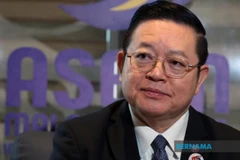
ASEAN’s stance is to continue pursuing constructive engagement and negotiation with the US, he said, adding member states could hold bilateral negotiations at the same time.
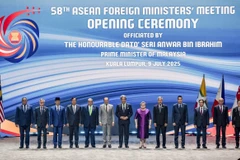
ASEAN foreign ministers are expected to express concern over the US’ unilateral tariffs in a joint communiqué of the AMM-58.
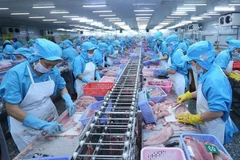
Aquatic exports last month inched up just 4% from a year earlier to 876 million USD, a steep drop from May’s 20% surge, marking the weakest monthly gain in the first half.
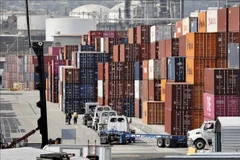
According to the earlier US tariff announcement, Cambodia encounters the highest rates of 49%, followed by Laos (48%), Vietnam (46%), Myanmar (44%), Thailand (36%), and Indonesia (32%). Meanwhile, Malaysia, Brunei, the Philippines, and Singapore face lower rates ranging from 10% to 24%.

Malaysia has expressed its readiness to negotiate in four key areas: addressing the US’s reported 24.8 billion USD trade deficit with Malaysia, removing non-tariff barriers, strengthening protections for technology and national security, and exploring the possibility of a bilateral trade agreement.
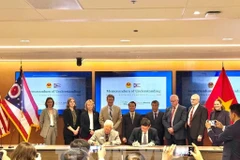
In addition, many Vietnamese firms established initial connections with Ohio partners to promote imports of raw timber, fruit, and meat products.
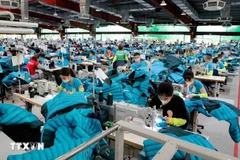
According to S&P Global, Vietnam’s Manufacturing Purchasing Managers’ Index (PMI) rose to 49.8 in May from 45.6 in April, remaining just below the 50-point threshold. The reading signals a near-return to stable operating conditions.

On the tariff issue, Secretary of the Party Central Committee and head of its Commission for Policies and Strategies Tran Luu Quang called for continued negotiations based on a cooperative spirit and understanding of each other's demands, aiming for a harmonious agreement that protects the interests of both sides and reflects the current state of bilateral ties.

Vietnam is ramping up efforts to expand market access for its agricultural, forestry, and fishery products through negotiations with potential partners, paving the way for a breakthrough in the country's agricultural products.