Vietnam manufacturing rebounds after US tariff policy impacts

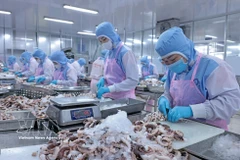
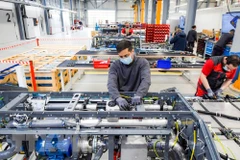
According to S&P Global, Vietnam’s Manufacturing Purchasing Managers’ Index (PMI) rose to 49.8 in May from 45.6 in April, remaining just below the 50-point threshold. The reading signals a near-return to stable operating conditions.

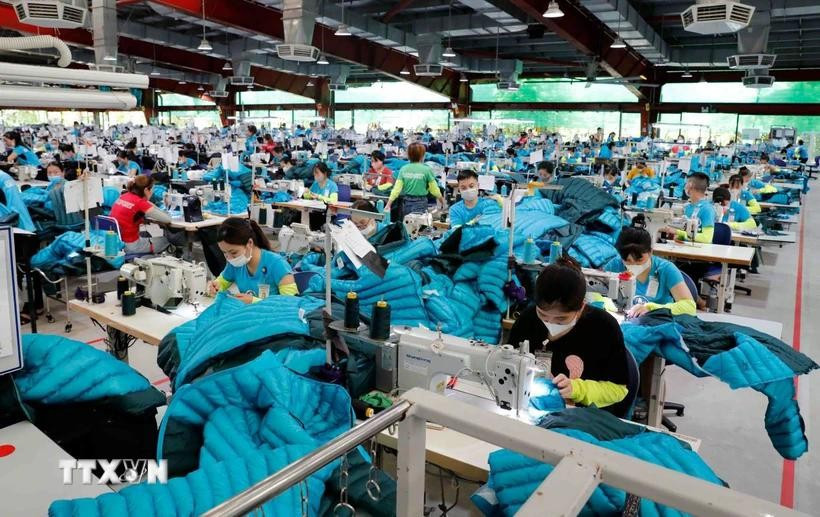
Garment production for exports to the US and the EU. (Photo: VNA)

HCM City (VNA) – Vietnam’s manufacturing sector showed signs of recovery in May, following a sharp downturn in April attributed to US tariff policies.

While new orders continued to decline, output rebounded and overall business conditions steadied, with some firms citing a more stable tariff environment.

According to S&P Global, Vietnam’s Manufacturing Purchasing Managers’ Index (PMI) rose to 49.8 in May from 45.6 in April, remaining just below the 50-point threshold. The reading signals a near-return to stable operating conditions.

Survey data showed that new orders, particularly from overseas, fell again in May amid softer market demand and ongoing tariff-related challenges. The drop in export orders was notably sharper than the overall decline in new business.

In contrast, production rose after shrinking in April, supported by improved operating capacity and a steadier outlook on tariffs.

Business sentiment also strengthened slightly, although it remained below the historical average, with some firms still cautious about potential future tariff shifts.

Efforts to boost output led to a modest increase in input buying, ending a two-month decline. However, both input and finished goods inventories fell, as firms limited stockpiling and prioritised quicker deliveries.

Weaker demand prompted some suppliers to reduce their prices, leading to the first drop in input costs since July 2023. Manufacturers continued to lower selling prices for the fifth straight month, with output charges easing slightly in May.

Andrew Harker, Economics Director at S&P Global Market Intelligence, said the news around tariffs continues to play a key part in determining trends in the Vietnamese manufacturing sector.

“May saw a more stable picture in terms of US tariff policies than April, helping lead to a renewed expansion in output and improved business confidence. That said, manufacturers remained wary of the impact of tariffs and again saw a marked reduction in new export orders which contributed to a continued decline in new business overall,” he added.

Another noteworthy aspect of the latest PMI survey was a first fall in input costs for almost two years as suppliers offered discounts in a subdued demand environment, he said: "As we approach the mid-point of the year, eyes will remain on US tariff policy to see how the Vietnamese manufacturing sector will be affected."/.

VNA

See more

Commercial banks are providing approximately 88% of total green credit outstanding in Vietnam. (Photo: nhandan.vn)

Capital sources expanded for sustainable growth

According to the State Bank of Vietnam (SBV), by the end of November 2025, outstanding green credit was estimated at around 750 trillion VND (28.55 billion USD), with an average growth rate exceeding that of overall credit in the economy.

Customers select goods at a supermarket. (Photo: VNA)

Retail market expands sharply, sustainability challenges persist

According to a report on recently released by the Ministry of Industry and Trade’s Agency for Domestic Market Surveillance and Development, the size of the market reached more than 7 quadrillion VND (about 266 billion USD) in 2025, up around 10% compared with 2024.

Oil rigs at the Bach Ho oil field. (Photo: VNA)

Resolution 79: State economy to lead growth

Resolution 79 is described as a “clear action declaration” by the Politburo, saying the state economy is not only responsible for maintaining macroeconomic stability, but must also become the force leading a new growth model that is green and sustainable.

Workers at Garment 10 Corporation produce apparel for export. (Photo: Nhan Dan)

Leveraging export advantages within RCEP region

In 2025, seafood exports to China alone exceeded 2.2 billion USD, up about 33% compared to 2024. Shipments to Japan fetched nearly 1.7 billion USD, a year-on-year increase of 14.6%, while those to the Republic of Korea and Australia grew by 9.6% and 3.2%, respectively.

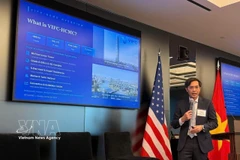
Certificates of membership in the Vietnam International Financial Centre in Da Nang are awarded at the conference on January 9. (Photo: VNA)

Da Nang continues targeted investment promotion approaches

According to Chairman of the Da Nang People’s Committee Pham Duc An, the city prioritises building sustainable economic ecosystems and focuses on key breakthrough sectors with strong spillover effects, including high technology and digital transformation, logistics, urban infrastructure, finance, processing and manufacturing industries, high-tech agriculture, and the pharmaceutical and medicinal herb industry.

In 2025, Hyundai sales reached 53,229 vehicles across the Vietnamese market. (Illustrative photo: Yonhap/VNA)

Hyundai sales in Vietnam rise almost 23% in December

In 2025, sales reached 53,229 vehicles across the market, a result considered a testament to the efforts by TC Group, Hyundai Thanh Cong, and the entire Hyundai dealership network nationwide amidst a volatile market.

Hydroponic vegetable cultivation model at the High-Tech Agricultural Park (Photo daibieunhandan.vn)

HCM City accelerates shift toward ecological urban agriculture

​The city’s agricultural sector is undergoing a strong transformation, restructuring toward higher value-added and sustainable development. In recent years, the sector has maintained steady growth, with agricultural, forestry and fisheries output rising by an estimated 2.5% annually.

Illustrative photo (Photo: VNA)

Dong Nai to launch major projects ahead of 14th National Party Congress

The launch of work on these projects represents an important political event for the province as they demonstrate the strong commitment of the entire political system to developing a comprehensive and modern infrastructure network, enhancing inter-regional connectivity, and addressing social welfare needs.

Illustrative image (Photo: VNA)

Lam Dong ready for nationwide economic census 2026

The entire process needs to reassure respondents that statistical activities operate independently, information is protected under the Statistics Law, and all data collection is completely separate from tax management.