Vietnam's export orders rebound amid reciprocal tariffs

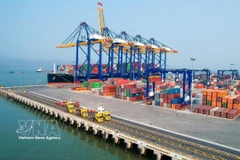
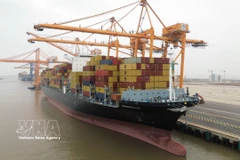
Among the seven countries surveyed by S&P Global in July, Vietnam led with a PMI of 52.4, well above the ASEAN average of 50.1. New export orders rose for the fourth straight month, reaching their fastest growth rate since November 2024.

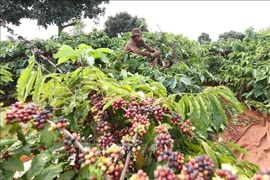
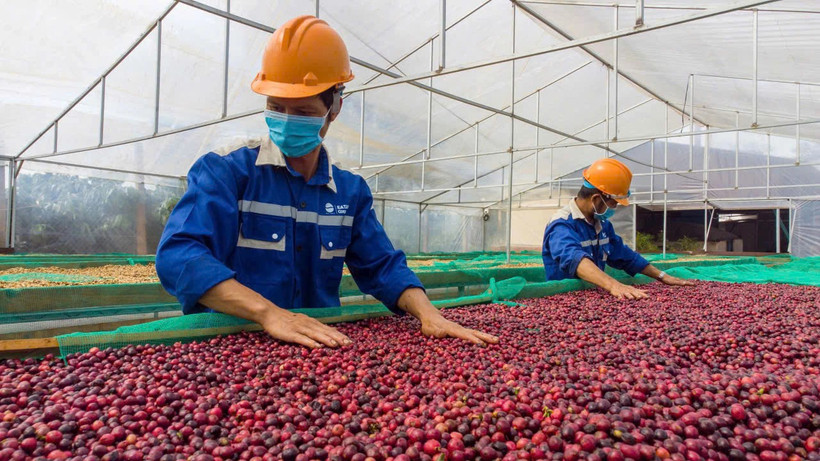
Staple agricultural exports such as pepper and coffee remain resilient, relatively insulated from the US tariffs. (Photo: thanhnien.vn)

Hanoi (VNA) – Vietnam’s manufacturing sector is showing renewed momentum, with the Purchasing Managers’ Index (PMI) rising above the 50-point threshold for the first time in four months, according to S&P Global’s July report.

The report also revealed notable gains in new export orders, underscoring a broader recovery trend.

Exports stay on the rise despite tariff pressures

Among the seven countries surveyed by S&P Global in July, Vietnam led with a PMI of 52.4, well above the ASEAN average of 50.1. New export orders rose for the fourth straight month, reaching their fastest growth rate since November 2024.

This positive and surprising sign comes amid continued concerns over the reciprocal tariffs from the US – a key export market.

Pham Sy Hoai, Vice President and General Secretary of the Vietnam Timber and Forest Product Association (VIFORES), noted that despite heavy impacts of the US reciprocal tariffs and trade defence measures, timber and wood product exports hit 9.6 billion USD by the end of July — up 7.9% year-on-year.

The sector is projected to earn over 7 billion USD in the final five months of 2025, bringing the year’s total to around 17 billion USD, he said.

Staple agricultural exports such as pepper and coffee remain resilient, relatively insulated from the US tariffs. Phan Minh Thong, Chairman of Phuc Sinh Group, highlighted that these goods continue to perform well, supported by strong global demand and rising prices.

Phuc Sinh’s export turnover reached 305 million USD in the first ten months of the 2024–2025 financial year (ending in September 30, 2025), marking a year-on-year increase of nearly 25%. Pepper prices tripled while coffee prices doubled, significantly boosting revenue.

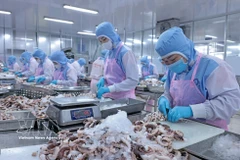
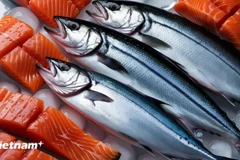
Vietnam’s aquatic exports reached 6.22 billion USD in the first seven months of 2025 — a 17.2% increase from the same period last year, according to the Vietnam Association of Seafood Exporters and Producers (VASEP). Exports to the US rose 10.4%, while those to China soared 42.6% to 1.33 billion USD.

China’s renewed large-scale imports, particularly of shrimp and squid, have opened major opportunities, especially ahead of the US tariff imposition in August. Vietnamese firms have responded with aggressive market diversification, strategic use of multilateral free trade agreements, and agile supply chain adjustments.

Boosting US imports to balance trade

In response to US trade actions, Vietnamese timber firms have stepped up imports of American round and sawn timber. In 2024, Vietnam purchased 320 million USD in US wood materials. During the first seven months of this year, imports already reached 321 million USD, surpassing the previous year’s total.

This shows Vietnam’s goodwill in narrowing the trade surplus and supporting American timber producers, said Hoai. If export conditions remain stable, imports from the US are expected to keep rising through year-end, he held.

He added that Vietnamese furniture exporters remain hopeful for a fair and suitable tariff framework that avoids market disruption and protects American consumer access to Vietnamese products.

The textile and garment industry has also diversified its raw material sources. In the first five months of 2025, Vietnam imported nearly 950,000 tonnes of cotton worth over 1.6 billion USD, up 27% in volume and 8% in value from the same period in 2024. The US remained Vietnam’s top supplier, accounting for 48% of total imports. Imports from the US reached 455,000 tonnes worth 800 million USD, shooting up 116% in volume and 79% in value. Vietnam is now the third-largest importer of US cotton, after China and Pakistan.

Vietnam’s coffee exports to the US remain modest as the EU is the primary market. Meanwhile, the country dominates global pepper shipments, with about 50% of global market share. It also imports pepper from Indonesia for re-export, reinforcing its critical role in global supply chains.

While the US imposed 20% tariffs on Vietnamese products — similar to Indonesia’s rate and well below Brazil’s 50%, exporters are optimistic.

Pepper and coffee are essentials, and even at higher prices, demand remains strong, said Thong. He noted that a decade ago, a cup of coffee costed 1 USD. Today, it’s even 14 or 15 USD in some places, and people still drink it.

He added that Vietnam’s agricultural exports face minimal direct competition from US producers, reducing the likelihood of trade defence measures such as anti-dumping investigations./.

VNA
See more

A view of the second Asia Agri Food International 2026 in Ho Chi Minh City on May 19 (Photo: VNA)

India pushes stronger agri-food cooperation with Vietnam

Experts noted that Vietnam has established itself as one of Southeast Asia’s leading agricultural product exporters, while India remains a major global supplier of agricultural and food products. By combining India’s production capacity and technological strengths with Vietnam’s dynamic processing and export ecosystem, the two countries can build more resilient supply chains in the region.

A panel discussion at the Meet Australia 2026 programme on May 19 (Photo: VNA)

Meet Australia 2026 promotes sustainable partnership opportunities

Meet Australia 2026 is not only a trade and investment promotion event but also a forum connecting trust, vision and action between Vietnam and Australia, as well as between national-level cooperation orientations and development needs of localities and businesses from both countries.

A customer purchases E10 biofuel petrol at a PVOIL station on Thai Thinh street in Hanoi. (Photo: VNA)

Authorities ordered to closely monitor rollout of E10 biofuel from June 1

According to the agency, the move is aimed at ensuring the effective and synchronised implementation of the E10 transition roadmap under Circular No. 50/2025/TT-BCT, issued by the Ministry of Industry and Trade on November 7, 2025. The plan seeks to avoid delays or supply disruptions that could affect the domestic fuel market.

Vietnamese Trade Counsellor in India Bui Trung Thuong speaks at the forum. (Photo: VNA)

Vietnam, India promote digital economy cooperation towards 25 bln USD trade target

With the strengthened Comprehensive Strategic Partnership, the rapid growth of digital economies in both countries and complementary strengths in technology, manufacturing and markets, Vietnam and India are well positioned to build a deeply connected digital trade ecosystem and enhance their participation in global value chains.

“Vietnam Economic Day” in St. Petersburg attracts crowds (Photo: VNA)

Vietnam showcases economic potential, investment opportunities in St. Petersburg

Vietnamese Ambassador to Russia Dang Minh Khoi stressed that economic cooperation between Vietnam and Russia is entering a new phase with promising opportunities for growth. He praised this year’s programme for combining a business roundtable, a youth business forum and traditional cultural and culinary activities, creating both an academic platform for dialogue and an opportunity to deepen mutual understanding between the two countries' people.

Lien Minh Agricultural Cooperative in Thai Nguyen province, provides stable employment for hundreds of its members. (Photo: VNA)

Private economic sector poised for breakthrough growth

More than a year after the Politburo's Resolution No. 68-NQ/TW on private sector development came into effect, expectations now extend beyond increasing the number of enterprises. The goal is to build a stronger business community with greater resilience, larger ambitions and the capacity to compete in global supply chains.

Milk collection at a dairy farm operated by Vinamilk at the Nhon Tan concentrated farming zone in An Nhon Tay commune, Gia Lai province. (Photo: VNA)

Self-reliance in raw materials fuels Vietnam’s dairy growth

The strategy targets annual industry growth of 12-14% by 2030, with processed liquid milk output reaching 4.2 billion litres annually. Domestic fresh milk production is projected to hit 2.6 billion litres per year, meeting 60-65% of processing demand, while milk powder output is expected to reach 245,000 tonnes annually. Per capita milk consumption is targeted at 40 litres per year.

Quang Ninh gives in principle approval to first offshore wind power plant

Quang Ninh gives in principle approval to first offshore wind power plant

Covering an area of 11.95 ha of land and water surface, the project is expected to have a designed capacity of 50 MW and will be implemented in nearshore waters of the Co To special zone. Its key components include wind turbines, a substation, a 110kV transmission line, and related auxiliary facilities.

At Nghi Son 2 thermal power plant in Thanh Hoa province. (Photo: VNA)

Vietnam’s national standards strategy for 2026–2035 approved

The strategy envisions a modern, open standards system welded to international norms, serving as a piece of soft institutional infrastructure, a policy tool and a technical backbone for state governance. It also casts standards as an engine of innovation, digital transformation, green transition and sustainable development.

Shrimp harvesting in Ca Mau province (Photo: VNA)

Vietnamese shrimp sector seeks distinct path in global race

Nguyen Duy Hoa, Deputy Technical Director of Cargill Vietnam, said Vietnam cannot compete with Ecuador on costs nor match India in scale. Instead, the country should focus on value rather than volume or price competition, prioritising quality improvement, technology adoption and value-added products.

Wind turbine No. 3 at the V1-3 site of the Duyen Hai Wind Power Plant in Truong Long Hoa ward, Vinh Long province.(Photo: VNA)

Retail market seen driving double-digit growth

Domestic consumption is being regarded as one of the key drivers for sustaining economic growth. Following the Government’s Resolution No. 88/NQ-CP on promoting the domestic market and stimulating consumption, many retailers have accelerated the expansion of distribution systems, invested in technology and improved supply chains.

Cargo containers are handled at Gemalink International Port, Ho Chi Minh City. (Illustrative photo: VNA)

Government delegation for international economic, trade negotiations established

The delegation is tasked with assisting the Prime Minister in directing ministries, sectors and localities in the negotiation, signing, coordination of ratification and approval, as well as implementation of international treaties and agreements on economic and trade matters involving the Vietnamese State and Government.

Lotte Mart Vietnam is currently distributing around 900 private-label products manufactured in Vietnam under the retailer’s strict quality control. (Photo: VNA)

RoK steps up trade cooperation with Vietnam, Malaysia

The Korean business delegation's trip aims to provide Korean firms with information on import – export trends across the ASEAN region and developments in local markets, while also offering opportunities to explore the latest industry trends and technologies.