Vietnam’s manufacturing sector returned to growth in July

The index pointed to a strengthening in the overall health of the manufacturing sector, with the solid improvement in business conditions was the most marked for almost a year.

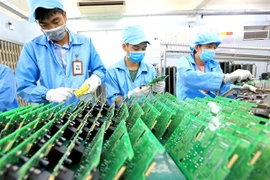
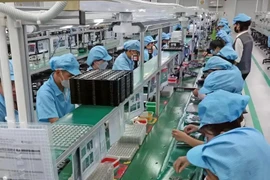
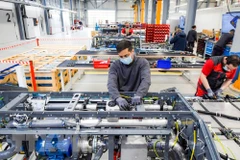
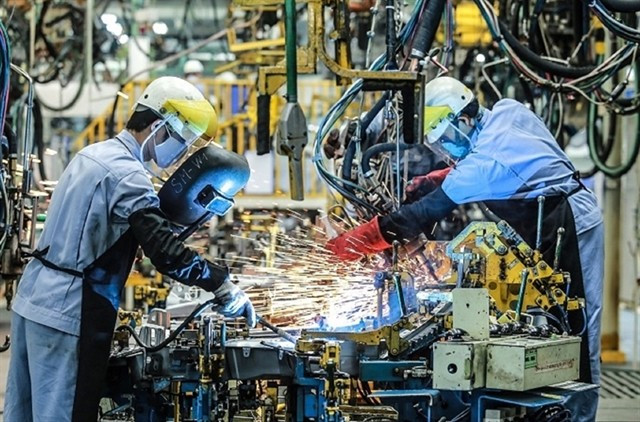
The renewed increase in new orders helps to support production growth in July. (Photo vneconomy.vn)

Hanoi (VNS/VNA) - The Vietnam Manufacturing Purchasing Managers' Index (PMI) rose to 52.4 in July, up from 48.9 the previous month, returning above the 50.0 no-change mark for the first time in four months, according to a survey released by S&P Global on August 1.

The index pointed to a strengthening in the overall health of the manufacturing sector, with the solid improvement in business conditions was the most marked for almost a year.

The improvement in operating conditions coincided with a return to growth of new orders in July. New business expanded for the first time in four months, and at the fastest pace since November last year amid reports of customer demand strengthening.

Some respondents did highlight the negative impact of US tariffs on new order growth, with, new business from abroad continuing to fall as a result of tariffs, extending the current sequence of contraction to nine months.

The renewed increase in new orders helped to support production growth in July. Output rose for the third month running and the pace of expansion was marked and the fastest in 11 months.

Rising output requirements drove a renewed increase in purchasing activity, with the pace of expansion the fastest since August last year.

Meanwhile, employment levels edged closer to stabilisation. Although staffing continued to decline due to lingering spare capacity following a recent drop in new orders, the latest reduction was the slowest in nine months as rising output requirements supported labour demand.

Despite renewed growth of input buying, stocks of purchases declined again as panellists reported challenges securing raw materials. That said, the pace of depletion was the weakest since December 2023. Stocks of finished goods also decreased in July.

Material shortages resulted in a further lengthening of suppliers' delivery times. The latest deterioration in vendor performance was solid and only slightly less pronounced than that seen in June.

Difficulties sourcing materials, particularly those from abroad, led to an increase in input costs at the start of the second half of the year. Input prices increased for the second successive month, and at a solid pace that was the fastest in 2025 so far.

Although manufacturers remained optimistic about output growth over the next 12 months, sentiment fell to a three-month low in July and remained well below the series average. Confidence was supported by expectations of more stable economic conditions, upcoming product launches and new orders, but concerns over the potential impact of US tariffs continued to weigh on the outlook.

Andrew Harker, economics director at S&P Global Market Intelligence, said: "July PMI data suggested that the Vietnamese manufacturing sector is getting back on its feet following the disruption caused to operations by the US tariff announcements in recent months.

"Although tariffs continued to cause reductions in new export orders, firms were able to secure enough business elsewhere that total new orders returned to growth.

Harker said that a key feature of the latest results was the impact of raw material shortages – driven by supplier delivery delays, falling inventories and rising cost pressures – and warned that if these supply issues persist, they could constrain the sector’s future growth./.

VNA

See more

Shrimp processing for export at Huy Nam company, An Giang province. (Photo: VNA)

Fisheries sector proactively adjusts to emerging challenges

In addition to food safety regulations, the US continues to closely monitor the origin of imported seafood through the Seafood Import Monitoring Programme (SIMP) administered by the National Oceanic and Atmospheric Administration (NOAA). Requirements linked to the Marine Mammal Protection Act (MMPA) are also a major concern for businesses.

Pham Van Cong, Chairman of the Vietnam Cashew Association, speaks in a conference reviewing the industry’s 2025 performance and deploying procurement plans for 2026 in HCM City on March 13. (Photo: VNA)

Cashew sector braces for challenges in 2026 amid global uncertainties

Vietnam’s cashew industry recorded export turnover of about 5.5 billion USD in 2025, the highest level ever. He noted that the result reflects the industry’s remarkable development, dynamism and timely adaptation to complex and unpredictable challenges both domestically and globally.

An Phát Complex Industrial Park in Hai Phong City is one of the eco-friendly industrial parks. (Photo: VNA)

Green industrial parks become new magnet for FDI

Statistics show that about 80% of FDI enterprises prioritise investing in industrial parks with green energy infrastructure, reflecting a growing shift in investment preferences amid tightening global environmental standards.

Wood panel production at the Thuan An Wood JSC in Ho Chi Minh City (Photo: VNA)

Vietnamese businesses ride wave of investment in green manufacturing

Recent developments in private investment show that as confidence in the private sector has grown and is a key driver of economic development, investors are strengthening support for enterprises not only through capital but also management expertise and market connectivity.

Officers and soldiers of Son Tra Border Guard Station, Da Nang City Border Guard Command tell local fishermen about IUU fishing. (Photo: VNA)

Fishing solidarity groups help Vietnam with IUU “yellow card” warning removal

Over the years, coastal authorities in Da Nang have intensified efforts to educate fishermen about regulations, particularly the need to avoid illegal fishing in foreign waters. Local administrations and competent forces have also strengthened vessel registration and inspection procedures, installed vessel monitoring systems and ensured transparent declarations of catches at ports.

Representatives of Central Retail Vietnam and Lotte Plaza Market sign a distribution cooperation agreement at the networking event in Ho Chi Minh City on March 13. (Photo: VNA)

Vietnamese firms step up cooperation with international distribution chains

Connecting Vietnamese businesses with international distribution networks has been a key component of government-led trade promotion programmes for many years, which are designed to help domestic companies place goods directly into global retail systems rather than exporting solely through intermediaries.

Direct Hanoi–Amsterdam flights by Vietnam Airlines to begin on June 16. (Photo: Vietnam Airlines)

Vietnam Airlines to launch direct Hanoi–Amsterdam service on June 16

Under the plan, the Hanoi–Amsterdam route will commence operations on June 16, 2026, with an expected frequency of three return flights per week using modern wide-body Airbus A350 aircraft. This will be the first direct air link between Vietnam and the Netherlands, helping to shorten travel time and enhance connectivity between Vietnam and one of Europe’s key economic, logistics and aviation transit hubs.

Farmers harvest the 2025 Winter–Spring rice crop in An Giang province. (Photo: VNA)

An Giang accelerates export shift to meet green consumption trends

To enhance competitiveness, authorities are assisting businesses in obtaining globally recognised certifications such as GlobalG.A.P., Organic and HACCP, enabling key exports including rice, seafood and clean agricultural products to strengthen their position in global markets, according to Quang Xuan Lua, Director of the An Giang Centre for Trade and Investment Promotion.

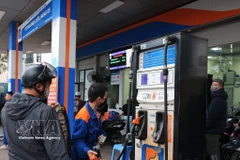
Motorcycle riders refill their vehicles at a petrol station in Hanoi (Photo: VNA)

E5 RON92 biofuel price falls in latest adjustment

Since the beginning of this year, domestic fuel prices have undergone 14 adjustments, including five decreases and nine increases for RON95 and six declines and eight hikes for E5 RON92. Meanwhile, diesel price has fallen three times and risen 11 times.