Using advanced technology to bring Vietnam’s railway closer to int’l standards: Deputy PM

Noting the strategic significance of connecting the Vietnam–China railway connectivity, Deputy Prime Minister Tran Hong Ha said that routes such as Lao Cai–Hanoi–Hai Phong, Hanoi–Lang Son, and Hanoi–Mong Cai will enhance logistics efficiency, promote socio-economic development in localities of both countries, and contribute to improving Vietnam’s operational capacity and access to modern railway technology.

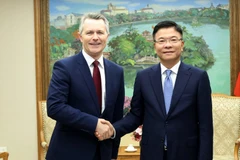
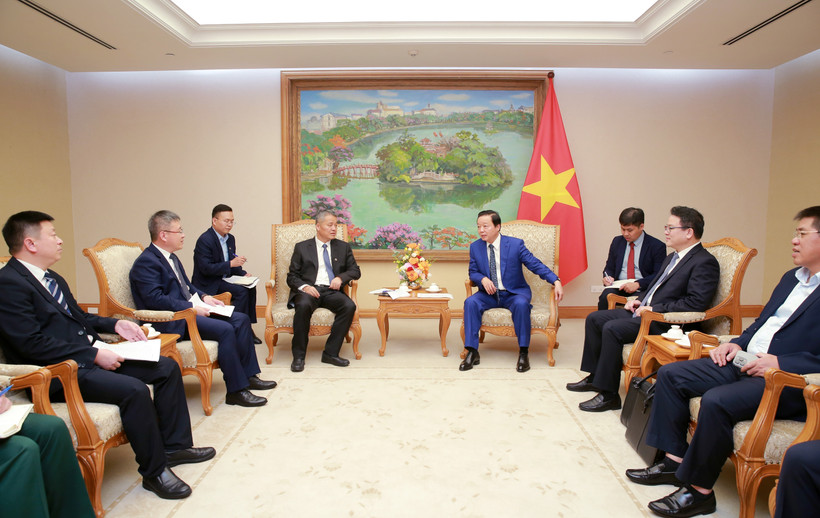
At the meeting between Deputy Prime Minister Tran Hong Ha (R) and Wang Bo, general manager of China Railway No.6 Engineering Group Co., Ltd. (Photo: VNA)

Hanoi (VNA) - Deputy Prime Minister Tran Hong Ha highlighted the need to apply advanced technology to help Vietnam’s railway industry meet international standards, while receiving Wang Bo, general manager of China Railway No.6 Engineering Group Co., Ltd. under the China Railway Group Limited in Hanoi on August 14.

Noting the strategic significance of connecting the Vietnam–China railway connectivity, Ha said that routes such as Lao Cai–Hanoi–Hai Phong, Hanoi–Lang Son, and Hanoi–Mong Cai will enhance logistics efficiency, promote socio-economic development in localities of both countries, and contribute to improving Vietnam’s operational capacity and access to modern railway technology.

The Deputy PM affirmed that the Vietnamese Government always prioritises modern science and technology in railway projects. Therefore, these projects must be implemented with a high sense of responsibility, ensuring safety and applying advanced technology to bring Vietnam’s railway industry closer to international standards.

Chinese enterprises participating in the projects should commit to technology transfer, support Vietnamese enterprises in mastering the technology, and undertake maintenance and operations through clear economic contracts and legal agreements, including human resources training, he stressed.

Regarding the North–South high-speed railway project, Ha stated that this is a large-scale project with modern technology. The official suggested Chinese enterprises participate via public, public–private partnership (PPP), or private investment models, provided it comes with technology transfer and collaboration with experienced Vietnamese investors.

He also requested Wang Bo to draw lessons from the company’s participation in several urban railway projects in Vietnam, so as to implement upcoming projects methodically, in strict compliance with procedures, from feasibility studies, technical design, and scientific and technological standards to contractor selection and financial mechanisms, thereby avoiding risks.

Wang briefed the Deputy PM on his company’s capabilities and experience, noting that it has signed a strategic cooperation agreement with a Vietnamese partner, and conducted technical staff training, on-site surveys, and inspections of equipment production facilities for the Lao Cai–Hanoi–Hai Phong line.

He assured that the company will make the most of its technological strengths and combine them with the local knowledge of Vietnamese partners to select suitable project packages, ensuring efficiency and safety for this railway project, thereby opening opportunities to participate in other railway infrastructure projects in Vietnam./.
VNA

See more

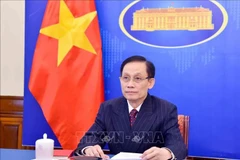
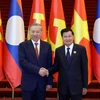
Vietnamese Minister of Foreign Affairs Le Hoai Trung (Photo: VNA)

Vietnamese, Lao foreign ministers hold online talks

The two ministers agreed to maintain close coordination in the time ahead and to expand cooperation under the new framework and orientation, underscoring the significance of the two countries’ “great friendship, special solidarity, comprehensive cooperation, strategic cohesion”.

State President Luong Cuong (fourth from left, first row) and newly-appointed foreign ambassadors in Hanoi on December 12, 2025. (Photo: VNA)

State President receives newly-appointed foreign ambassadors

Receiving Egyptian Ambassador Hany Mostafa Mohamed Mostafa Hassan, President Cuong affirmed that Vietnam highly evaluates Egypt’s role, position, and contributions to regional peace and stability. He also congratulated the African country on its achievements in implementing the 2030 Vision.

An overview of the seminar on the Party’s leadership in ensuring macroeconomic stability, renewing the growth model, restructuring the economy and promoting international integration (Photo: VNA)

Vietnam, Cuba exchange theoretical views on Party’s leadership in macroeconomic stability

The two sides explored in depth the Party’s role in leadership, orientation, oversight and strategic coordination in economic management; approaches to implementing economic restructuring programmes alongside the renewal of the growth model; measures to respond to global economic volatility, inflationary pressures and shifts in global trade; and the building of effective strategic advisory bodies to ensure the Party’s comprehensive leadership in a changing context.

Vietnam’s Ambassador to Australia Pham Hung Tam (Photo: VNA)

Australia–Vietnam Policy Institute serves as bridge for bilateral relations

Established in 2022, AVPI serves as a forum for exchanging ideas among businesses, government agencies, non-profits, universities, and scholars in Australia on Vietnam. The institute acts as a platform for policy dialogue, focusing on research and insights on strategic relations and bilateral economic ties.

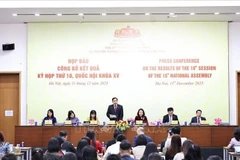
General Secretary and Chairman of the NA Office Le Quang Minh chairs the press conference announcing the results of the NA's 10th session (Photo: VNA)

10th session helps strengthen public trust in personnel work, NA’s supreme oversight

Personnel consolidation carried out at the NA's 10th session helps ensure continuous, unified, effective, and efficient leadership of the state apparatus; guarantee smooth and uninterrupted direction and governance; and prevent any leadership gaps in critical areas. All positions elected or approved by the legislature meet the key criteria required within the organisational structure.