Vietnam – A magnet for German investment

A report by the German Chamber of Commerce and Industry in Vietnam, released in September 2025, noted that German capital began to flow into Vietnam in the early 1990s, shortly after the country began its economic reforms.

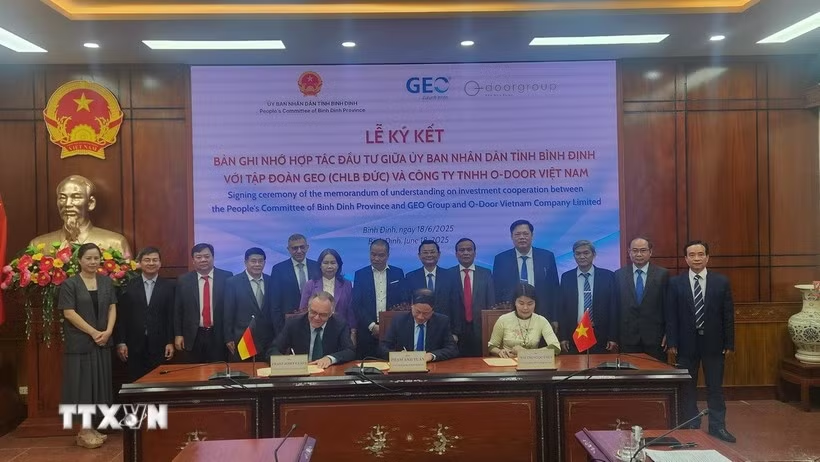
The signing ceremony between Germany’s GEO Group and Vietnam’s O-DOOR Company for a project to establish a Training and Human Resources Development Centre for Renewable Energy in Gia Lai province. (Photo: VNA)

Hanoi (VNA) – With its young workforce, competitive labour costs, expanding domestic market, and increasingly open investment environment, Vietnam is fast becoming one of the most appealing destinations for German investors in the 2025–2026 period.

A report by the German Chamber of Commerce and Industry in Vietnam, released in September 2025, noted that German capital began to flow into Vietnam in the early 1990s, shortly after the country began its economic reforms. Following Vietnam’s accession to the World Trade Organization (WTO) in 2007 and the revision of the Enterprise and Investment Laws in 2015, German investment saw a significant upsurge. So far, 576 German enterprises have invested in Vietnam with a total registered capital of nearly 3.7 billion USD, generating at least 50,000 jobs nationwide.

While Germany is globally recognised for its strong manufacturing base, nearly half of its projects in Vietnam are concentrated in the service sector, including consultancy, logistics, business process outsourcing, and information technology. Prominent examples include Digi-Texx, employing more than 1,500 people in Ho Chi Minh City, and Bosch, which has around 4,000 employees engaged in engineering and technology.

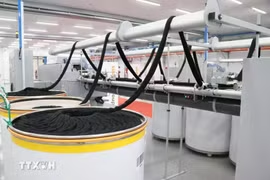
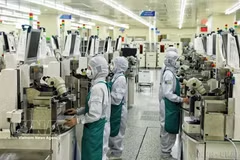
Meanwhile, German manufacturing operations in Vietnam continue to expand, with 117 active enterprises across various industries. Bosch operates a drive belt production plant in Dong Nai and research centres in both HCM City and Hanoi. In the textile sector, several German suppliers and original equipment manufacturers have established a presence, while the chemical industry mainly caters to domestic clients. Although the automotive industry in Vietnam remains relatively small, notable German investors such as Schaeffler, Bosch, and Dräxlmaier have already made their mark.

HCM City remains the primary hub for German businesses, accounting for about 75% of their sales and service activities. Manufacturing clusters are concentrated in Dong Nai and Tay Ninh, while the Hanoi–Hai Phong corridor in the north continues to attract major names like B. Braun, Messer, and new entrants such as Harting, RRC, and Certoplast. The central region, with its cost advantages and quality living environment, is also drawing increasing attention, with notable projects in Da Nang, Quang Nam, and Gia Lai. Overall, most German factories are situated within a 30–40 km radius around HCM City – Vietnam’s long-established foreign investment hub.

Germany’s appeal to Vietnam lies not only in capital but also in the transfer of technology, management expertise, and vocational training models. German companies typically take a long-term approach, promoting sustainable development, adhering to strict legal and environmental standards, and collaborating with local suppliers to facilitate technology transfer and management skill development.

With the EU–Vietnam Free Trade Agreement (EVFTA) now in effect, Vietnam’s green growth strategy gaining momentum, and global supply chains undergoing realignment, the prospects for German–Vietnamese investment cooperation remain highly promising. Backed by technological strength and long-term commitment, German enterprises are expected to continue supporting Vietnam’s socio-economic development in the years ahead./.

VNA

See more

A representative of Sumika Electronic Materials Vietnam (VSIP Bac Ninh Industrial Park, Tu Son Ward) briefs the delegation from Customs Sub-department Region V on the company's operations. (Photo: báo bắc ninh)

Bac Ninh customs facilitates clearance to boost exports

Pham Chi Thanh, head of Customs Sub-Department Region V, said the unit is focusing resources on developing a digital customs model and streamlining professional procedures to shorten clearance times and reduce costs for businesses while maintaining effective state management.

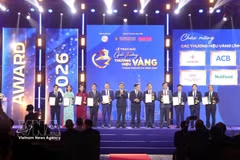
At the sixth Golden Brand Awards 2026 ceremony (Photo: VNA)

Ho Chi Minh City honours top 50 brands for 2026

The awards aim to recognise brands that can lead their industries, drive innovation and create a ripple effect across the business community, lifting the city’s standing in a new growth stage.

Luxury apartment projects in downtown Ho Chi Minh City (Photo: VNA)

Ho Chi Minh City's housing market sees price stabilisation, sharper buyer segmentation

According to Avison Young Vietnam, improved planning and infrastructure development have helped ease market uncertainty and prevented a complete freeze. More than 25,000 apartments are expected to enter the market in multiple launches between 2027 and 2030, with many projects scheduled to benefit from infrastructure improvements around 2030.

Vietnamese Deputy Minister of Industry and Trade Phan Thi Thang speaks at the forum (Photo: VNA)

Vietnam, Georgia look to more business opportunities

For Vietnamese firms, Georgia can serve as a gateway to broader regional markets, given its strategic location connecting the South Caucasus, Central Asia and China with European markets via the Black Sea.

Chairman of the Vietnamese Business Association in Laos (AVILA) Duong Dinh Bang (Photo: VNA)

PM’s visit injects fresh momentum into Vietnam-Laos special relations

At the 2026 Laos-Vietnam Investment Promotion Conference in Vientiane, the two PMs held direct dialogue with businesses and investors from both countries, affirming their determination to address bottlenecks in institutional frameworks, administrative procedures, transport infrastructure and payment connectivity. The goal of these efforts is to boost bilateral trade to 10 billion USD by 2030.

Deputy Secretary of the An Giang provincial Party Committee and Secretary of the Party Committee of the Phu Quoc special zone Dinh Van Noi speaks at the dialogue (Photo: baoangiang.com)

Phu Quoc moves to resolve infrastructure bottlenecks ahead of APEC 2027

Deputy Secretary of the An Giang provincial Party Committee and Secretary of the Party Committee of the Phu Quoc special zone Dinh Van Noi said an official information portal will be launched to receive public feedback, while hotlines for local leaders will allow businesses and residents to raise concerns directly.

Deputy Minister of Industry and Trade Phan Thi Thang at the forum. (Photo: VNA)

Vietnamese firms explore investment opportunities in Georgia

Priority areas with great cooperation potential include manufacturing, logistics infrastructure, renewable energy, tourism, hospitality, information and communications technology (ICT), and business process outsourcing (BPO), said a Georgian official.

Prime Minister Le Minh Hung and delegates launch the digital platform of the Vietnam Association of Small and Medium Enterprises (August 2026). Photo: VNA

Vietnamese businesses, entrepreneurs make growing contributions to national development

Vietnam Entrepreneurs’ Day is an opportunity to recognise businesses’ contributions and reinforce the entrepreneurial spirit, the pursuit of legitimate prosperity and national responsibility. With stronger policies and greater innovation, Vietnamese enterprises are expected to play an increasingly important role in economic growth and the country’s ambition to become a strong, prosperous nation.

A view at a CO.OPMART supermarket in Bac Ninh city (Photo: bacninh.gov.vn)

Bac Ninh’s CPI up 4.07% in nine months

The consumer price index (CPI) in Bac Ninh city rose 4.07% year-on-year in the first nine months of 2026, with housing and construction materials, education and transport recording the sharpest increases, according to the municipal Statistics Office.

Vietnam's textile - garment and footwear industries are aiming to shift from processing and assembly to stages with higher added value, increasing technology content and competitiveness. (Photo: VNA)

Vietnam’s supporting industries seek stronger domestic links

As global supply chains undergo major changes and environmental standards and digital technology requirements become more demanding, developing supporting industries has become essential to improving the competitiveness of the economy. This requires coordinated efforts by the Government, multinational corporations and domestic businesses.