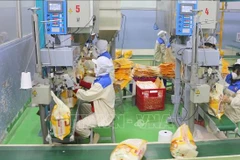
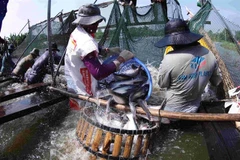
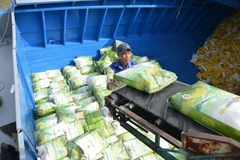
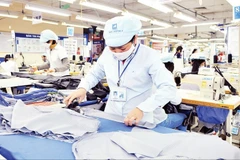
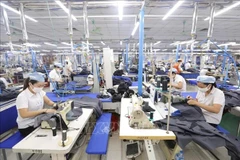
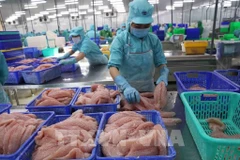
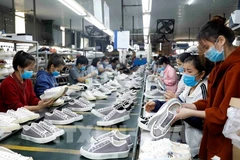
Illustrative image (Photo: VNA)
Hanoi (VNA) - The latest labour market report by Vietnam’s General Statistics Office (GSO) has for the first time presented data and trends according to the newest statistical standards on the measurement of labour market issues.
This upgrade will help policymakers and other data users better analyse and understand the characteristics and challenges of different groups of workers, the double burden of work and family responsibilities carried by women, and different categories individuals who are not in employment, the International Labour Organisation (ILO) said on its website.
The standards were adopted in 2013 by the 19th International Conference of Labour Statisticians, or ICLS19.
In 2014, with ILO’s technical support, Vietnam became one of the 10 pilot countries that tested them in their Labour Force Surveys, which look at the trends on the size of the labour force, on employment and unemployment, and job quality.
The pilot-testing of the complex new standards lasted until 2020, and Vietnam officially adopted the new standards in January this year and applied them in its report of the first quarter.
Redefinition of work
According to ILO Vietnam Labour Economist, Valentina Barcucci, the most important innovations brought about by the ICLS19 standards are in the definition of ‘work’ and ‘employment’.
“The concept of ‘work’ becomes broader, to include both paid and unpaid work,” she said.
The concept of ‘employment’, on the other hand, becomes narrower. It is now defined as “work for pay or profit”, or work to generate an income exclusively. Therefore, those who work for their own use, such as producing food for their own household, are no longer considered as ‘employed’.
“The result of this change is that some groups of workers have become more visible than before, so their characteristics and challenges are now more easily analyzed and understood. This is in line with the Leave No One Behind approach,” Barcucci explained.
 ILO Vietnam Labour Economist, Valentina Barcucci (Photo: VNA)
With the new definition of employment applied, the GSO could identify a group of 3.5 million people who work for their own use, in subsistence agriculture.
Another type of work that has been made visible under ICLS19 is the production of services for an individual’s own household. The concept of ‘work for own use’ includes also activities that are part of unpaid care work, such as cooking, looking after children, and others.
For the first time, according to the ILO Labour Economist, Vietnam can now quantify how many hours women and men spend in these activities on average, and analyze the double burden carried by women through statistical evidence.
New indicators of labour market
Another major highlight of ICLS19 is the adoption of broader measures of labour underutilization beyond the commonly used unemployment rate. In addition to the unemployed, additional measures recommended are the underemployed, and the potential labour force, all of which have a strong attachment to the labour market, but have also unmet needs for employment.
“By releasing its labour market data using ICLS19, Vietnam joins some other half of the ILO member States who have already implemented the new standards, many of them from advanced economies, and six of them among the ASEAN member States,” said Tite Habiyakare, the Bangkok-based ILO Regional Labour Statistician, as he congratulated Vietnam on such an achievement.
“It is important for policy makers and for the media to use these other indicators of labour underutilization, in addition to the unemployment rate, which is usually low in Vietnam,” explained Habiyakare. “The new measures of labour underutilization provide indicators that are more reflective of and reactive to economic realities, and thus serve the needs of policy makers to a greater extent.”
The unemployed, who are not working, seeking work, and available to work, are usually a minority of those who are not working.
The potential labour force includes individuals who are not working, but do not meet all criteria to be considered unemployed. They may be looking for jobs, but not available to work at the moment. Or in alternative, they may be available to work, but not seeking employment at the moment.
Finally, those who are not working and do not belong to any of these categories are considered as having no attachment to the labour market.
“Why is it important to have so many ways of describing individuals who are not working? COVID-19 has provided a clear answer,” said Barcucci.
During the second quarter of 2020, more than 2 million individuals stopped working, but only 200,000 of them became unemployed, while the rest withdrew from the labour force.
“These are likely to be either individuals who did not work but could not see a reason to seek employment, since the social distancing measures had dramatically reduced economic activity,” the ILO Vietnam Labour Economist added.
In alternative, they were individuals who had stopped working to look after children during school closure, and who, therefore, were not available to work. In either case, they were not ‘unemployed’ but outside of the labour force – or part of the potential labour force.
Basis for policy making
“Identifying the characteristics of different groups of individuals who are not in employment provides important information to design policies that target their specific needs,” said Barcucci.
“For example, policies targeting the unemployed typically include skills and labour market training, wage subsidies for enterprises, and other fiscal and monetary measures. On the other hand, policies to bring women who are not available to work back on the labour market would focus on parental subsidies and flexible working arrangements.”
Pham Quang Vinh, deputy head of the GSO, said the upgrade has not affected macro indicators.
Certain indicator such as those regarding trained workforce, income and unemployment rate would be changed. Notably, the indicator of productivity may be higher, he said./.