Vietnam – Algeria: New drivers for bilateral trade relations

More than six decades after diplomatic ties were established (1962–2025), Vietnam and Algeria have achieved significant progress in economic and trade cooperation. In recent years, bilateral trade has grown strongly, with export structure expanded, and oil and gas collaboration seen as a success symbol of their partnership.

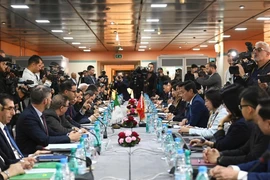
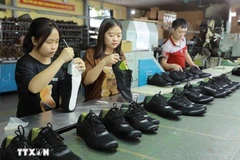
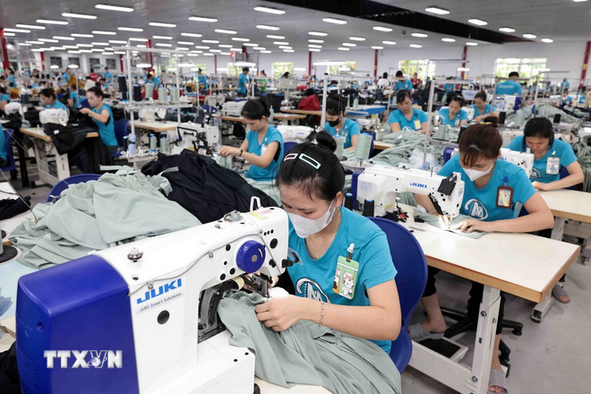
Vietnam mainly exports coffee, cashew nuts, peppercorns, seafood, chemicals, footwear, garments, and steel to Algeria. (Photo: VNA)

Hanoi (VNA) – At a time when both Vietnam and Algeria are working to diversify markets and seek new growth drivers, Prime Minister Pham Minh Chinh’s official visit to the African country is expected to mark an important turning point, helping perfect the cooperation framework, create breakthroughs in trade and investment, and elevate bilateral relations in a more substantive and effective manner.

More than six decades after diplomatic ties were established (1962–2025), Vietnam and Algeria have achieved significant progress in economic and trade cooperation. In recent years, bilateral trade has grown strongly, with export structure expanded, and oil and gas collaboration seen as a success symbol of their partnership.

Important partners

According to the Vietnamese Department of Customs, between 2020 and 2024, bilateral trade averaged nearly 180 million USD per year, hitting a record 241 million USD in 2023. In the first 10 months of 2025 alone, two-way trade was estimated at 472 million USD, up 195% year-on-year. Of this, Vietnam’s exports reached 465 million USD, while imports from Algeria were estimated at 7 million USD.

Vietnam mainly exports coffee, cashew nuts, peppercorns, seafood, chemicals, footwear, garments, and steel to Algeria. In return, Algeria exports computers, electronic products and components, carob powder, chicken feet, and livestock feed to Vietnam.

Vietnam and Algeria have signed a bilateral trade agreement, most recently updated in 1994. The two countries have also expanded cooperation into oil and gas exploration and production in Algeria.

The tripartite joint venture between the Petrovietnam Exploration Production Corporation (PVEP), Algeria’s national oil company Sonatrach, and the Thai oil and gas giant PTT Exploration and Production (PTTEP) was established in 2009. Operating at the Bir Seba field in Hassi Messaoud, Ouargla province, over 600 km south of Algiers, the venture has produced nearly 57 million barrels of oil from the first commercial flow in August 2015 through the end of 2024. In early 2025, daily output has averaged around 17,500 – 18,000 barrels.

Vietnamese Ambassador to Algeria Tran Quoc Khanh stressed that Algeria is one of Vietnam’s key trade partners in Africa. With the strengths and potential of both sides, the two countries complement each other well. Algeria, Africa’s largest country – nearly eight times the size of Vietnam, is a gateway to the African continent with vast potential in energy and raw materials. Meanwhile, Vietnam has strong capabilities in manufacturing, agricultural processing and high-quality goods exports. Vietnam also serves as a strategic bridge for Algeria to access Southeast Asia and the Asia-Pacific.

However, bilateral cooperation, especially in business and investment, still faces obstacles. Geographic distance and logistics costs hinder the movement of goods. Businesses in both countries also lack information on each other’s legal frameworks, investment environments, and market needs. Language differences, business culture, legal systems, and technical standards remain barriers to cooperation.

Room for further growth

Vietnam’s Trade Counsellor in Algeria Hoang Duc Nhuan noted that the economic development of both countries is opening new opportunities for bilateral economic and trade cooperation. Vietnam and Algeria hold considerable potential to build a larger-scale cooperative relationship, expanding their reach into markets in Africa, Asia, and beyond.

However, the two sides need to improve their legal frameworks, strengthen trade and investment promotion, and encourage businesses to participate more actively in economic events held in both countries. It is also necessary to regularly disseminate information on trade regulations, investment policies, finance, customs procedures, and business opportunities.

A representative of the Vietnamese Ministry of Industry and Trade suggested that the two countries should enhance delegation exchanges at all levels, including business delegations, and boost trade promotion activities. Vietnam proposed that Algeria soon respond to its request to consider negotiating and updating the 1994 bilateral trade agreement. It also encourages the African side to increase imports which Vietnam has strong advantages in, such as rice, coffee, pepper, seafood, consumer goods, textiles, footwear, electricity, electronics, and construction materials.

The ministry also hoped that the Algerian side facilitate PVEP’s activities at ongoing projects, and support Petrovietnam in expanding exploration and development opportunities through bidding rounds or direct negotiations for potential oil and gas projects there./.

VNA
See more

Vietnamese Ambassador to the RoK Vu Ho speaks at the event. (Photo: VNA)

President Ho Chi Minh honoured in RoK on 136th birth anniversary

With Vietnam–Korea ties expanding across multiple fields, he noted that honouring President Ho Chi Minh in the RoK carries significance beyond the overseas Vietnamese. It offers a chance to raise mutual understanding, empathy, and bonds between the Vietnamese and Korean people built on shared values of peace, cooperation, and development.

President Ho Chi Minh works at the Presidential Palace in Hanoi. (File photo: VNA)

Ho Chi Minh Thought guides development path: Top leader

In an article written on the occasion of President Ho Chi Minh’s 136th birth anniversary (May 19, 1890 – 2026), the top Vietnamese leader affirmed that “Ho Chi Minh Thought serves as a guiding light along our development path.”

Vietnamese Ambassador to Venezuela Vu Trung My speaks at the event (Photo: VNA)

President Ho Chi Minh’s enduring legacy highlighted at Venezuela commemoration

Vice President of the United Socialist Party of Venezuela (PSUV) Jesús Faria expressed deep admiration for President Ho Chi Minh and Vietnam’s indomitable struggle for national independence. He described President Ho Chi Minh as an immortal symbol of 20th-century national liberation movements, whose legacy continues to inspire leftist parties, progressive movements, and peoples across Latin America, including Venezuela.

Standing Vice Chairman of the municipal People’s Committee Nguyen Loc Ha (R) and EU Ambassador to Vietnam Julien Guerrier. (Photo: VNA)

Ho Chi Minh City, EU boast ample room for sustainable development cooperation

Since the establishment of their diplomatic ties in 1990, Vietnam and the EU have deepened the bilateral ties into one of the bloc’s most dynamic and in-depth partnerships with an ASEAN member, Ha noted, adding that the relationship entered a new chapter in January when the President of European Council’s visit upgraded it to a Comprehensive Strategic Partnership.

Deputy Minister of Foreign Affairs Nguyen Minh Hang speaks at a discussion session on reforming multilateral systems and global governance, held on May 15, 2026, as part of the expanded BRICS Foreign Ministers’ Meeting in India. (Photo: VNA)

Vietnam ready to strengthen BRICS connection with Asia-Pacific

Hang called on countries to act responsibly in accordance with international law and the UN Charter; respect the independence, sovereignty and territorial integrity of states; refrain from using or threatening to use force; and settle disputes peacefully through dialogue. She also underscored the importance of ensuring security, safety and freedom of navigation through straits in line with international law, including the 1982 United Nations Convention on the Law of the Sea (UNCLOS).

Vietnamese Minister of Foreign Affairs Le Hoai Trung (centre), DPRK Vice Minister Pak of Foreign Affairs Sang Gil (left), and Vietnamese Ambassador to the DPRK Le Ba Vinh cut the ribbon to open the exhibition. (Photo: VNA)

Photo exhibition highlights Vietnam–DPRK relations

Visitors at the exhibition were moved by historical photographs dating back nearly 70 years, including images of the founding leader of the DPRK Kim Il Sung personally welcoming President Ho Chi Minh and a CPV delegation at Pyongyang’s Sunan International Airport during their visit to the DPRK from July 8–12, 1957. In return, the DPRK leader paid an official visit to Vietnam from November 27 to December 3, 1958.

Illustrative image (Photo: VNA)

Deputy PM calls for substantive assessment of two-tier local administration operations

Chairing a meeting on the development of a scheme to review the first-year operations of the political system’s organisational apparatus and the two-tier local administration model, Tra emphasised that the review must comprehensively and objectively evaluate the nationwide implementation of administrative unit restructuring and the operation of the new local administration model.

Vietnamese Ambassador to Russia Dang Minh Khoi (right) and First Deputy Chairman of the Federation Council of Russia Andrey Yatskin at their meeting in Moscow on May 14. (Photo: VNA)

Key directions for Vietnam–Russia cooperation in 2026

Vietnamese Ambassador to Russia Dang Minh Khoi had a working session with a delegation from the Russian Federation Council led by First Deputy Chairman Andrey Yatskin, in Moscow on May 14, discussing the expansion of multifaceted cooperation in 2026.

Officials from Cao Bang province of Vietnam and Baise city in the Guangxi Zhuang Autonomous Region of China hold talks on May 15. (Photo: VNA)

Cao Bang, China’s Baise city eye to boost all-around cooperation

Cao Bang province of Vietnam and Baise city in the Guangxi Zhuang Autonomous Region of China are exploring a “red tourism” route linking Pac Bo and Meng Mo (China) to promote revolutionary tradition education and strengthen bilateral friendship. They are also stepping up cooperation in human resource development through training exchanges and efforts to improve workforce quality.

Atsaphangthong Siphandone (centre), Secretary of the Vientiane Party Committee and Chairman of the municipal People’s Council, speaks at the working session. (Photo: VNA)

Ho Chi Minh City, Vientiane strengthen cooperation for 2026–2030

Under the MoU, the two sides will strengthen cooperation in politics – diplomacy, security – defence, legal and judicial affairs, economic affairs, education, culture and society, cooperation among mass organisations and socio-political organisations, and development support.

Politburo member and Minister of Foreign Affairs Le Hoai Trung (left) meets with Jo Yong Won, Chairman of the Standing Committee of the Supreme People's Assembly (SPA) and Chairman of the SPA of the Democratic People's Republic of Korea, in Pyongyang on May 15. (Photo: VNA)

Vietnam wishes to unceasingly develop ties with DPRK: Foreign Minister

Jo Yong Won, Chairman of the Standing Committee of the Supreme People's Assembly (SPA) and Chairman of the SPA of the Democratic People's Republic of Korea (DPRK), expressed confidence that under the leadership of the CPV, headed by General Secretary and President Lam, Vietnam will successfully achieve the strategic goals set forth at the 14th National Party Congress.