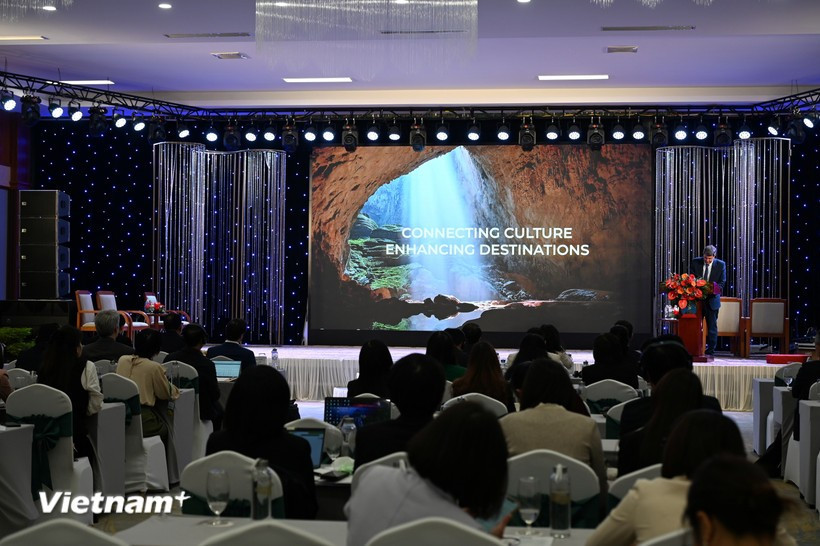
Hanoi (VNA) – Nearly 100 delegates from regional countries, the Swiss State Secretariat for Economic Affairs (SECO), which is collaborating with the Greater Mekong Subregion (GMS) on sustainable tourism development, gathered at the International Conference on Sustainable Tourism Development in the GMS held on November 18 in Ninh Binh province.
The conference showcased sustainable tourism experiences from Switzerland and GMS countries, including Vietnam’s own practices and commitments, highlighting efforts to achieve shared goals amid various challenges.
Lessons from “Swisstainable” programme
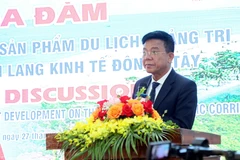
Addressing the event, Deputy Director of the Vietnam National Authority of Tourism (VNAT) Ha Van Sieu expressed his appreciation for the participation and support of the Mekong Tourism Coordinating Office (MTCO), the Pacific Asia Travel Association (PATA), the Asian Ecotourism Network, and the SECO-funded sustainable tourism project in Vietnam.
Recognised as a leading country in sustainable development, Switzerland has extensive experiences in green tourism. It is currently implementing the Swiss Tourism for Sustainable Development Project (ST4SD) project in Vietnam, running from 2024 to 2027.
Prof. Fabian Weber from Lucerne University of Applied Sciences and Arts (HSLU) of Switzerland presented the “Swisstainable” – a sustainability programme for Swiss tourism initiated by the university in 2021. He said the programme has delivered positive results, with over 2,300 businesses, 15 tourism destinations, and nearly 80 certifications recognised within the system.
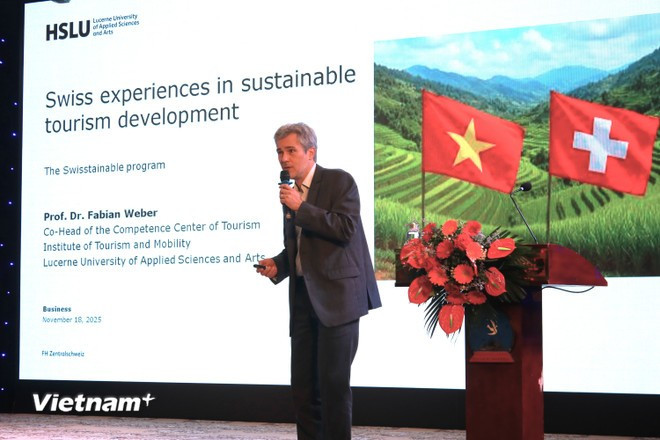
Weber highlighted five key trends that are shaping sustainable tourism now and in the future. These include regenerative tourism, which creates positive impacts for local communities, low-carbon tourism, moving toward carbon neutrality, technology adoption, especially AI and data, transparency, certification, and accountability, and respect for local cultures and community empowerment.
Sustainability is no longer optional but a mandatory requirement for participation in the global tourism market, he noted.
The expert recommended that each GMS country take specific and collective actions to implement sustainable tourism strategies. He said governments and authorities should engage all stakeholders, strongly develop marketing, and use incentives, regulations, and support to motivate businesses while focusing on creating positive impacts for communities.
Representatives from Cambodia, Myanmar, Laos, Thailand, and Vietnam shared models, standards, and resources for sustainable tourism, discussing collaboration to exchange experiences and foster regional development.
People placed at centre of GMS tourism
The GMS is rich in cultural heritage, which underpins its strong tourism growth. In 2024, the region welcomed 69 million international tourists, contributing billions of dollars to local economies and creating over 20 million jobs. Surveys indicate that 83% of tourists seek sustainable tourism experiences.
However, the region remains vulnerable to climate change, resource pressures, and global geopolitical and economic impacts.
Delegates from Cambodia, Thailand, Laos, and Myanmar shared solutions such as applying digital tools and technologies to manage destinations and protect heritage, developing online platforms to track progress. Other solutions include assessing destinations and granting certification under Global Sustainable Tourism Council (GSTC) standards, and building data systems for monitoring and measurement.

Like its GMS neighbours — Laos, Cambodia, Thailand, Myanmar, and China — Vietnam prioritises cultural and human factors, placing cultural stakeholders at the centre of sustainable development to help communities protect and enhance their heritage.
Accordingly, Vietnam’s Green Tourism Programme focuses on four strategies aligned with sustainable development goals of the GMS, including developing green tourism destinations with climate resilience, promoting sustainable conservation and community livelihood support, promoting and proposing national green tourism model awards, supporting local workforce development, and strengthening international cooperation.
A representative from the MTCO also highlighted that Quynh Son village in Lang Son province and Lo Lo Chai village in Tuyen Quang province were honoured as one of the best tourism villages in 2025 by the UN World Tourism Organisation. This demonstrates Vietnam’s commitment to preserving local culture and promoting sustainable development, while protecting natural resources.
Vietnam proposed developing sustainable tourism based on GSTC standards, supporting businesses, building a green and sustainable regional brand, and coordinating with GMS countries to implement joint initiatives.
Alongside the five regional countries, Vietnam’s active participation in developing the GMS Tourism Development Strategy through 2030 is seen as a key milestone, guiding the next phase toward a green, sustainable, and cohesive GMS./.