Hanoi (VNA) - Vietnam has boosted its exports to the US in 2025 despite high tariffs, fueled by supply chain shifts and stronger-than-expected growth in the electronics sector, according to experts from the Hong Kong-Shanghai Banking Corporation (HSBC).
In 2025, Vietnam faced one of the biggest trade shocks since the US – China trade tensions, as the US imposed a 46% tariff on many Vietnamese exports. This development was largely unforeseen at the start of the year, especially for an economy with the world’s third-largest bilateral trade surplus with the US.
According to HSBC report “Vietnam at a Glance,” released on December 12, in just a few months, Vietnam successfully negotiated to lower the tariff rate to around 19–20%, placing the country in the same tax bracket as other emerging ASEAN markets.
Measurement of tariff impacts: far milder than initial projections
HSBC experts noted that when the tariffs were announced in April, many forecasts predicted a sharp decline in Vietnam’s exports to the US. However, the reality unfolded differently. By the end of 2025, the country’s exports to the US has averagely risen by 28% year-on-year, outperforming most regional peers. Vietnam not only maintained its market share in the US but even expanded it, with 32% of total exports now destined for this market.
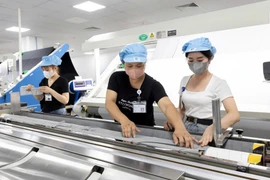
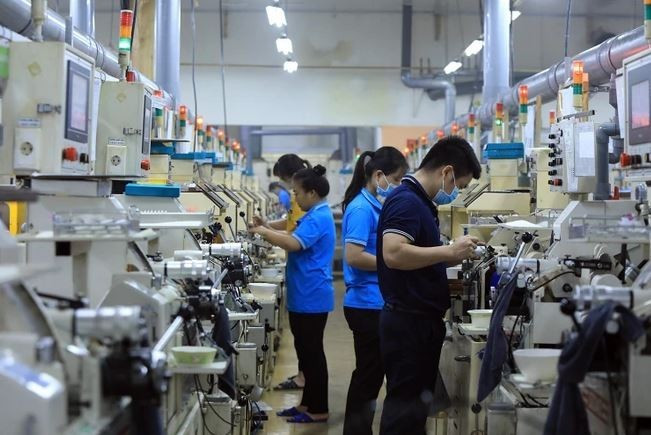
Notably, the electronics sector, traditionally the most affected by global trade fluctuations, still recorded strong growth. Since early 2025, electronics have eclipsed light manufacturing products as the top export to the US, becoming a key export category.
According to HSBC, the US is not only a key export market but also the largest contributor to Vietnam’s trade surplus. In the first half of 2025, the monthly surplus fell to around 1.3 billion USD but quickly rebounded to 3 billion in the third quarter, driven by strong growth in electronics exports.
This indicates that Vietnam’s dependence on the US market has increased compared to the period before the tariffs.
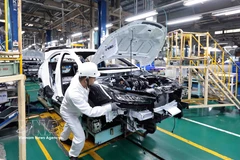
The trend aligns with Vietnam’s rising position in the technology value chain. Since the escalation of US – China trade tensions, Vietnam has strengthened its role in the assembly of complete electronic products, specialising in consumer electronics. Thanks to Samsung’s continuous investment since 2007, Vietnam has transformed into a major manufacturing hub, producing half of Samsung’s smartphone output.
Besides trade, another noteworthy indicator is Foreign Direct Investment (FDI), as Vietnam has benefited significantly from export growth driven by FDI. Although FDI fell by 8% year-on-year from early 2025 to date, the overall scale remains substantial.
Notably, FDI in manufacturing is near pre-pandemic levels, despite a decline from last year’s peak. The FDI composition also reveals clear shifts as investment inflows from the Republic of Korea dropped sharply by 72% year-on-year, while those from mainland China and the US increased significantly, partially offsetting the decline.
These inflows are expected to help Vietnam reduce reliance on a few major investors while strengthening medium- and long-term export growth prospects./.