Vietnam’s export sector urged to shift from low-cost production to value creation

The Ministry of Industry and Trade is developing the “International Market Expansion Programme 2026–2035” to help businesses grow sustainably, maximise the benefits of new-generation FTAs, strengthen green standards and promote digital trade.

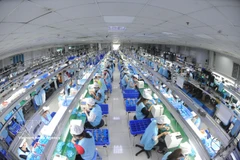
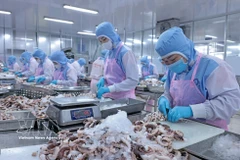
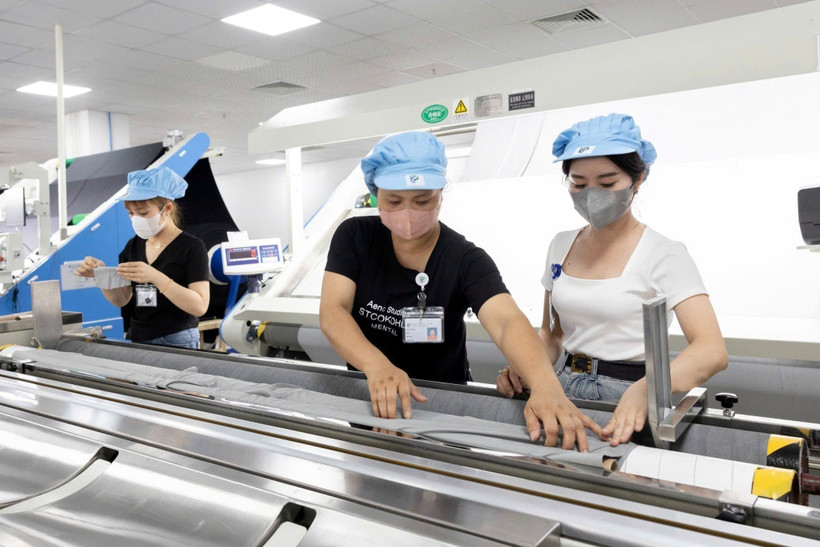
Garment workers in Nam Dinh province. (Photo: VNA)

Hanoi (VNA) – Despite impressive growth, Vietnam’s export sector continues to grapple with low added value, an imbalanced market structure and limited utilisation of free trade agreements (FTAs).

Experts say the current “turning-point phase” requires a decisive shift from low-cost production to value creation, supply-chain innovation and building strong national brands.

According to the Ministry of Industry and Trade (MoIT), Vietnam’s total trade value reached 800 billion USD by mid-November 2025. With current momentum, international trade is expected to set a new record of over 900 billion USD this year, reaffirming exports as a key growth driver.

However, significant challenges persist.

Dr Vo Tri Thanh, Director of the Institute for Brand and Competitiveness Strategy, noted that although trade volume has grown rapidly, domestic value added remains low and the bulk of profit in export chains continues to accrue to foreign-invested enterprises. This reflects limited participation by domestic firms in high-value stages such as design, technology, logistics and distribution.

Linkages between foreign-invested enterprises and local enterprises also remain weak, resulting in modest spillovers in technology and management. Market concentration is another concern, with the US and China accounting for up to nearly 45% of Vietnam’s total export revenue. Such dependence heightens vulnerability to policy shifts or changes in consumer preferences in these major markets.

Vietnam has signed more than 17 FTAs, yet the rate of preferential certificate of origin (C/O) utilisation remains relatively low at around 32–33%, according to the Ministry. Barriers include limited access to market information, fragmented production capacity, outdated technology and high compliance costs, especially for small and medium-sized enterprises.

Challenges are becoming more complex as the global economy accelerates its green and digital transformation. Major markets such as the EU, US and Japan are tightening requirements on environment, labour and traceability, placing considerable pressure on Vietnamese exporters.

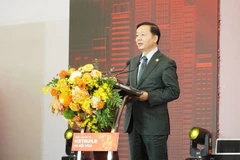
Vu Ba Phu, Director of the Trade Promotion Agency, said global trade is undergoing major shifts, including supply-chain restructuring, rising technical barriers, low-carbon logistics and the rapid expansion of cross-border e-commerce. These dynamics present both pressure and opportunity for Vietnamese firms seeking deeper entry into high-value markets.

In reality, many local firms continue to struggle with rules of origin, quality testing and supply-chain transparency. Some have even had to decline export orders because they could not meet importers’ technical requirements.

To create a new momentum for exports, experts highlight the need for stronger policy support and enhanced business capability.

Deputy Director of the Import-Export Department under the MoIT Tran Thanh Hai stressed the importance of raising quality standards and building brands to sustain traditional markets and access new ones.

Meanwhile, Thanh added that global development is shifting toward a model built on sustainability, inclusiveness and innovation. Vietnam, therefore, must move beyond low-cost production and toward value creation and national branding.

Phu informed that the MoIT is developing the “International Market Expansion Programme 2026–2035” to help businesses grow sustainably, maximise the benefits of new-generation FTAs, strengthen green standards and promote digital trade. If implemented effectively, these measures are expected to provide a solid foundation for Vietnamese goods to elevate their global position and advance into higher-value market segments in the coming decade./.
VNA

See more

Production of electronic components at Star Engineers Vietnam Co., Ltd. in Binh Xuyen I Industrial Park, Phu Tho province (Photo: VNA)

Vietnam looks to expand fiscal space to support double-digit growth

Experts emphasise that fiscal policy should move beyond a supportive role to actively lead growth. Continued and selectively expanded tax and fee reductions could directly ease cost pressures on businesses, enabling them to sustain operations and expand investment.

Ngo Quang Hung, representative of the Vietnam Trade Office in Malaysia, introduces Vietnamese products at the Melaka International Halal Fair, held from May 16-19, 2026. (Photo: VNA)

Vietnam, Malaysia promote smart business connectivity

Malaysia is paying close attention to Vietnam’s Doi Moi (Renewal) reforms, particularly in land policies, rice production technologies and seafood industry development, as both sides seek to expand practical cooperation.

The exchange of greenhouse gas emission quotas and carbon credits is conducted on the domestic carbon credit exchange through the carbon trading system, which is interconnected with the national registration system. (Photo congly.vn)

Ministry establishes monitoring framework for carbon market

Under a new circular, the exchange of greenhouse gas emission quotas and carbon credits is conducted on the domestic carbon credit exchange through the carbon trading system, which is interconnected with the national registration system.

Le Son Phong, Deputy Director of the Da Nang Department of Science and Technology, speaks at the press conference announcing the Da Nang Venture and Angel Summit 2026. (Photo: VNA)

Da Nang to host international venture capital forum later this month

Le Son Phong, Deputy Director of the Da Nang Department of Science and Technology, said DAVAS 2026 is not merely an investment-matching event for startups, but also demonstrates the city’s commitment to promoting innovation, developing the knowledge-based economy and creating a favourable environment for technology enterprises and startups.

Visitors explore southern Vietnam's products (Photo: vNA)

Vietnam, Cambodia boost supply chain connectivity

Total two-way trade neared 10.1 billion USD in 2024, up 17.5% year-on-year and jumping to more than 11 billion USD in 2025. Vietnam’s key exports to Cambodia include apparel, iron and steel, petroleum, machinery and equipment, chemicals, and processed food. Its main imports are cashew nuts, rubber, farm produce, and industrial raw materials.

Cao Thanh Dinh, founder and CEO of ANPz Co., Ltd (All Nippon Partners) in Japan (Photo: VNA)

Resolution 68 boosts investor confidence in Vietnam’s long-term outlook

Cao Thanh Dinh, Founder and CEO of ANPz Co., Ltd (All Nippon Partners) in Japan, said that after one year of implementation, Resolution No. 68-NQ/TW of the Politburo on private sector development has sent a positive signal to investors by affirming the private sector as a key driver of sustainable and long-term development.

To promote the local lychee brand, expand consumption markets and enhance the fruit's value, Bac Ninh province is organising various trade promotion activities and experiential tourism programmes during the 2026 lychee season. (Photo: VNA)

Bac Ninh promotes lychee tourism with 36 model orchards

According to the Bac Ninh Centre for Culture and Tourism Promotion, the orchards must comply with VietGAP, GlobalGAP or organic production standards while offering suitable conditions for experiential tourism activities. They are also required to connect with nearby tourist attractions, craft villages and historical sites to form integrated tour routes.

Ha Long-Mong Cai Expressway (Illustrative photo: VNA)

Quang Ninh takes lead in public investment disbursement

As of May 13, the northern province had disbursed more than 5.64 trillion VND (213.9 million USD) in public investment capital, fulfilling 24.2% of its annual target and 54% of its disbursement target of 10.56 trillion VND for the year's first half.