Hanoi (VNA) – As artificial intelligence (AI) is fast becoming a strategic technology, Vietnam has been quick to recognise the challenge posed by a shortage of high-quality AI professionals and is stepping up efforts to bridge the gap.
One of the most notable initiatives is the launch of the “Vietnam AI Academy”, expected to mark a breakthrough in developing internationally standardised AI talent and offering a fresh approach to workforce training in this field.
Strong demand, limited supply
Vietnam has identified AI as one of three pillars of its strategic technology pillars, alongside data and computing infrastructure. Central to mastering this field is the development of highly skilled human resources with the ability not only to absorb but also to innovate, apply, and disseminate knowledge.
In recent years, many universities have opened AI-related programmes and increased enrolment quotas. Around 150 universities and colleges nationwide now offer courses in information and communications technology (ICT), supported by some 74,000 technology firms – the main pool for digital and AI workforce training. Yet, training still falls short in both scale and quality compared with actual demand.
A Google report estimates Vietnam currently has only 300 AI experts, while the market faces an annual shortfall of 150,000–200,000 ICT workers, particularly in AI, big data, and cybersecurity.
Do Thanh Binh, Director of International Cooperation at the Vietnam Software and IT Services Association (VINASA), said demand for AI personnel is forecast to surge by 74% during 2025–2030, requiring hundreds of thousands of new engineers each year.
Beyond numbers, quality remains a concern. Training at many universities remains heavy on theory, with limited practical application and little alignment with global trends such as deep learning and generative AI. Lecturers with hands-on project experience are concentrated in a few major institutions.
Assoc. Prof. Dr. Nguyen Van Vu of the University of Science under the Vietnam National University - Ho Chi Minh City, noted that business demand for AI talent grows by 10–25% annually, but universities are only expanding enrolment by 5–10%. He cautioned that without guaranteed training quality, new programmes might still leave graduates struggling to find job opportunities.
Infrastructure for AI research and teaching is also lacking, with limited high-performance computing systems and underdeveloped laboratories. Links between government, academia, and business remain largely formal rather than substantive.
A pioneering tri-sector model
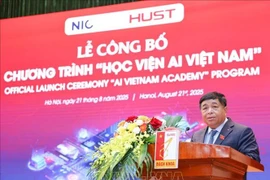
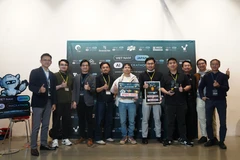
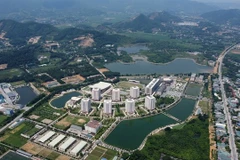
In response, leading educational institutions are accelerating reforms. The Hanoi University of Science and Technology (HUST) has emerged as a frontrunner, leveraging its strong technical education tradition and research capacity. In partnership with NVIDIA and the National Innovation Centre (NIC), the university has launched the Vietnam AI Academy.
The initiative represents a pioneering collaboration between government, academia, and business, seen as a strategic approach to building a high-tech workforce. HUST Rector Huynh Quyet Thang said the academy aims to produce internationally qualified professionals and a strong AI expert network to support enterprises and localities in their digital transformation.
The academy plans to train at least 2,000 learners in its first year, rising to 6,000 in the second and 8,000–10,000 by the third. It also contributes to the ViGen Project, which is developing an open-source Vietnamese language dataset for AI research and application, with support from Meta, NIC, and the AI for Vietnam community.
Experts stress that building a high-quality AI workforce requires synchronised measures: updating curricula to international standards, upgrading lecturer capacity, investing in computing infrastructure, expanding research collaboration, and creating incentives to attract domestic and foreign specialists.
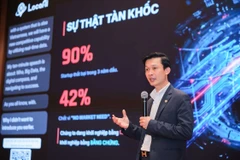
According to Vu Manh Cuong, Business Director of NVIDIA Vietnam, the country must urgently adopt the “train the trainer” model and combine self-learning with guided instruction. Training should target three levels: upskilling and reskilling existing ICT workers in public institutions, enterprises, and start-ups; standard training for average students; and advanced programmes for elite talent.
If pursued consistently, these efforts could help turn AI into a competitive advantage for Vietnam in the digital era, driving the country’s integration into the global value chain./.
See more
Journalists’ club names top 10 sci-tech events of 2025
The events were chosen from categories including policy and mechanisms, applied science and technology, social sciences and humanities, and honours for distinguished scientists.
Naval region 4 safely brings 52 fishermen to Song Tu Tay island
The Naval Region 4 Command reported on December 19 that it had coordinated efforts to safely bring 52 fishermen from a distressed fishing vessel to Song Tu Tay island in the Truong Sa special zone.
Gov't leader requests greater efforts to step up development of sci-tech, innovation
Emphasising three strategic digital breakthroughs - digital institutions, digital infrastructure and digital human resources - PM Chinh called for close integration of science and technology development, innovation, administrative reforms, digital transformation and Project 06 with efforts to streamline the organisational apparatus and modernise leadership, management and working styles.
Vietnam sets orientations for applying nuclear energy across sectors
The plan aims to ensure the effective implementation of Decision No. 245/QD-TTg dated February 5, 2025, which approved the national master plan, while concretising objectives, orientations, solutions and resources for applying radiation and radioisotopes across sectors. It also assigns responsibilities to ministries, sectors and localities, and sets roadmaps and priorities for key programmes and projects.
Viettel’s “Internet for Schools” project wins top honour at Human Act Prize 2025
The accolade recognises Viettel's nearly two-decade journey of expanding digital access to educational establishments, especially in rural, mountainous and island areas where technological limitations have long hindered learning and development opportunities for younger generations.
Internet Day 2025 highlights trust as cornerstone of digital development
Vietnam aims to develop a safe, humane, and trustworthy Internet that serves socio-economic development, with trust as the foundation, innovation as the driving force, and institutions as the pillar.
Ward- and commune-level comprehensive digital transformation ecosystem launched
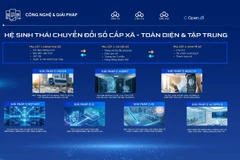
The ecosystem aims to build unified operational capacity at the grassroots level, reduce information delays and improve public service quality. It is structured around three key pillars.
Resolution No. 57: Digital transformation largely benefits people, businesses
The Law on Digital Transformation lays an important legal basis for implementing the Politburo’s Resolution No. 57-NQ/TW on breakthroughs in science – technology development, innovation, and national digital transformation.
AI hackathon connects Vietnamese tech engineers in Japan
A total of 32 teams registered for Vietnam–Japan AI Hackathon 2025 and competed through three rounds, with the eight strongest advancing to the final held on December 13.
Vietnam to become attractive destination for tech talent, innovative startups: PM
TechFest Vietnam 2025, held from December 12 to 14, is expected to attract more than 60,000 participants both in person and online, with the participation of over 20 corporations, 50 investment funds, more than 100 supporting organisations and incubators, and delegates from Southeast Asia, Northeast Asia, Central Asia, the Middle East, North America, and Europe.
Hanoi eyes turning Hoa Lac into Vietnam’s Silicon Valley
The ambition reflects the city’s vision to nurture world-class research, high-tech manufacturing and a thriving startup ecosystem capable of powering long-term growth.
Vietnam emerges as attractive destination for technology capital in Southeast Asia
The report notes that after more than a decade of development, Vietnam’s startup ecosystem has entered a phase of deeper growth and stronger international integration. The country is now home to more than 4,000 startups, two unicorns, and dozens of companies approaching unicorn status.
Vietnam, Japan enhance cooperation in intellectual property protection
Tran Huu Linh, Director of the Agency for Domestic Market Surveillance and Development, said IP infringements have recently become more sophisticated, particularly in fast-moving consumer goods, fashion, cosmetics and electronic components.
Applying the Internet of Things in smart transport
The project aims to build a unified, safe and efficient IoT platform to support the management, operation and exploitation of smart transport systems under the Ministry of Construction, with data shared across ministries and localities.
Viettel secures three prestigious international awards
Viettel has won honours in the “People & Culture” and “Best Operator in a Growth Market” categories at the 2025 World Communication Awards (WCA), alongside the “Best Digital Transformation Project” at the 2025 Global Telecoms Awards (Glotel).
Green-tech push for Can Gio
Vietnam has the capacity, ambition and technological foundation to join the group of leading sustainable coastal urban nations in the coming decade, experts said at a dialogue on "advancing to the sea with ESG++ megacities: breakthroughs through green technology", held on December 9 in Hanoi by the Vietnam Institute for Real Estate Studies (VIRES).
Vietnam turns intellectual property into bankable assets in new law
About AI-generated content, the law draws a clear line: purely autonomous AI creations are not eligible for copyright or patent protection. Those who provide substantial creative input, such as ideas, curation, editing, or selection, qualify as authors or inventors.
National Cybersecurity Association opens branch in HCM City
The southern branch aims to become a coordinating body for cybersecurity tasks, workforce development, awareness-raising and the strengthening of digital defence capabilities across the region, contributing to the safe and sustainable growth of Vietnam’s digital economy.
Viettel exceeds target of 20,000 new 5G stations by more than three weeks
Viettel plans to continue scaling up its network from now until the end of 2025, with an additional 23,500 stations scheduled for installation, nearly quadruple the number rolled out in 2024. Once completed, Viettel will operate Vietnam’s largest 5G network, with 30,000 stations covering 90% of outdoor areas and 70% of indoor spaces nationwide, from major cities to rural regions.
Vietnam Academy of Social Sciences affirms role in Asia's research community
The VASS delegation joined the plenary session and seven specialised discussions of the the 26th Biennial Conference of the Association of Asian Social Science Research Councils (AASSREC), focusing on social science research in the Indo-Pacific for a sustainable future.