Vietnam – ideal destination for global electronics makers

Vietnam has been a fast-rising star in the global manufacturing spot, according to techwireasia.com, an independent tech news website that covers enterprise and technology in Asia.
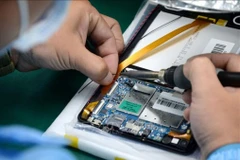
Vietnam – ideal destination for global electronics makers ảnh 1Apple CEO Tim Cook introduces iPads and mini iPads in Cupertino, California. (Photo: AFP/VNA)

Hanoi (VNA) - Vietnam has been a fast-rising star in the global manufacturing spot, according to techwireasia.com, an independent tech news website that covers enterprise and technology in Asia.

“Vietnam has slowly been rising to be Apple’s most important manufacturing hub. It started with Vietnamese manufacturers having previously been contracted to make some of Apple’s flagship products including iPads and AirPods,” the website said.

Then when the COVID-19 lockdowns affected the supply chain in China, Cupertino gradually started shifting iPad production to Vietnam. Apple’s leading iPad assembler, BYD, is reportedly assembling the tablets at its production lines in Vietnam.

The iPad will actually become the second line of Apple products following the Airpods wireless earbuds to be made in Vietnam.

Nikkei Asia recently reported that Apple is in talks to make Apple Watches and MacBooks in Vietnam for the first time, marking a further win for the Southeast Asian country as the US tech giant looks to diversify production.

Apple suppliers Luxshare Precision Industry and Foxconn have started test production of the Apple Watch in northern Vietnam with the aim of producing the device outside of China for the very first time.

The Apple Watch is even more sophisticated, according to industry experts, who say that squeezing so many components into such a small case requires a high degree of technological skill. Producing the device would be a win for Vietnam as the country attempts to further upgrade its tech manufacturing sector.

The number of Apple suppliers with facilities in the country has increased to at least 22 from 14 in 2018, according to Nikkei Asia’s analysis of Apple’s latest available suppliers list and interviews with sources.

The last few years, more so since the pandemic, global businesses started to diversify, to increase resiliency and connectivity of their supply chains and decrease reliance on a single country. All that led to Vietnam becoming a top destination for investment in manufacturing due to its strategic location and advantages in shipping, competitive labor, and production costs.

Especially when it comes to the assembling and manufacturing of tech products from smartphones to TV components, Vietnam has made its presence felt in the past decade. The Republic of Korea and Japan – both home to some of the biggest technology names – account for the largest chunk of 376 billion USD of FDI, which came into the Vietnamese manufacturing sector between 2015 and 2020, according to one study. Last year, RoK electronic giant LG invested more than 1 billion USD in ramping up its OLED display output at the Vietnamese port city of Hai Phong.

Vietnam – ideal destination for global electronics makers ảnh 2Prime Minister Pham Minh Chinh visits a phone circuit board production line of Samsung Electronics Vietnam in Thai Nguyen. (Photo: VNA)

Overall, due to the shift in production caused by the trade war, Vietnam’s economy was boosted by almost 8%, according to an analysis of Nomura – a Japanese investment bank. Samsung already accounts for a quarter of Vietnam’s exports and even this year the tech giant reinforced its position as the largest exporter in Vietnam. US-based Intel has also set up its biggest chip assembly plant there. 

Vietnam is doing all it can to attract American investors. Oxford Economics predicts that around 4% of global electronic exports will come from Vietnam by 2025. 

“That really makes Vietnam, which is close to China, an ideal destination for many electronics makers as the nation gradually grows its supply chain ecosystem,” Eddie Han, a senior analyst with Isaiah Research, told Nikkei Asia.

Vietnam’s GDP growth is forecast to surge from an estimated 2.6% in 2021 to 7.5% in 2022, with resilient manufacturing and a robust rebound in services serving as the driving forces for economic recovery. According to the latest economic update by World Bank (WB) for Vietnam, the country’s economy expanded 5.2% in Q4 of 2021, and respectively 5.1% and 7.7% t in Q1 and Q2 of 2022./.

VNA

See more

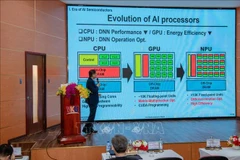
An expert speaks at the International Conference on Semiconductors (ICOS) 2026 (Photo: VNA)

ICOS 2026 highlights pathways for Vietnam’s semiconductor development

This was the first international, specialised semiconductor conference held in central Vietnam and the first time the country hosted a large-scale academic forum dedicated exclusively to this sector. Organised in line with international standards, it featured plenary sessions, technical presentations and industry forums, reflecting major research trends shaping the semiconductor sector.

Resolution No.57: People should be put at centre of AI governance

Resolution No.57: People should be put at centre of AI governance

Assessing the role of AI, Minister of Science and Technology Nguyen Manh Hung emphasised that it is an “intellectual infrastructure.” More than an applied technology, AI is increasingly becoming a form of national infrastructure, comparable to electricity, telecommunications or the Internet.

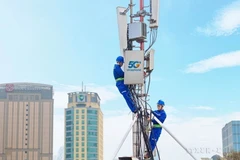
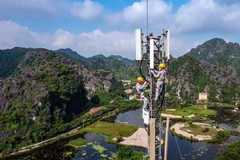
In Vietnam, 5G technology infrastructure has begun to be widely deployed by domestic network operators (Photo: VNA)

5G technology expansion expected to boost Vietnam’s digital economy

The Ministry of Science and Technology reported that by 2025, 5G had been commercialised nationwide, covering more than 90% of the population. Viettel alone has deployed 30,000 5G base stations, achieving 90% outdoor coverage and 70% indoor coverage, exceeding its commitments to the Government.

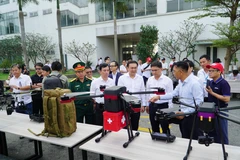
At a display of UAVs (Photo: VNA)

HCM City pilots UAVs for delivery services

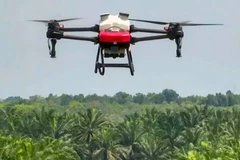
HCM City aims to promote UAV use in urban delivery - a promising field contributing to smart logistics and postal services for e-commerce, smart cities and high-tech public services, while fostering UAVs as a strategic technology sector underpinning the innovation ecosystem.

Viettel's virtual assistant for searching administrative units helps shorten time and simplify searches for people. (Photo: Viettel)

Viettel’s virtual assistant among Top 10 technology products

The accolade recognises the mastery of core technologies by the Viettel Artificial Intelligence and Data Services Centre (Viettel AI), while reaffirming the group’s capacity to successfully deploy “Make in Vietnam” artificial intelligence solutions in international markets.

Workers are operating a robotic wafer conveyor assembly line in the semiconductor industry. (Illustrative image. Photo VNA)

Innovation – Driver for new development phase

The draft action programme of the Party Central Committee to implement the Resolution of the 14th National Party Congress identifies the shift to a new growth model, economic restructuring, and accelerated industrialisation and modernisation, with science, technology, innovation and digital transformation as the core engines, as key tasks.

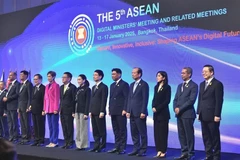
Participants at the 5th ASEAN Digital Ministers Meeting (ADGMIN) in Thailand. (Photo: VNA)

Hanoi to host 6th ASEAN Digital Ministers’ Meeting in January

Held annually on a rotating basis among ASEAN member states, the meeting plays a key role in shaping strategic orientations, formulating policies and promoting digital cooperation within ASEAN, while strengthening collaboration with partners and international organisations amid rapid digital and digital-economy transformation globally.

(Illustrative photo: Viettel)

Viettel records breakthrough in first 5G Advanced trial

The achievement, marked as Vietnam’s first 5G Advanced trial, was made possible by carrier aggregation (CA) technology, enabling mobile devices to operate across multiple frequency bands simultaneously instead of a single band.

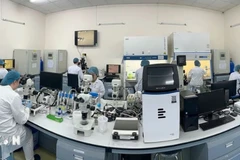
A biotechnology laboratory of the International University at Vietnam National University-Ho Chi Minh City. (Photo: VNA)

Resolution 57: Role of intellectuals in advancing science and technology research

Prof. Dr. Tran Dai Lam, Director of the Institute of Materials Science at the Vietnam Academy of Science and Technology (VAST), emphasised that intellectuals should nurture national responsibility and ambition, be ready to take on challenges, evaluate research outcomes by international standards, and engage in collaboration across different sectors.

Professor Vu Minh Khuong, of the Lee Kuan Yew School of Public Policy (right), talks to a Vietnam News Agency correspondent in Singapore. (Photo: VNA)

Resolution 57 - catalyst for scientific and technological breakthroughs

The resolution also seeks to create stronger mechanisms to mobilise social and private resources and support an innovation ecosystem; link digital transformation in the public sector with the modernisation of national governance; and prioritise the development of elite human resources and internationally-standard research infrastructure.

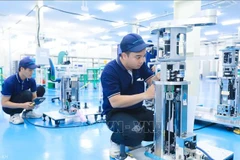
Workers produce electronic components (Photo: VNA)

Science, technology drive Vietnam’s rising global profile: expert

Assoc. Prof. Le Duc Anh from Tokyo University held that for fast and sustainable development, Vietnam should prioritise science – technology and innovation as the main driver of productivity, focusing on sectors with high spillover effects such as semiconductors, AI, data, new energy and materials, biomedical technology, automation – robotics, and cybersecurity.