Vietnam, Italy seek to unlock potential, drive new growth momentum

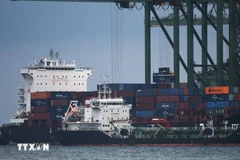
Italy is currently Vietnam’s third-largest trading partner in the European Union. In the first seven months of 2025, bilateral trade exceeded 4.3 billion USD, up 5.1% from the same period in 2024. Vietnam’s exports to Italy reached 3.1 billion USD, a 4.5% increase, while imports from Italy stood at 1.2 billion USD, up 6.7%.

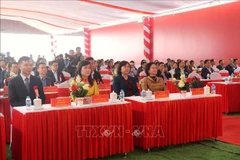
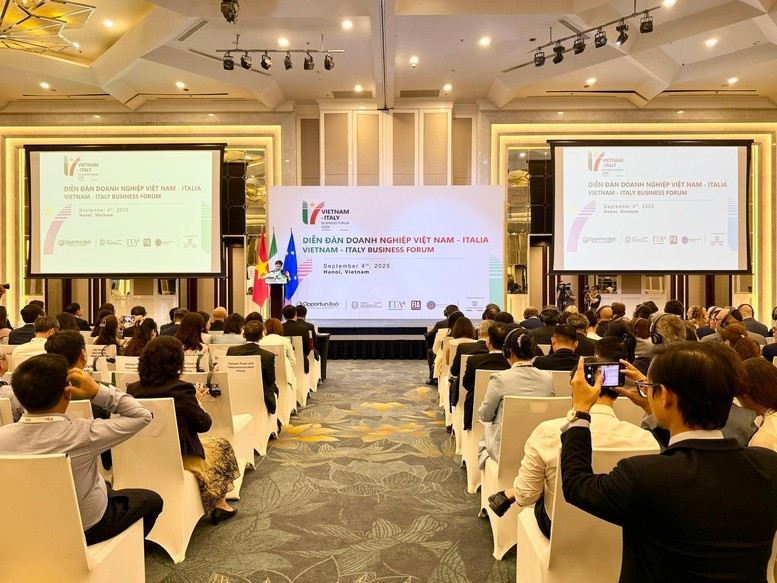
At the Vietnam – Italy Business Forum held in Hanoi on September 4 (Photo: baochinhphu.vn)

Hanoi (VNA) – The potential for economic, trade, and investment cooperation between Vietnam and Italy remains vast, offering opportunities for stronger and more substantive growth, Deputy Minister of Finance Ho Sy Hung said at the Vietnam – Italy Business Forum held in Hanoi on September 4.

The event, co-hosted by the Ministry of Finance, the Italian Trade Agency (ITA), and the General Confederation of Italian Industry (Confindustria), served as an important milestone in fostering bilateral investment, trade, and business ties.

Hung highlighted four features that define the Vietnam – Italy relationship: reliable partnership, complementary economies, warm and sincere friendship, and a shared aspiration for peace and progress. Since the establishment of the Strategic Partnership in 2013, bilateral relations have achieved remarkable results, standing as a model of regional cooperation. Italy remains deeply connected to Vietnam through shared cultural values, historical links, and a common vision of peace, stability, and prosperity.

Italy is currently Vietnam’s third-largest trading partner in the European Union. In the first seven months of 2025, bilateral trade exceeded 4.3 billion USD, up 5.1% from the same period in 2024. Vietnam’s exports to Italy reached 3.1 billion USD, a 4.5% increase, while imports from Italy stood at 1.2 billion USD, up 6.7%.

On investment, Italian investors have registered 162 projects in Vietnam with combined capital of over 624 million USD, ranking Italy 32nd among 151 countries and territories investing in the country. Meanwhile, Vietnam has invested in one project in Italy worth nearly 700,000 USD.

According to Hung, Vietnam looks forward to Italian businesses leveraging their resources, expertise, and reputation to help Vietnam access global investment flows, green and sustainable finance, as well as investment in science, technology, and innovation.

Vietnam is giving priority to projects in green, digital, circular, and knowledge-based economy; science and technology; renewable and new energy; international financial centre and green finance; high-tech agriculture and industry; and trade and tourism.

This forum offers opportunities for connection and knowledge-sharing in four promising areas: mechanical engineering and agricultural technology; energy transition and circular economy; infrastructure and transport; and high technology and innovation, Hung noted.

He also called on Italy to support early ratification of the EU–Vietnam Investment Protection Agreement (EVIPA) by EU member states, and to create more favourable conditions for Vietnamese enterprises to participate more deeply in global supply chains. Both sides should expand cooperation in new fields such as digital economy, green economy, circular economy, energy transition, and free trade zones, the deputy minister said.

Notably, as Vietnam is pursuing its commitment to achieve net-zero emissions by 2050, the country seeks to learn from Italy’s experience in renewable energy development and green economy initiatives.

The forum witnessed the signing of more than 10 memoranda of understanding (MoUs) covering innovation and Industry 4.0, energy and infrastructure, financial and insurance cooperation, and trade and tourism promotion. These agreements provide a foundation for businesses from both countries to implement concrete projects in the near future.

In addition, four thematic sessions were held on machinery and agricultural technology, energy transition and circular economy, infrastructure and transport, and high technology and innovation.

These discussions offered updates on policies, opportunities, and development orientations in both countries, while creating space for businesses to explore practical cooperation.

Business-to-business networking activities also took place, giving Vietnamese and Italian enterprises a chance to meet directly, seek partners, expand markets, and build long-term collaboration./.
VNA

See more

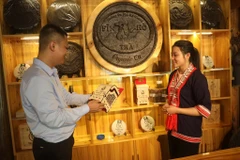
Phin Ho Tra – a national five-star OCOP product. (Illustrative photo: VNA)

Hanoi to host Vietnam OCOP Festival 2025

The festival is seen a practical activity celebrating the achievements made by the capital and the country in 2025, affirming OCOP’s role in rural economic development, contributing to realising Vietnam’s aspiration for strong economic growth in the context of deep integration.

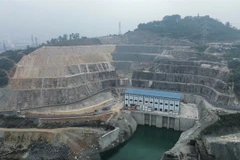
The expanded Hoa Binh Hydropower Plant (Photo baochinhphu.vn)

EVN launches major power projects

Among the flagship projects inaugurated was the expanded Hoa Binh Hydropower Plant with a total installed capacity of 480MW per year and average annual output of about 488 million kWh.

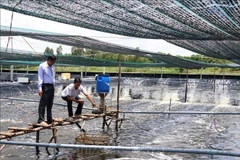
An ultra-intensive shrimp farming model linked with environmental protection in Ca Mau province. (Photo: VNA)

Fisheries take the lead in the Mekong Delta’s green transition

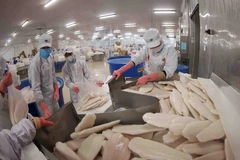
Across the Mekong Delta, leading aquaculture producers, processors and exporters, along with suppliers of inputs, are transitioning to circular, high-tech and clean production models that cut greenhouse gas emissions and comply with international certification standards.

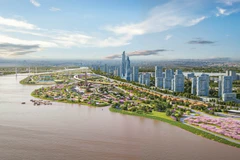
A perspective view of the Red River Landscape Boulevard project in Hanoi (Photo: VNA)

Works starts on Hanoi’s Red River Landscape Boulevard Axis project

The project is among the 234 key works and projects being launched, inaugurated or technically opened simultaneously across 34 cities and provinces nationwide to mark the 14th National Party Congress. Its launch contributes to implementing the country’s strategic development orientations while concretising Hanoi’s development goals in the new period.

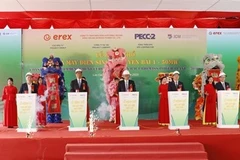
The ground-breaking ceremony of the Yen Bai 1 biomass power plant in Lao Cai province on December 19. (Photo: VNA)

Work starts on 114-million-USD biomass power plant in Lao Cai

The project, developed by Erex Yen Bai Biomass Power Co. Ltd. is located in Dong Cuong commune, Lao Cai province. It is backed by Japan’s Erex Group and falls under the Joint Crediting Mechanism, a bilateral initiative between Vietnam and Japan to reduce greenhouse gas emissions.

At the inauguration ceremony (Photo: VNA)

Vietnam Railways Corporation unveils upgraded coaches, digital tools

These moves reflect the VNR's commitment to fulfilling six priority tasks set by the Prime Minister, including leading in innovation and digital transformation, applying sci-tech in line with the Politburo’s Resolution No. 57-NQ/TW, and spearheading advances in digital, green and circular economy.

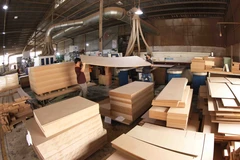
Producing MDF panels for export at Hai Duong MDF Construction and Manufacturing Co., Ltd., in Ho Chi Minh City (Photo: VNA)

HCM City targets 15 billion USD in wood exports by 2035

The merger of HCM City with Binh Duong and Ba Ria – Vung Tau is expected to give the local wood industry a strong boost into a phase of high-quality growth driven by linkages, innovation, sustainability, and deeper integration into global value chains.

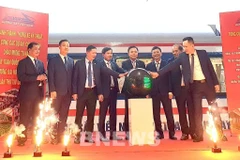
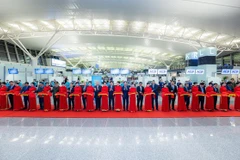
Delegates cut a ribbon to inaugurate the expanded Terminal T2 at Noi Bai International Airport in Hanoi on December 19, 2025. (Photo: VNA)

Expanded Terminal T2 at Noi Bai International Airport makes debut

The project expands the terminal’s floor area to over 200,000 sq.m, increases passenger capacity from 10 million to 15 million, even up to 18 million per year, and boosts operational capacity with boarding gates rising from 17 to 30 and jet bridges from 14 to 27, meeting strong growth in international travel demand.

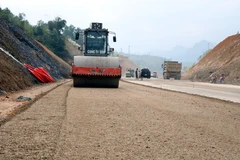
A section of Can Tho - Ca Mau Expressway (Photo: VNA)

Can Tho – Ca Mau travel time halves from December 19

Stretching more than 110 km with a total investment of over 27.5 trillion VND (1.04 billion USD), the project not only resolves long-standing traffic bottlenecks in the Mekong Delta, but also opens up new development opportunities for the entire region - especially Ca Mau, the last locality in the country to be directly connected to the eastern North–South expressway axis.