Vietnam, Japan eye stronger healthcare cooperation

Vietnam and Japan are strengthening healthcare cooperation in preventive medicine, human resource training, and sustainable medical infrastructure development, aiming to advance comprehensive healthcare.

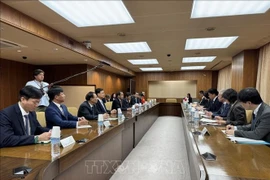
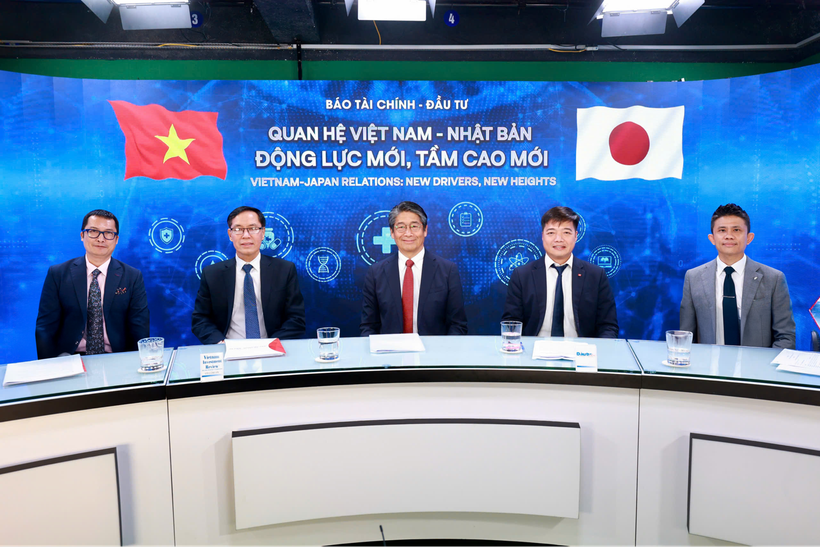
Delegates exchange views at the seminar (Photo: VietnamPlus)

Hanoi (VNA) – Vietnam and Japan are strengthening healthcare cooperation in preventive medicine, human resource training, and sustainable medical infrastructure development, aiming to advance comprehensive healthcare.

Healthcare cooperation has been highlighted as one of the key pillars of Vietnam–Japan relations, reflected in programmes promoting preventive medicine, infrastructure development, and human resource training.

At a seminar themed “Vietnam – Japan Relations: New Momentum, New Heights" hosted by the Investment Review on the occasion of the 52nd anniversary of diplomatic relations between the two countries (1973–2025) on October 15 in Hanoi, delegates discussed strategic cooperation, with healthcare considered a top priority.

japan2.png
Japanese Ambassador to Vietnam Ito Naoki speaks at the seminar (Photo: VietnamPlus)

In his remarks at the event, Japanese Ambassador to Vietnam Ito Naoki said that the two countries are expanding cooperation in innovation, digital transformation, green transition, artificial intelligence (AI), and the semiconductor industry. The two governments have agreed to consider these as new pillars to promote sustainable development.

According to the diplomat, the two countries are promoting many cooperation programmes in preventive medicine, healthcare digitalisation, and elderly care, aiming to build a more efficient healthcare system.

Japan is currently supporting Vietnam in strengthening primary healthcare capacity, narrowing regional gaps in service access, and enhancing the ability to prevent and control both non-communicable and infectious diseases.

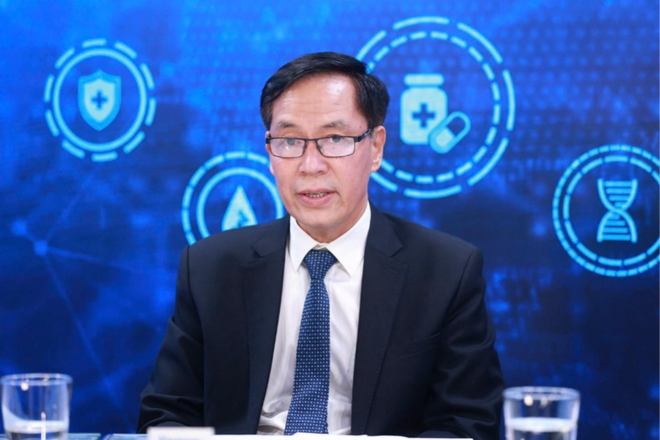
Dang Quang Tan, Director General of the Department of International Cooperation under the Ministry of Health (MoH), said Japan is a key partner in healthcare. The bilateral cooperation has evolved into a long-term strategic relationship, strengthened by the Memorandum of Cooperation in the Health Sector signed in 2019 between the MoH and the Japanese Ministry of Health, Labour and Welfare.

So far, many key cooperative projects have been implemented, focusing on three pillars - modern infrastructure, advanced equipment, and capacity development.

Notable projects in Vietnam include the 3 million USD project, "Strengthening Capacity Development System for Health Workers through Telemedicine" implemented by MoH in cooperation with the Japan International Cooperation Agency (JICA), and Improving the Prevention and Control of Viral Hepatitis between the Vietnam Administration of Disease Prevention and JICA. These projects have yielded positive outcomes in disease control and treatment, bringing practical benefits to the Vietnamese people.

Vietnam's healthcare development strategy in the coming years will be based on innovation, high technology application, improved service quality, and international integration, Tan said. Vietnam encourages Japanese enterprises to share experience, technology, and advanced management models in areas such as pharmaceuticals, medical equipment, food safety, traditional medicine, and hospital management.
japan3.png
Dang Quang Tan, Director General of the Department of International Cooperation under the Ministry of Health (Photo: VietnamPlus)

Dang Quang Tan, Director General of the Department of International Cooperation under the Ministry of Health (Photo: VietnamPlus)

From an economic and investment perspective, Nguyen Anh Tuan, Deputy Director-General of the Foreign Investment Agency under the Ministry of Planning and Investment (MoPI), said Japan is currently the largest provider of official development assistance (ODA) capital for Vietnam, the third-largest foreign investor, and the fourth-biggest trade and tourism partner of the Southeast Asian nation.

So far, Japan has invested in more than 5,600 projects in Vietnam with a total registered capital exceeding 78 billion USD.

Japan’s investment advantages align closely with the Vietnamese Government’s priorities for sustainable economic development, particularly in high technology, manufacturing, healthcare, digital transformation, and science and technology. Among these, healthcare remains a key priority in bilateral cooperation, with concrete and timely progress being made.

At the seminar, speakers emphasised the crucial role of public–private partnership (PPP) models in building a sustainable healthcare system.

Ambassador Ito Naoki praised the contribution of Japan's private sector in this field. He expressed belief that through cooperation activities of Japanese companies in healthcare, the quality of healthcare services and the capacity of Vietnam’s health system will continue to improve.

The diplomat cited the case of Takeda Group as a prime example of Japanese enterprises’ role in Vietnam’s healthcare sector, noting that the company developed the first dengue vaccine licensed for use in Vietnam.

From 2021 to 2024, Takeda, in collaboration with Japan's National Centre for Global Health and Medicine (NCGM) under the Japanese Ministry of Health, Labour and Welfare, and the Ho Chi Minh Society of Asthma, Allergy and Clinical Immunology (HSAACI), launched an initiative to strengthen the diagnosis and treatment capacity for Hereditary Angioedema (HAE) — a rare disease.

So far, this initiative has helped strengthen professional capacity in diagnosing and treating HAE in Vietnam through expert exchange programmes between Vietnam and Japan. Over 70 seminars, discussions, and training courses were organised, benefitting 7,500 healthcare professionals, screening over 100 suspected cases, and accurately diagnosing 35 HAE patients.

Two specialised treatment centres have been established in Hanoi and HCM City, expanding access to care for patients./.
VNA

See more

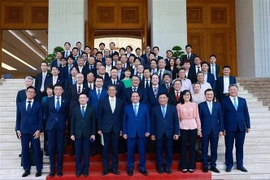
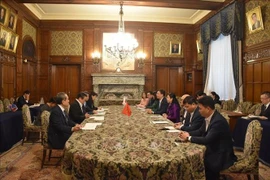
At the event (Photo: VNA)

First hospital in Mekong Delta earns US AACI accreditation

Nam Can Tho University Hospital on December 15 hosted a ceremony to announce its accreditation by the American Accreditation Commission International (AACI), a US-based body, becoming the first facility in the Mekong Delta and among a select few in Vietnam to earn the distinction.

A health worker administer IPV polio vaccine to a child in Dong Thap province. (Photo: VNA)

Vietnam proactively takes polio prevention measures amid outbreak in Laos

The meeting took place following an assessment by the World Health Organisation (WHO) warning that Vietnam is facing a very high risk of polio import and re-emergence. The risk arises after neighbouring Laos officially declared a polio outbreak on October 7, following the detection of circulating vaccine-derived poliovirus type 1 (cVDPV1).

A view of the International Conference on Molecular Diagnostics in Microbiology and Diseases, organised by Rencontres du Vietnam and the International Centre for Interdisciplinary Science and Education (ICISE) in the central province of Gia Lai on December 11. (Photo: VNA)

Nearly 100 international scientists attend molecular diagnostics conference in Vietnam

The conference features almost 80 presentations across plenary sessions, parallel sessions and poster sessions, focusing on leading research trends such as point-of-care diagnostics; predictive biomarkers used to anticipate individual responses to therapy; and the development of new tools and platforms for rapid molecular-level detection and diagnosis.

Digital transformation in healthcare is being strongly promoted. (Photo: Organising Committee of the 2024 “Technology with Heart” Award, co-hosted by Vietnam News Agency and Viettel)

AI and precision medicine: Emerging prospects for Vietnam-Canada cooperation

Canada has strong experience in compiling and analysing genomic data, while Vietnam has a large population with diverse genetic structures. This complementarity can help Vietnam narrow its technological gap and enhance its capacity to treat rare diseases — an area many countries are prioritising for development.

Maternal and child healthcare in Tuyen Quang province. (Photo: VNA)

Vietnam on path to become a healthy nation

Resolution 72 not only focuses on health care but is also closely interlinked with other sectors, helping to build a solid foundation for sustainable national development and create momentum for Vietnam to “take off” and further integrate into the world.

The emergency ward at Bach Mai Hospital, Hanoi. (Photo: VNA)

Health sector targets free hospital fee for all

The total value of medical expenses not covered by the health insurance fund is estimated at around 24.8 trillion VND (942 million USD) per year. Health insurance contributions remain low, at 4.5% of the salary or reference base used for calculation.

Sen. Lieut. Gen. Vongsone Inpanphim, Lao Deputy Minister of National Defence and Director of the General Department of Politics presents the Friendship Order of Laos to Vietnam’s Central Military Hospital 108. (Photo: VNA)

Vietnam, Laos expand cooperation in military medicine

Over the past two decades, many Vietnamese experts have undertaken long-term missions at the Central Hospital 103 to provide training and technical assistance, contributing to the successful treatment of complex cases. The Central Military Hospital 108 has also trained 206 Lao doctors, six nurses and two engineers — a clear demonstration of substantive, long-standing cooperation.

Deputy Minister Do Xuan Tuyen (left) and Alberto Anaya Gutiérrez, General Secretary of the Mexican Workers' Party (PT). (Photo: VNA)

Vietnam, Mexico boost medical cooperation

As both nations look to keep their long-standing partnership in good health, the health ministries of Vietnam and Mexico have been accelerating cooperation, especially in traditional medicines.

The opening of Vietnam Medi-Pharm 2025 and Vietmedicare Expo in Ho Chi Minh City on November 27, 2025. (Photo: VNA)

Major medical, pharmaceutical exhibitions kick off in HCM City

The 33rd Vietnam International Medical and Pharmaceutical Exhibition (Vietnam Medi-Pharm 2025) and the International Exhibition on Pharmaceuticals, Medical Devices and Healthcare (Vietmedicare Expo 2025) kicked off at the Saigon Exhibition and Convention Centre on November 27.

Doctors Do Thi Ngoc Linh (left) and Le Diep Linh at the RCS membership certificate award ceremony in London. (Photo: VNA)

Vietnamese surgeons honoured with prestigious Royal College Fellowship

The fact that the Vietnamese doctors have been awarded with FRCS certificate proves Vietnam’s surgical expertise has met international standards, contributing to improving the quality of treatment at home, expanding academic cooperation with world leading medical institutions and inspiring younger doctor to pursue higher standards.