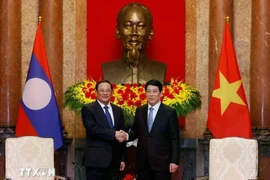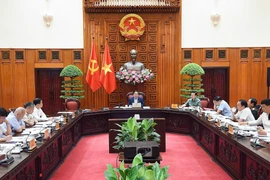
Hanoi (VNA) – State President Luong Cuong’s state visit to Laos is expected to provide an opportunity for the two sides to advance bilateral ties in a more substantive, practical, and sustainable manner, especially in terms of trade.
Trusted neighbours
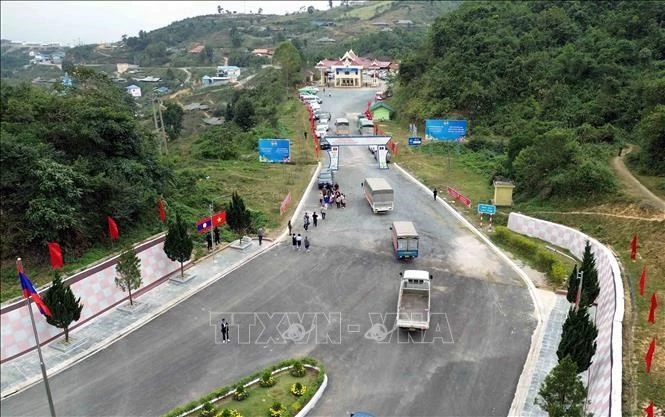
Vietnam and Laos share a border line stretching over 2,300 kilometres which runs through 10 provinces in each country. This frontier is strategically positioned along the East–West Economic Corridor, offering substantial potential for development. Along the shared border, the two countries have established a network of border crossings, including nine international border gates, six main gates, 18 auxiliary checkpoints, and 27 designated crossings. In addition, nine border gate economic zones have already been formed.
In 2015, the two countries signed the Vietnam–Laos Border Trade Agreement, which was initially valid until 2018 and extended until the end of 2024. A new Vietnam–Laos bilateral trade agreement was signed on April 8, 2024 and came into effect on February 24, 2025. Additionally, on January 9, 2025, the Vietnamese Minister of Industry and Trade and the Minister of Energy and Mines of Laos signed a new agreement on coal and electricity trade. This agreement took effect immediately upon signing.
According to the Department of Foreign Market Development under Vietnam’s Ministry of Industry and Trade, recent years have seen the total value of bilateral trade surpass 2 billion USD. Both sides are now aiming to increase the figure to 5 billion USD, with annual growth averaging around 12%. Statistics from the Department of Customs showed that in 2024, trade between Vietnam and Laos reached 2.25 billion USD, up 38.2% from the previous year. Of which, Vietnam exported 755.2 million USD worth of goods to Laos, up by 41.6%, while imports from Laos stood at 1.5 billion USD, a rise of 36.5%.
In the first quarter of 2025, two-way trade reached 980.1 million USD, a surge of 105.5% compared to the same period in 2024. Exports from Vietnam valued at 346.4 million USD, representing soaring 138.6%. Meanwhile, imports from Laos rose by 91.1% to 633.6 million USD.
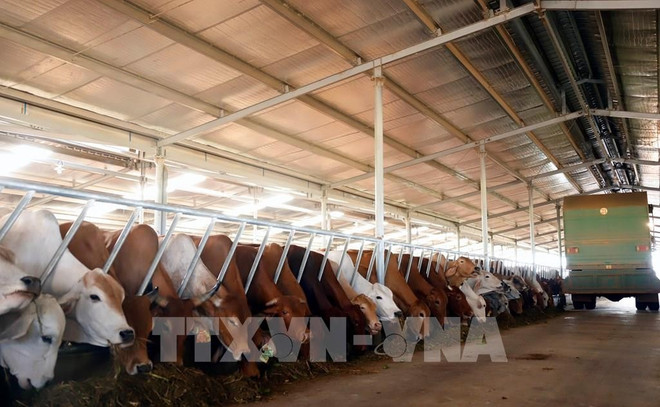
Vietnam’s exports to Laos are undergoing a notable transformation in terms of structure. Industrial goods, chemicals, and construction materials are now taking centre stage, showing record growth. Key exports from Vietnam to Laos include chemical products, machinery and equipment, iron and steel products, animal feed and raw materials, and various vehicles and components. Meanwhile, Vietnam imports raw materials such as rubber, coal, fertiliser, timber, minerals, and maize to serve as vital inputs for domestic industries.
(Photo: VNA)
The trade structure shifted significantly in the first quarter of 2025. Industrial goods and raw materials increasingly replaced the more traditional agricultural and fuel-based exports. Estimates for the first four months of 2025 suggest total trade volume will reach around 1.3 billion USD, up by 112.6% year-on-year. Of that, Vietnam's exports are expected to hit approximately 466.8 million USD, an impressive rise of 150.8%, while imports from Laos are projected to reach 852.7 million USD, up by 96.2%. At present, Vietnam maintains a trade deficit with Laos, estimated at about 386 million USD, which is 55.3% higher than in the same period last year.
In terms of investment, Vietnamese businesses have run 267 projects in Laos, with total registered capital of 5.7 billion USD, with roughly 2.8 billion USD disbursed. Many of these ventures are performing well and have made substantial contributions to Laos’s socio-economic development.
At the 47th meeting of the Vietnam–Laos Inter-Governmental Committee, held in January 2025 in Laos, both sides signed four major cooperation documents. These included the official minutes of the session, a 2025 cooperation plan between the two governments, a formal agreement on coal and electricity trade, and a cooperation plan between the education ministries of both countries. Additionally, 13 investment certificates and licences were awarded during the meeting, with a total value of approximately 1.8 billion USD.
Notably, Vietnam and Laos have signed agreements on coal and electricity trade, finalised the framework for local currency payments, and established bilateral retail payment connectivity. These serve as important legal foundations for both sides to continue effectively implementing their commitments to cooperation in coal and electricity trade in the near future. At the same time, they facilitate trade, commercial exchanges, and financial services for businesses and citizens of both countries, especially in border areas.
Despite encouraging progress, experts noted that bilateral trade has yet to match its potential. Some limitations remain, particularly in policies designed to attract investment in processing and manufacturing, as well as in infrastructure and logistics development near border areas. Infrastructure development, especially roads linking districts and connecting to border gates are still lagging, restricting the flow of goods and slowing down the pace of commercial activity.
Elevating relationship
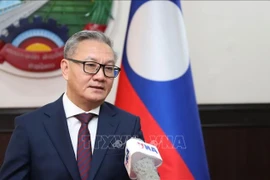
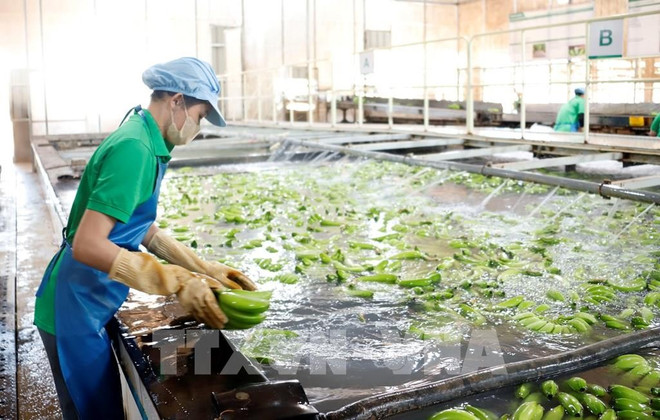
Vietnam’s Ambassador to Laos Nguyen Minh Tam stressed the importance of boosting economic collaboration through enhanced institutional linkages, infrastructure development, clean and renewable energy projects, financial integration, telecommunications, tourism, and high-tech agriculture. He also called on more Vietnamese businesses to invest in Laos’ strengths such as clean energy, digital transformation, and sustainable agriculture. The goal is to foster deeper economic interdependence, expand markets, and strengthen socio-cultural ties.
(Photo: VNA)
Vietnam’s Trade Office in Laos is actively working with the Ministry of Industry and Trade’s Trade Promotion Agency to implement annual trade programmes that promote connectivity between localities. A highlight of these efforts is the annual Vietnam–Laos Trade Expo, held in the third quarter each year. The event provides free exhibition booths for businesses and acts as a national platform for trade promotion, offering opportunities for firms from both sides to network and establish new partnerships.
Minister of Industry and Trade Nguyen Hong Dien has called for the effective implementation of directions by the two Prime Ministers on cooperation in trade, energy, and mineral resources. He has urged relevant Vietnamese corporations to promptly conclude long-term coal purchase agreements with Lao suppliers and to agree on a unified benchmark for global coal prices to be used in contract negotiations.
The minister also stressed the importance of further investment in road infrastructure, border gates, warehouses, and coal conveyor systems on both sides of the border to streamline trade logistics. In parallel, he proposed exploring the development of border economic zones or industrial clusters along the Vietnam–Laos border. Another initiative under consideration is the construction of petroleum storage facilities in Laos’s border areas, funded by Vietnamese government aid.
Particularly, Minister Dien suggested that the Lao Government provide favourable conditions for Vietnamese enterprises to invest in mineral extraction and renewable energy, particularly wind, solar, and thermal power, to supply electricity back to Vietnam or be exported to third countries./.