Vietnam leads recovery in Southeast Asian supply chains: Nikkei Asia

Supply chains in Southeast Asia are racing to recover to full strength after months of factory stoppages and production cuts. This includes Vietnam, which is seeing a rapid return to normality, according to Nikkei Asia.
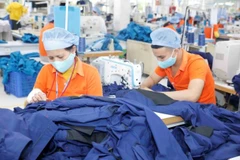
Vietnam leads recovery in Southeast Asian supply chains: Nikkei Asia ảnh 1Workers produces footwear for export at the factory of the Phuc Yen Shoes Joint Stock Company in Vinh Phuc province (Photo: VNA)

Tokyo (VNA) – Nikkei Asia, a news service of Japan, ran an article on November 9 saying that Vietnam is leading recovery in Southeast Asian supply chains.

It noted that as coronavirus cases fall dramatically across Southeast Asia, supply chains in the region are racing to recover to full strength after months of factory stoppages and production cuts.

It cited local media reports as saying that Vietnam in particular is seeing a rapid return to normality as Hanoi finally eases restrictions. About 200 factories in the country contracted to make sportswear for Nike have resumed operations.

An industrial park in Ho Chi Minh City that houses plants operated by Samsung Electronics and Intel will "provide assistance so that both companies' facilities will return to full production this month," said a park executive.

Starting in July, factories in the south of Vietnam were placed under heavy restrictions. The factories were also ordered to staff workers at around 30 - 50 percent of normal capacity at any time.

Vietnam's number of coronavirus cases gradually declined, with the daily infection rate currently at 7,000 people, considerably less than half of the late-August peak that topped 17,000 cases.

Companies that produce electrical and electronic components essential for the auto industry are also returning to full strength, much to the relief of manufacturers around the globe, according to Nikkei Asia.

Japan's Furukawa Electric expects to return to full capacity at its Vietnamese plants. Its three factories there make wire harnesses for automobiles, with the Ho Chi Minh City site alone staffed with about 8,000 workers.

The factory floors "have returned to a position where they can respond to requests from a client," said Furukawa Electric President Keiichi Kobayashi.

Since October, the utilisation rate at all three factories has been steadily recovering.

The impact from the COVID restrictions has been particularly damaging to Southeast Asia's automotive industry. Vietnam has a high concentration of wire harness factories, while Malaysia is a production hub for automotive semiconductors.

Both components had experienced shortages in supplies -- the main reason why Toyota Motor and seven other Japanese automakers were forced to cut September production in half compared to the previous year.

Vietnam was the source of about 40 percent of Japan's wire harness imports last year, and domestic suppliers Yazaki and Sumitomo Electric Industries are restoring production at their Vietnamese plants as well. This trend is expected to support a production comeback in Japan's auto sector.

Since the start of October, the country has considerably relaxed restrictions so that factories can gradually resume operations.

Meanwhile, the Wall Street Journal of the US cited Foxconn Technology Group, which supplies Apple, as saying that its facilities in Vietnam are operating normally.

One technician for a shoe factory in southern Vietnam said the factory was now operating with 4,000 of its 7,000 workers. It is expected to restore full production by November.

An employee of a large American apparel company said supplier factories in Vietnam already had around three-quarters of their workers back, the Wall Street Journal reports.

According to a survey conducted by the General Statistics Office of Vietnam for the fourth quarter, the percentage of firms recording increased revenue and recruiting more employees is much higher than those with declines in these regards.

The Purchasing Managers’ Index (MPI) in October rose to 52.1 points compared to the 40.2 points in September, which also reflects this positive trend./.

VNA

See more

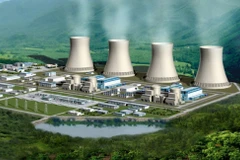
Part of the Vung Ang II Thermal Power Plant. (Photo: VNA)

Vung Ang II thermal power plant inaugurated in Ha Tinh

With a total investment of 2.2 billion USD, the Vung Ang II Thermal Power Plant is developed under a build-operate-transfer (BOT) model and has a designed capacity of 1,200 MW, comprising two turbines. The plant is expected to play a key role in ensuring stable electricity supply for the central region and neighbouring areas, thereby facilitating the development of industries, agriculture and services.

Aircraft at the Noi Bai International Airport in Hanoi. (Photo: VNA)

Vietnam seeks stable jet fuel supplies from China amid Middle East disruptions

On the basis of the long-standing friendship and cooperation between Vietnam and China, as well as close ties between their aviation authorities, the Civil Aviation Authority of Vietnam has asked the Civil Aviation Administration of China to direct relevant fuel suppliers to ensure sufficient and stable supplies for Vietnam.

Illustrative photo (Photo: Xinua/VNA)

Remittances to Ho Chi Minh City decline in Q1 amid global headwinds

Data from the State Bank of Vietnam (SBV)'s Region 2 branch showed that remittances transferred through credit institutions and economic organisations in Ho Chi Minh City exceeded 2 billion USD in the January–March period, down 15.6% from the previous quarter and 16.9% year-on-year.

The shipments are unloaded at the airport. (Photo: VNA broadcasts)

Nearly 100 tonnes of Vietnamese fruits, vegetables airlifted to UAE

Vietnamese fresh produce and processed foods are increasingly recognised for their quality, with items such as cashew nuts, coffee and spices gaining popularity among Middle East consumers. In 2025, Vietnam’s farm produce exports to the UAE exceeded 445 million USD, up nearly 24% year-on-year.

The World Coffee Heritage Forum officially opens at the World Coffee Museum in Dak Lak province, with eyes on UNESCO recognition for Vietnamese coffee culture. (Photo: VNA)

World Coffee Heritage Forum opens in Dak Lak

Dak Lak is known as the 'capital' of Vietnamese coffee, with rich, fertile basalt red soil ideal for agriculture. The coffee provides livelihoods for thousands of locals and has developed a unique cultural space, closely tied to the socioeconomic life, customs and identity of local communities.

Chili peppers are on the list of essential goods in Indonesia (Photo: VNA)

Indonesia reduces imports of strategic food commodities

In 2026, Indonesia is expected to have approximately 12 million tonnes of rice carried over from the previous year, supported by annual production of around 34.7 million tonnes. With projected consumption of 31.1 million tonnes, national rice reserves could reach approximately 16 million tonnes by the end of the year.

Hanoi’s roadmap to implement low-emission zones from July is providing a strong boost to the electric two-wheeler market (Photo: VNA)

Low-emission zone roadmap drives electric two-wheeler boom in Hanoi

From July 1, Hanoi will introduce time-based or area-based restrictions on petrol-powered motorcycles within Ring Road 1, with plans to expand coverage across the entire zone by 2028 and extend to areas within Ring Road 3 by 2030. The policy is expected to reshape travel habits for millions of urban residents.

Delegates at the opening ceremony of the Made in Da Nang Expo 2026 (Photo: VNA)

Nearly 300 firms join Made in Da Nang Expo 2026

Speaking at the opening ceremony, Vice Chairman of the Da Nang People’s Committee Tran Chi Cuong said the exhibition is a large-scale trade promotion event aimed at showcasing products, connecting markets, and helping businesses enhance competitiveness while expanding domestic and export markets.

 Green production, standardised value chains key to fruit, vegetable sector growth

Green production, standardised value chains key to fruit, vegetable sector growth

Facing mounting pressure from increasingly stringent domestic and international standards, Vietnam’s fruit and vegetable sector is accelerating its shift toward green, safe, and sustainable production models. Beyond changing farming practices, localities and businesses are stepping up efforts to standardise value chains and build brands to achieve growth targets for 2026.

Hiep Phuoc Industrial Park in Ho Chi Minh City. (Photo: VNA)

Southern industrial real estate enters strategic growth phase

Key industrial hubs in the south, including Ho Chi Minh City, Dong Nai and Tay Ninh, are transitioning from a period driven largely by supply expansion and rising land prices to a more refined growth model. This new phase is shaped by infrastructure upgrades, supply chain restructuring, product improvement and greater emphasis on operational performance.