Hanoi (VNA) - Vietnam and New Zealand have steadily deepened and expanded their partnership over the past five decades, achieving meaningful progress across various sectors.
The bilateral relationship, one of the earliest ties in each country’s diplomatic history, was established on June 19, 1975, soon after Vietnam’s reunification.
Since the 2005 Joint Declaration of Cooperation, their relations have been upgraded to a Comprehensive Partnership (2009), a Strategic Partnership (2020), and a Comprehensive Strategic Partnership in February 2025. This marks not only a diplomatic milestone but also reflects growing strategic trust and political commitment as both countries enter a new phase of collaboration.
Shared interests - Driving force
Experts emphasised the strong alignment of interests as the foundation of the evolving Vietnam – New Zealand relationship.
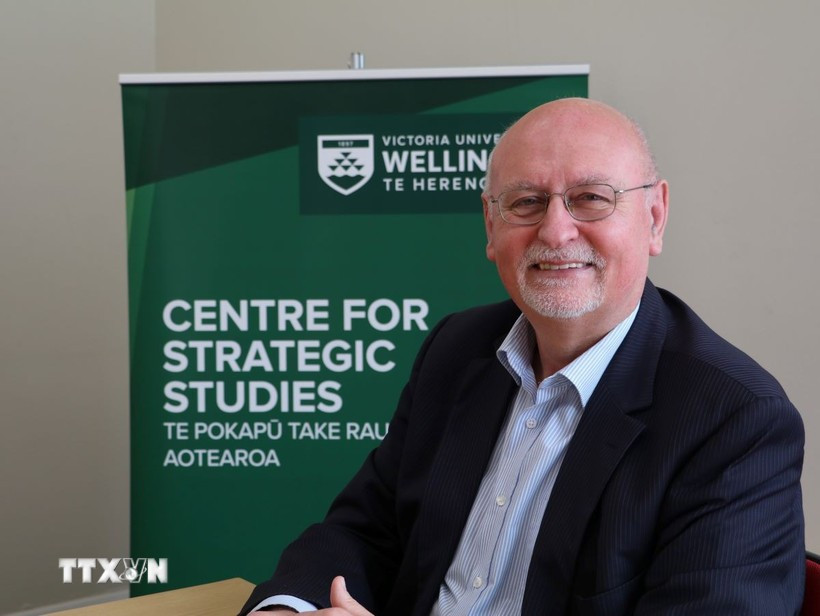
Prof. Roberto Rabel of Victoria University of Wellington highlighted the economic complementarities and shared values in politics, security, culture, and people-to-people links. This synergy has expanded cooperation from the bilateral to regional and global levels.
Economic ties remain central to the bilateral relationship. Vietnam, with its fast-growing economy and expanding global integration, complements New Zealand’s strengths in high-tech agriculture, renewable energy, and sustainable governance. Both are signatories to the Comprehensive and Progressive Agreement for Trans-Pacific Partnership (CPTPP) and the Regional Comprehensive Economic Partnership (RCEP), reaffirming their shared commitment to free, fair, and rules-based trade. These complementarities present major opportunities for enhanced trade and investment ties.
Diplomatically, shared values strengthen the relationship. Suzannah Jessep, Chief Executive of the Asia New Zealand Foundation, noted both nations’ adherence to international law, regional peace, and rules-based trading. This alignment reinforces strategic trust and supports coordinated efforts in multilateral forums.
Professor Damon Salesa of Auckland University of Technology viewed the Comprehensive Strategic Partnership as a sign of deepening trust, alignment, and cooperation. It also provides a formal framework for joint initiatives in trade, security, education, and people-to-people exchange.
A particularly promising area is collaboration in the digital era and sustainable development. Vietnam has one of Asia-Pacific’s fastest-growing digital economies, expanding at nearly 20% annually. New Zealand, meanwhile, brings strengths in ethical AI, digital inclusion, renewable energy, and high-tech agriculture.

According to Salesa, integrating Vietnam’s digital dynamism with New Zealand’s sustainability expertise could unlock substantial mutual value. Priority areas include digital transformation, green economy efforts, clean energy, and agricultural innovation — all aligned with both countries’ development strategies.
Untapped potential for cooperation
Experts agreed that the Vietnam - New Zealand partnership holds vast untapped potential. Rabel highlighted the need to identify high-impact sectors and launch collaborative projects across governments, businesses, and civil society. Key sectors include education, agricultural innovation, and good governance.
Jessep added that the next phase will be propelled by Vietnam’s economic momentum and New Zealand’s strategic pivot to Asia, reinforcing the bilateral ties and contributing to regional stability.
Education is considered a cornerstone of the bilateral relations. Salesa stressed that educational collaboration not only builds human capital but also strengthens mutual understanding — essential for a resilient, long-term partnership. It cultivates a new generation of leaders with global perspectives and cultural awareness.
Yet, today’s global context is increasingly complex, marked by strategic competition, regional tensions, climate change, and non-traditional security threats. Jim Rolfe of Victoria University argued the partnership must evolve accordingly — through deepened economic collaboration, stronger multilateral diplomacy, and enhanced defence capacity — to support a stable and balanced Indo-Pacific.
With five decades of collaboration, shared interests, and strong political resolve, the Vietnam – New Zealand Comprehensive Strategic Partnership is well-placed to deepen further. Its success will rely on developing a common vision, investing in human capital, driving innovation, and strengthening international linkages.
Emerging sectors such as climate change, food security, digital equity, tourism, and scientific research offer fresh avenues for cooperation. A focused, future-oriented partnership will yield tangible benefits for both countries' people while promoting peace, stability, and sustainable development in the region./.