Vietnam pushes forward comprehensive digital transformation in healthcare

Vietnam’s healthcare system is undergoing profound changes under the impact of the Fourth Industrial Revolution, digital transformation, and innovation. These are no longer just trends but necessary conditions for sustainable development.

y-te-1.jpg
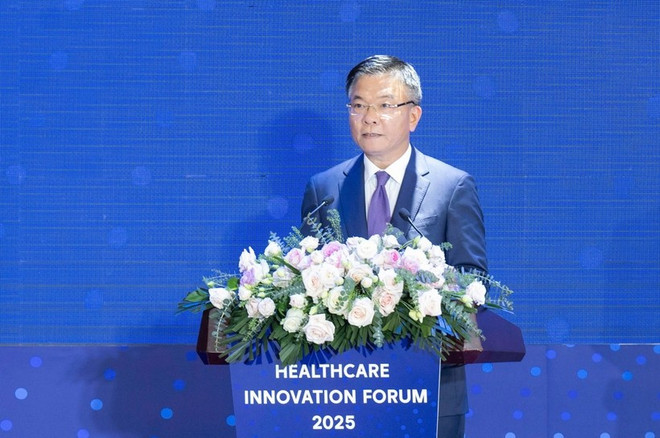
Deputy Prime Minister Le Thanh Long speaks at the Forum. (Photo: Vietnam+)

Hanoi (VNA) - Vietnam’s healthcare system is being strongly influenced by the Fourth Industrial Revolution, digital transformation, and innovation. These are both inevitable and essential for building a healthcare sector that is sustainable, equitable, high-quality, efficient, and internationally integrated. As such, Vietnam must further accelerate healthcare digitalisation to improve services and better safeguard public health.

Deputy Prime Minister Le Thanh Long made this statement at the forum titled “Innovation and Digital Transformation to Advance Comprehensive, Sustainable Healthcare in the New Era”, held in Hanoi on 6 June by Pharma Group in collaboration with FPT Corporation.

Significant progress in healthcare digital transformation

Deputy Prime Minister Le Thanh Long highlighted notable strides in recent years: all hospitals now operate with hospital information systems; many medical institutions have adopted electronic health records through the VNeID platform, offer remote consultations, use electronic prescriptions and artificial intelligence (AI) in treatment, and even apply robotic surgery.

However, several challenges remain. Infrastructure, cybersecurity, and data protection systems are not yet synchronised; digital progress is uneven across sectors; and there is still a shortage of high-quality healthcare professionals to meet practical demands. The COVID-19 pandemic also exposed gaps in preventive and grassroots healthcare, as well as weaknesses in medicine and medical device supply chains.

These shortcomings, according to the Deputy Prime Minister, require urgent reform in leadership and policy to deliver more effective and inclusive public healthcare. As Party General Secretary To Lam has directed, the sector must shift from a reactive model (treatment) to a proactive one (prevention and wellness), and make breakthroughs in science, innovation, and comprehensive digital transformation.

To this end, the Politburo has recently issued several key resolutions: Resolution No. 57 on science, technology, innovation, and digital transformation; Resolution No. 59 on international integration; Resolution No. 66 on legal reforms; Resolution No. 68 on private sector development.

These policies, along with an upcoming resolution focused on healthcare, are set to become institutional pillars driving national development and breakthroughs in healthcare delivery.

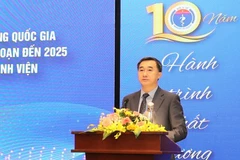
y-te-2.jpg
Truong Gia Binh, Chairman of FPT Corporation and Head of the Private Economic Development Research Board, shares his insights. (Photo: Vietnam+)

Three breakthroughs needed for healthcare reform

Truong Gia Binh, Chairman of FPT Corporation, stated: “Vietnam has chosen to rise in this new era. To realise that aspiration, the health sector must pursue three breakthroughs: reforming regulatory frameworks, fostering innovation, and advancing public-private partnerships.”

On regulatory reform, Binh emphasised the need to abandon the mindset of "if you can't manage it, ban it," and instead view regulation as a tool for global competitiveness. "How can Vietnamese citizens access new medicines as quickly as those in the US or Japan? How can we raise the rate of access to new drugs from 9% to 51% like Japan? These should be the goals of institutional reform,” he said.

Regarding innovation, Binh noted Vietnam's potential to become a hub for clinical trials and AI-driven pharmaceutical manufacturing, with one million IT engineers and a growing pool of AI talent.

For public-private collaboration, he called for a unified data platform connecting hospitals, pharmaceutical firms, doctors, and pharmacists.

US Ambassador to Vietnam Marc E. Knapper stressed that innovation in health and pharmaceuticals is enabling tangible improvements in public healthcare. In recent years, the Ministry of Health has deepened cooperation with US companies under supportive policy frameworks promoting innovation and digital health for sustainable care.

Ambassador Knapper noted the joint commitment to creating a favourable legal environment, including intellectual property protections and streamlined administrative processes, to ensure timely and affordable access to new, advanced medicines in Vietnam.
y-te-3.jpg
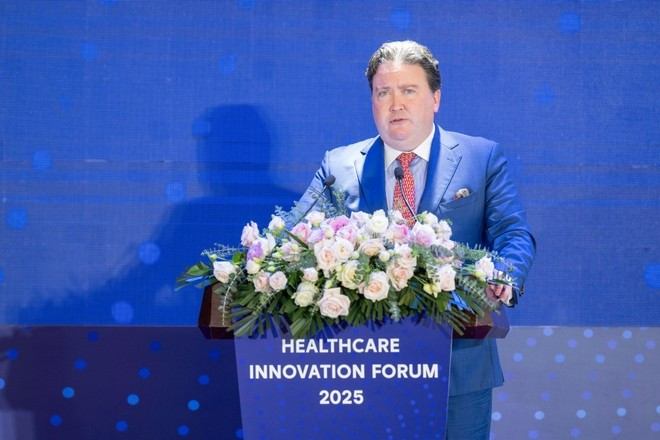
US Ambassador to Vietnam Marc E. Knapper. (Photo: Vietnam+)

Darrell Oh, Chairman of Pharma Group, reaffirmed the group’s commitment to supporting Vietnam’s Vision 2045: “By working together, we can turn policy aspirations into real change and improve health outcomes in a lasting way. Investing in health is investing in Vietnam’s most valuable asset - its people.”

On this occasion, Deputy Prime Minister Le Thanh Long called for stronger investment in scientific research and the development of high-tech laboratories and medical research centres. He prioritised research in biotechnology, disease surveillance, early warning systems, pharmaceuticals, and medical devices.

y-te-4.jpg
Discussion sessions at the Forum. (Photo: Vietnam+)

He also called on domestic and international experts, scientists, and businesses to continue working closely with Vietnam to develop a more comprehensive and sustainable healthcare system - one that protects public health and contributes to global healthcare progress.

With its broad strategic theme and practical initiatives, the Forum addressed three pressing challenges: improving quality of life, expanding access to healthcare, and fostering a pharmaceutical industry powered by innovation, AI, and data./.
See more

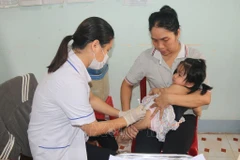
A health worker administer IPV polio vaccine to a child in Dong Thap province. (Photo: VNA)

Vietnam proactively takes polio prevention measures amid outbreak in Laos

The meeting took place following an assessment by the World Health Organisation (WHO) warning that Vietnam is facing a very high risk of polio import and re-emergence. The risk arises after neighbouring Laos officially declared a polio outbreak on October 7, following the detection of circulating vaccine-derived poliovirus type 1 (cVDPV1).

A view of the International Conference on Molecular Diagnostics in Microbiology and Diseases, organised by Rencontres du Vietnam and the International Centre for Interdisciplinary Science and Education (ICISE) in the central province of Gia Lai on December 11. (Photo: VNA)

Nearly 100 international scientists attend molecular diagnostics conference in Vietnam

The conference features almost 80 presentations across plenary sessions, parallel sessions and poster sessions, focusing on leading research trends such as point-of-care diagnostics; predictive biomarkers used to anticipate individual responses to therapy; and the development of new tools and platforms for rapid molecular-level detection and diagnosis.

Digital transformation in healthcare is being strongly promoted. (Photo: Organising Committee of the 2024 “Technology with Heart” Award, co-hosted by Vietnam News Agency and Viettel)

AI and precision medicine: Emerging prospects for Vietnam-Canada cooperation

Canada has strong experience in compiling and analysing genomic data, while Vietnam has a large population with diverse genetic structures. This complementarity can help Vietnam narrow its technological gap and enhance its capacity to treat rare diseases — an area many countries are prioritising for development.

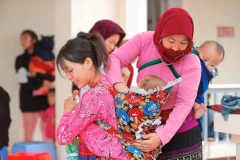
Maternal and child healthcare in Tuyen Quang province. (Photo: VNA)

Vietnam on path to become a healthy nation

Resolution 72 not only focuses on health care but is also closely interlinked with other sectors, helping to build a solid foundation for sustainable national development and create momentum for Vietnam to “take off” and further integrate into the world.

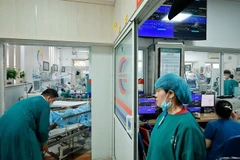
The emergency ward at Bach Mai Hospital, Hanoi. (Photo: VNA)

Health sector targets free hospital fee for all

The total value of medical expenses not covered by the health insurance fund is estimated at around 24.8 trillion VND (942 million USD) per year. Health insurance contributions remain low, at 4.5% of the salary or reference base used for calculation.

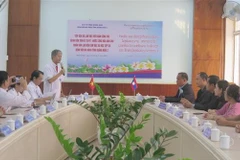
Sen. Lieut. Gen. Vongsone Inpanphim, Lao Deputy Minister of National Defence and Director of the General Department of Politics presents the Friendship Order of Laos to Vietnam’s Central Military Hospital 108. (Photo: VNA)

Vietnam, Laos expand cooperation in military medicine

Over the past two decades, many Vietnamese experts have undertaken long-term missions at the Central Hospital 103 to provide training and technical assistance, contributing to the successful treatment of complex cases. The Central Military Hospital 108 has also trained 206 Lao doctors, six nurses and two engineers — a clear demonstration of substantive, long-standing cooperation.

Deputy Minister Do Xuan Tuyen (left) and Alberto Anaya Gutiérrez, General Secretary of the Mexican Workers' Party (PT). (Photo: VNA)

Vietnam, Mexico boost medical cooperation

As both nations look to keep their long-standing partnership in good health, the health ministries of Vietnam and Mexico have been accelerating cooperation, especially in traditional medicines.

The opening of Vietnam Medi-Pharm 2025 and Vietmedicare Expo in Ho Chi Minh City on November 27, 2025. (Photo: VNA)

Major medical, pharmaceutical exhibitions kick off in HCM City

The 33rd Vietnam International Medical and Pharmaceutical Exhibition (Vietnam Medi-Pharm 2025) and the International Exhibition on Pharmaceuticals, Medical Devices and Healthcare (Vietmedicare Expo 2025) kicked off at the Saigon Exhibition and Convention Centre on November 27.

Doctors Do Thi Ngoc Linh (left) and Le Diep Linh at the RCS membership certificate award ceremony in London. (Photo: VNA)

Vietnamese surgeons honoured with prestigious Royal College Fellowship

The fact that the Vietnamese doctors have been awarded with FRCS certificate proves Vietnam’s surgical expertise has met international standards, contributing to improving the quality of treatment at home, expanding academic cooperation with world leading medical institutions and inspiring younger doctor to pursue higher standards.

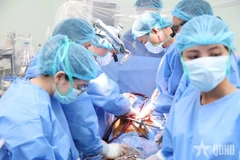
Doctors from Military Hospital 175 perform surgery on a patient on Truong Sa Island. (Photo: Military Hospital 175)

First successful open-chest surgery performed at Truong Sa infirmary

The successful emergency operation on a patient with serious chest injuries in Truong Sa showed that Vietnam’s military medical forces are now capable of handling complex emergencies at sea, boosting the confidence of soldiers and fishermen living and working on remote islands.