Vietnam, Russia explore joint venture for maritime transport route

Vietnam plays an important role in Asia’s shipbuilding sector and expressed Moscow’s wish to strengthen cooperation with Hanoi in shipbuilding, maritime trade, and logistics.

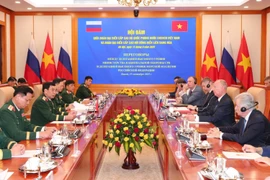
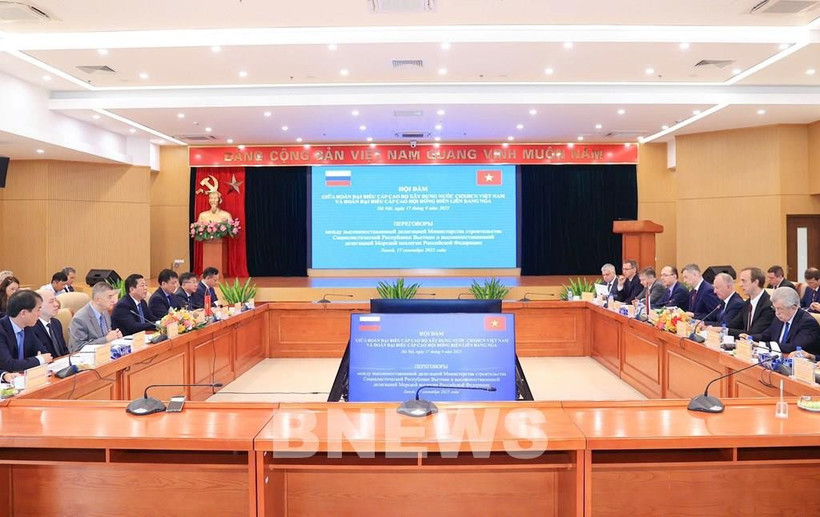
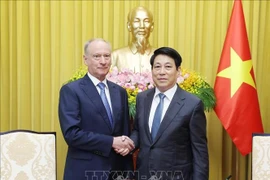
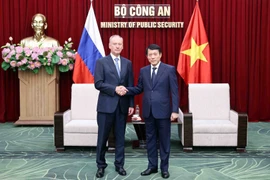
Minister of Construction Tran Hong Minh holds talks with Aide to the President of Russia and Chairman of the Maritime Board Nikolai Platonovich Patrushev in Hanoi. (Photo: VNA)

Hanoi (VNA) – Vietnam and Russia are studying the feasibility of establishing a joint venture to operate a maritime transport route, underscoring their shared commitment to deepening cooperation in shipbuilding, logistics, and maritime infrastructure.

The proposal was made during recent talks in Hanoi between Minister of Construction Tran Hong Minh and Aide to the President of Russia and Chairman of the Maritime Board Nikolai Platonovich Patrushev.

During the talks, Patrushev hailed the comprehensive strategic partnership between Vietnam and Russia, highlighting Russia’s technological expertise and shipbuilding capacity, particularly in producing fishing vessels and passenger ships.

He emphasised Vietnam’s important role in Asia’s shipbuilding sector and expressed Moscow’s wish to strengthen cooperation with Hanoi in shipbuilding, maritime trade, and logistics.

He also encouraged Vietnamese enterprises to participate in the Northern Sea Route – a strategic Arctic shipping lane linking Europe and Asia that significantly reduces shipping time and costs.

Russia is also keen to cooperate with Vietnam in building new shipyards, modernising existing facilities, and developing research and testing centres for shipbuilding.

Speaking at the event, Russian Deputy Minister of Industry and Trade A. Karimov suggested expanding cooperation into areas such as robotics, communications, biotechnology, geology, and pipeline manufacturing. He invited Vietnam to take part in the NEVA Exhibition and Conference, the largest civil shipbuilding exhibition in Eastern Europe and one of the world’s top ten events in the sector.

Executives from Russian corporations, including FESCO and Delo, shared recent progress in logistics cooperation and voiced interest in expanding joint activities in shipbuilding, logistics infrastructure, and training. They stressed the need for a stronger legal framework to facilitate bilateral projects and research.

For his part, Minh welcomed the Russian proposals, stressing that this is a timely opportunity to elevate maritime cooperation.

He reaffirmed the traditional friendship and multifaceted cooperation between the two countries, particularly in transport, which plays a key role in driving trade, tourism, and economic growth.

The minister urged Russia to complete procedures for signing a revised protocol to the 1993 Maritime Trade Agreement and a memorandum of understanding (MoU) on cooperation between the Russian Maritime Board and Vietnam’s Ministry of Construction. He also suggested both sides finalise internal procedures to sign an MoU on mutual understanding in parallel with the amended agreement.

In shipbuilding, Minh proposed that Russia collaborate on developing shipbuilding industrial parks in Vietnam and welcomed Russian investors to explore opportunities in Vietnam’s seaport system under current regulations and WTO commitments.

He encouraged both sides to facilitate Vietnamese and Russian enterprises in expanding logistics operations, particularly the Vietnam–Vladivostok container route. He also recommended that FESCO and Vietnam Maritime Corporation (VIMC) study the establishment of a joint venture to operate maritime transport routes. Cooperation could also include exchanging crew and vessel data to streamline online administrative procedures in line with the Convention on Facilitation of International Maritime Traffic.

Minh said Vietnam looks forward to Russia’s support in organising short- and long-term training programmes, scholarships, and capacity building for Vietnamese maritime officials and shipbuilding specialists.

He expressed appreciation for Russia’s initiative on the International North–South Transport Corridor (INSTC), saying Vietnam’s participation could open new markets for Vietnamese goods. He assigned the Vietnam Maritime and Inland Waterways Administration to lead studies on potential engagement in the project and to serve as a contact point for Russian investors./.
VNA

See more

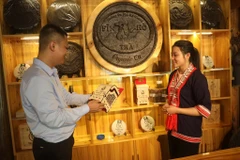
Phin Ho Tra – a national five-star OCOP product. (Illustrative photo: VNA)

Hanoi to host Vietnam OCOP Festival 2025

The festival is seen a practical activity celebrating the achievements made by the capital and the country in 2025, affirming OCOP’s role in rural economic development, contributing to realising Vietnam’s aspiration for strong economic growth in the context of deep integration.

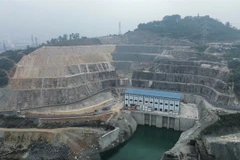
The expanded Hoa Binh Hydropower Plant (Photo baochinhphu.vn)

EVN launches major power projects

Among the flagship projects inaugurated was the expanded Hoa Binh Hydropower Plant with a total installed capacity of 480MW per year and average annual output of about 488 million kWh.

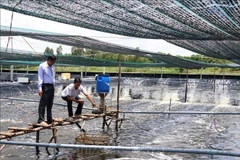
An ultra-intensive shrimp farming model linked with environmental protection in Ca Mau province. (Photo: VNA)

Fisheries take the lead in the Mekong Delta’s green transition

Across the Mekong Delta, leading aquaculture producers, processors and exporters, along with suppliers of inputs, are transitioning to circular, high-tech and clean production models that cut greenhouse gas emissions and comply with international certification standards.

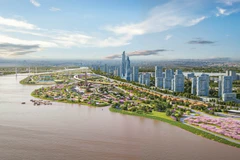
A perspective view of the Red River Landscape Boulevard project in Hanoi (Photo: VNA)

Works starts on Hanoi’s Red River Landscape Boulevard Axis project

The project is among the 234 key works and projects being launched, inaugurated or technically opened simultaneously across 34 cities and provinces nationwide to mark the 14th National Party Congress. Its launch contributes to implementing the country’s strategic development orientations while concretising Hanoi’s development goals in the new period.

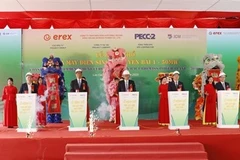
The ground-breaking ceremony of the Yen Bai 1 biomass power plant in Lao Cai province on December 19. (Photo: VNA)

Work starts on 114-million-USD biomass power plant in Lao Cai

The project, developed by Erex Yen Bai Biomass Power Co. Ltd. is located in Dong Cuong commune, Lao Cai province. It is backed by Japan’s Erex Group and falls under the Joint Crediting Mechanism, a bilateral initiative between Vietnam and Japan to reduce greenhouse gas emissions.

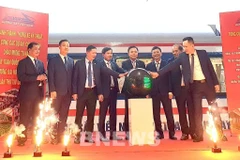
At the inauguration ceremony (Photo: VNA)

Vietnam Railways Corporation unveils upgraded coaches, digital tools

These moves reflect the VNR's commitment to fulfilling six priority tasks set by the Prime Minister, including leading in innovation and digital transformation, applying sci-tech in line with the Politburo’s Resolution No. 57-NQ/TW, and spearheading advances in digital, green and circular economy.

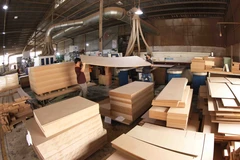
Producing MDF panels for export at Hai Duong MDF Construction and Manufacturing Co., Ltd., in Ho Chi Minh City (Photo: VNA)

HCM City targets 15 billion USD in wood exports by 2035

The merger of HCM City with Binh Duong and Ba Ria – Vung Tau is expected to give the local wood industry a strong boost into a phase of high-quality growth driven by linkages, innovation, sustainability, and deeper integration into global value chains.

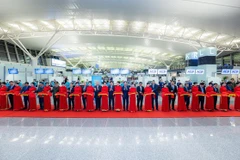
Delegates cut a ribbon to inaugurate the expanded Terminal T2 at Noi Bai International Airport in Hanoi on December 19, 2025. (Photo: VNA)

Expanded Terminal T2 at Noi Bai International Airport makes debut

The project expands the terminal’s floor area to over 200,000 sq.m, increases passenger capacity from 10 million to 15 million, even up to 18 million per year, and boosts operational capacity with boarding gates rising from 17 to 30 and jet bridges from 14 to 27, meeting strong growth in international travel demand.

A section of Can Tho - Ca Mau Expressway (Photo: VNA)

Can Tho – Ca Mau travel time halves from December 19

Stretching more than 110 km with a total investment of over 27.5 trillion VND (1.04 billion USD), the project not only resolves long-standing traffic bottlenecks in the Mekong Delta, but also opens up new development opportunities for the entire region - especially Ca Mau, the last locality in the country to be directly connected to the eastern North–South expressway axis.