Hanoi (VNA) - After more than 30 years of development, Vietnam–Republic of Korea (RoK) relations have become a model of deep, substantive cooperation, delivering remarkable achievements across all fields and making positive contributions to peace, stability, cooperation, and development in the region and the world.
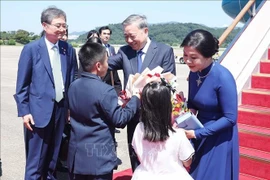
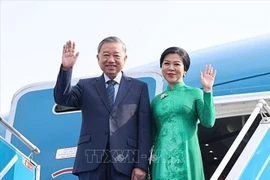
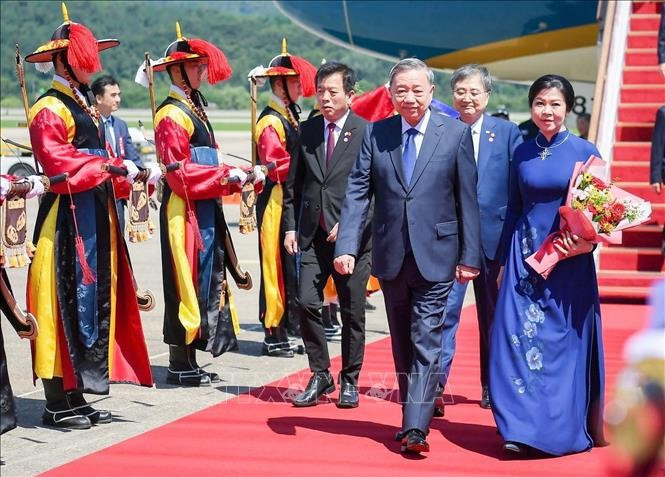
In an interview with Korean media on the occasion of Party General Secretary To Lam’s state visit to the RoK, Deputy Prime Minister and Foreign Minister Bui Thanh Son affirmed that the visit demonstrates Vietnam’s strong resolve to further deepen the Comprehensive Strategic Partnership with the RoK, with the aim of fostering greater political trust, closer strategic coordination, more substantive and comprehensive cooperation, and stronger bonds of friendship between the two countries' people.
He stressed that the visit provides an important opportunity for the two countries’ top leaders to exchange views on major measures, set priorities, and open up new directions of cooperation across fields, thereby propelling Vietnam–RoK relations forward in the new era for the practical benefit of their people and businesses amid a complex and unpredictable regional and global landscape.
Vietnam, he noted, is ready to work with the new RoK administration to focus on key areas of cooperation, including strengthening high-level exchanges, elevating collaboration in diplomacy, defence, and security, and enhancing the effectiveness of substantive cooperation, especially in sectors where the RoK has strengths aligned with Vietnam’s new development orientation.
The two sides also agreed to position science–technology, innovation, digital transformation, and high-quality human resources development as a new pillar of the partnership; and to promote diverse new cooperation areas such as cultural industries, tourism, labour, climate change, education, healthcare, and people-to-people exchange.
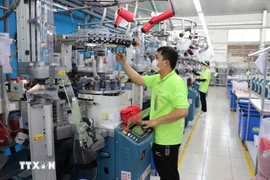
On economic cooperation, Minister Son underlined that trade, investment, and economic ties have always been a core pillar and a key driver of the overall relationship. The RoK is currently one of Vietnam’s leading investors, with over 10,000 valid projects totalling 93.7 billion USD in registered capital. The presence of major Korean conglomerates in Vietnam is a vivid testament to their strategic trust in the country’s investment environment and development prospects.
Supply chain recovery cooperation is also identified as a strategic priority. The two sides should work together to ensure supply chain resilience and sustainability, capitalising on the high complementarity of their economies. Vietnam is committed to accompanying Korean businesses in developing diversified, high-value supply chains, encouraging Vietnamese enterprises to participate more deeply and at higher value segments in Korean firms’ global supply networks. The Party and State of Vietnam will continue to create the most favourable conditions for stable, long-term investment and for exploring new opportunities for mutual growth.
In recent years, Vietnam has carried out major, transformative reforms to streamline the political apparatus, prioritise science–technology, innovation, and national digital transformation, deepen and broaden international integration, reform administration and the legal system, and promote the private sector, creating new development space for the country and unprecedented opportunities for foreign investors, including those from the RoK.
The Minister expressed his belief that, with strong political will from senior leaders and the dynamism and creativity of the business communities, the two countries will remain reliable development partners, further harnessing the benefits of investment cooperation to contribute to regional and global recovery and sustainable development.
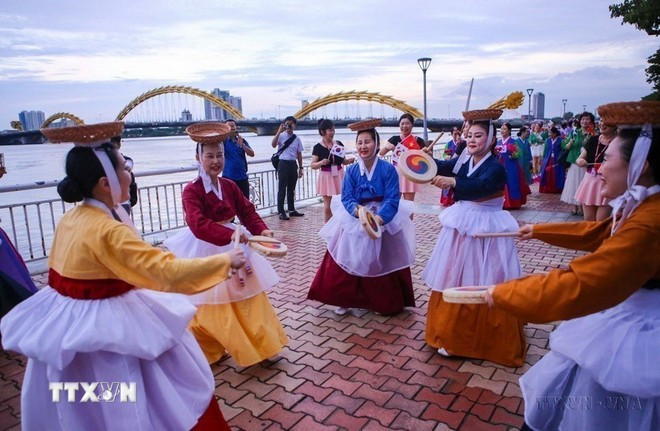
Vietnam and the RoK, he noted, share many cultural, historical, and social values, including traditions of loyalty, community spirit, and resilience. With over 350,000 Vietnamese living in the RoK and more than 250,000 Koreans in Vietnam, around 100,000 of them in Vietnamese–Korean multicultural families, the two peoples enjoy close bonds, facilitating vibrant cultural and people-to-people exchanges. Cultural and educational cooperation is now more dynamic than ever.
He proposed that the two countries continue to upgrade cooperation mechanisms and agreements in culture, education, and language with a long-term vision, explore the establishment of cultural cooperation frameworks to enhance creative collaboration, heritage preservation, artistic exchanges, and training of high-quality cultural personnel. Vietnam will establish a Vietnam Cultural Centre in the RoK and encourages the RoK to share experiences and apply innovative, technology-based models to assist Vietnamese localities in tourism planning and joint promotion through cultural and artistic exchanges. The two countries will also continue to support their overseas communities and pay more attention to the younger generations in Vietnamese–Korean families.
As an economy with a high degree of openness, Vietnam is deeply affected by the increasingly complex and intertwined international context, which poses not only challenges but also opportunities to innovate thinking, approaches, and development models. The political apparatus at all levels has been streamlined, the two-tier local government model is operating effectively, and regional infrastructure systems have been restructured to form new economic hubs and attract strategic investment. Law-making and enforcement have been progressively reformed to ensure a consistent, feasible, transparent legal system, with strong application of digital technologies to create a stable, favourable environment for business and innovation.
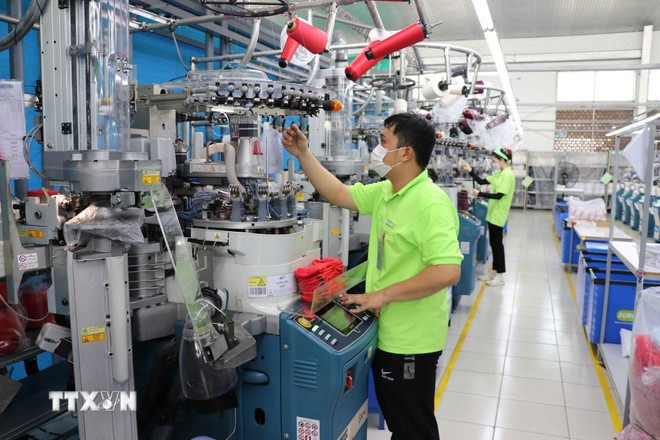
Breakthroughs in science–technology, innovation, and digital transformation are becoming the foundation and primary driving force for industrialisation and modernisation in the new era. The private sector is developing into “one of the most important driving forces” of the national economy, with foreign-invested enterprises encouraged to forge deeper linkages with domestic firms so that Vietnam becomes a genuine strategic development partner for foreign businesses, including major Korean corporations.
Vietnam continues to expand international integration to open up new development space, ensuring comprehensive and extensive engagement while maintaining independence and self-reliance through diversification of markets and partners, and enhancing resilience to global shocks.
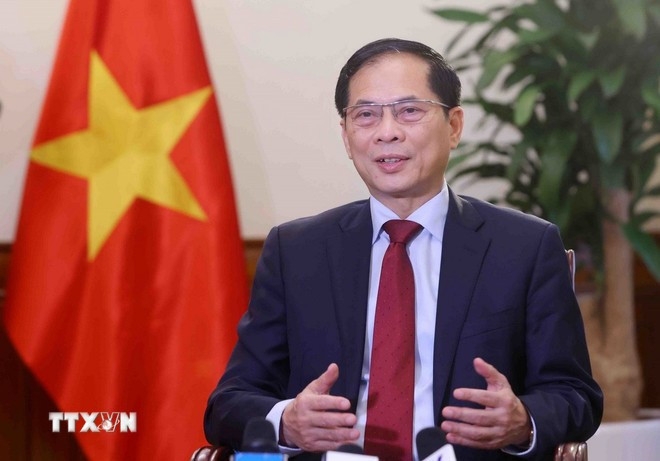
Sharing the key to Vietnam’s diplomatic success, the Deputy PM said Vietnam consistently pursues an independent, self-reliant, peaceful, cooperative, and development-oriented foreign policy, diversifies and multilateralises relations, and is a trusted partner and active, responsible member of the international community.
On the basis of equality, mutual respect, and mutual benefit, the country promotes friendship with all countries, renews and diversifies cooperation channels in all areas, proactively integrates internationally, protects national interests, and resolves all disputes through dialogue and cooperation, upholding multilateralism and contributing to peace and stability regionally and globally.
Thanks to this approach, Vietnam now maintains strategic-level relations with all major powers and attaches great importance to advancing ties with neighbours, regional countries, other key partners, and traditional friends to foster an open and inclusive external landscape. The country consistently upholds its “four no’s” defence policy - no joining military alliances, no siding with one country against another, no allowing another country to build its military bases or use Vietnamese territory to oppose the other, and no using or threatening to use force in international relations. This stance has helped build strategic trust with all partners and contributed to peace, stability, and cooperation at both regional and global levels.
Vietnam recognises that rapid, sustainable development requires bold thinking, decisive action, a fresh mindset, a new vision, and a forward-looking spirit. Initial results have been highly positive, with local administrations swiftly restructured and operating smoothly from the outset to better serve citizens. Streamlining the apparatus has freed up resources, expanded development space, enhanced regional planning coherence, and unlocked local potential, while easing budget pressures and generating savings for social welfare policies.
These outcomes are laying a solid foundation for Vietnam to further optimise national resources, refine its organisational structure, and reorganise its socio-economic development space to create new growth drivers for the country while improving the well-being of its people./.