Vietnam to report achievements in implementation of Int’l Covenant on Civil and Political Rights

Considering the dialogue an opportunity to introduce Vietnam’s efforts and achieved results, the Vietnamese delegation will participate in the session with an open, sincere, cooperative, and constructive spirit.

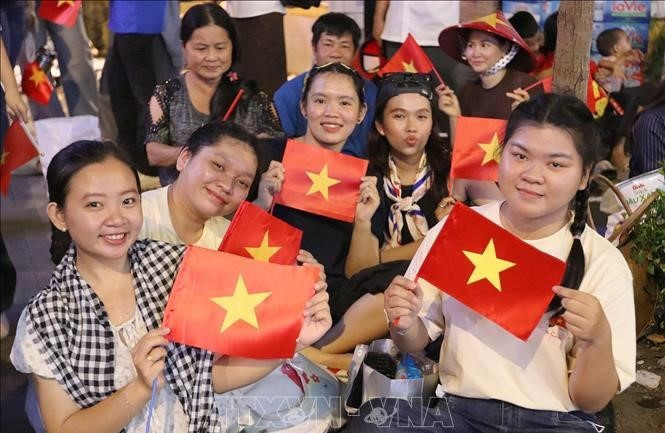
People from Ho Chi Minh City and neighbouring provinces gather on the sidewalks of Nam Ky Khoi Nghia street (District 3) to wait for the parade commemorating the 50th anniversary of the Liberation of the South and National Reunification (April 30, 1975 – 2025). Illustrative image (Photo: VNA)

Hanoi (VNA) - All efforts as well as results of Vietnam in the implementation of the International Covenant on Civil and Political Rights (ICCPR), one of the world’s most important human rights treaties, will be reported by a Vietnamese delegation during a dialogue on its country report, held from July 7-8 in Geneva, Switzerland, within the framework of the 144th session of the Human Rights Committee (HRC).

Talking to the press, Deputy Minister of Justice Nguyen Thanh Tinh said that Vietnam acceded to the ICCPR on September 24, 1982. The country submitted its fourth report covering 2019 to 2022 to the HRC on March 22, 2023, and responded to the committee’s list of issues on December 19, 2024.

To prepare for this dialogue, the Ministry of Justice submitted to the Prime Minister (PM) for approval the fourth plan for the protection of the ICCPR. Based on the PM’s approval, it established an inter-ministerial working group comprising representatives from nine relevant ministries and sectors.

Considering the dialogue an opportunity to introduce Vietnam’s efforts and achieved results, the Vietnamese delegation will participate in the session with an open, sincere, cooperative, and constructive spirit.

Key messages to be conveyed include the acceleration of the implementation of revolutionary breakthroughs to lead the country into a new era of development, including reforms in the process of law-making and law enforcement, and continuing to build a socialist rule-of-law state of the people, by the people, and for the people.
6-7-nguyenthanhtinh.jpg
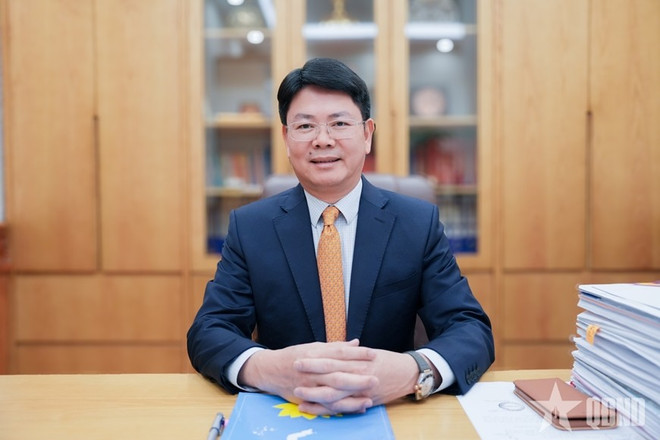
Deputy Minister of Justice Nguyen Thanh Tinh (Photo: qdnd.vn)

In addition, the expansion of democracy and the creation of conditions for people to participate more actively in state management are receiving increasing attention, thus ensuring better protection and guarantee of citizens’ civil and political rights. Vietnam reaffirms its consistent commitment to prioritising the best possible resources and taking comprehensive measures to promote, protect, and better ensure the enjoyment of civil and political rights.

The information and evidence presented in the report as well as during the dialogue will serve as a clear response, refuting distorted information about the human rights situation in the country, the deputy minister stated.

For issues raised that are inaccurate or not objective regarding the domestic human rights situation, the delegation will engage in frank and straightforward dialogue without ignorance, Tinh said, adding that for matters that are clear, they will provide information immediately; but for issues where information is insufficient, they will request additional details in order to verify and respond later.

Regarding the issue of ensuring and promoting human rights in Vietnam, the official affirmed that this is a consistent and overarching viewpoint of the Party and State. The Party and State always pursue the policy of building a rule-of-law state with the aim of ensuring human rights, individual freedom, and promoting fairness and equality within society. From this stance, in the process of developing and improving the legal system, enforcing laws, and advancing judicial reform, the Party has issued numerous resolutions and conclusions to promote and protect human rights.

Notably, the viewpoint that places human beings at the centre, as the subject, the most important resource, and the goal of development has been fully institutionalised in Vietnam’s Constitution and legal system.

In recent years, the National Assembly has adopted numerous laws and resolutions related to human rights and citizens' rights, thereby contributing to the concretisation of the provisions of the Constitution as well as the international human rights treaties to which Vietnam is a party.

In addition, the country has actively worked to improve the relevant legal framework to create conditions for individuals to enjoy their rights to the fullest extent possible. At the same time, it has continuously refined the legal framework on the organisation of the state apparatus, enhanced the effectiveness of law enforcement, and accelerated administrative reforms, all aimed at the ultimate goal of better serving the needs of the people, businesses, and society, added Tinh./.

VNA

See more

Delegates join group discussions at the ongoing 14th National Party Congress (Photo: VNA)

14th National Party Congress: Delegates eye reforms in new era

During the discussions, Prime Minister Pham Minh Chinh summed up key lessons drawn from the Government’s management during the previous term, stressing the need to turn Party resolutions into laws and renewing growth drivers for the next development phase.

PM Pham Minh Chinh visits the press centre serving the 14th National Party Congress (Photo: VNA)

PM urges media to spotlight key outcomes of 14th Party Congress

During a visit to the press centre amid a break in proceedings, PM Pham Minh Chinh met with reporters and inquired about their working conditions. He described the press as a hardworking and vital force, so that all possible support should be offered to them, including adequate infrastructure, reliable internet connectivity, and a conducive work environment to enable timely, comprehensive, accurate, diverse, and engaging coverage.

Andrey Klimov, member of the Presidium of the Supreme Council of the United Russia Party (UR), grants an interview to the Vietnam News Agency. (Photo: VNA)

14th National Party Congress: Russian political party expresses confidence in future of comprehensive cooperation

Andrey Klimov, member of the Presidium of the Supreme Council of the United Russia Party (UR), emphasised that the Communist Party of Vietnam (CPV) holds a vital role in every aspect of national life. Therefore, the 14th National Congress will not only set the main course for Vietnam’s development but also influence the country’s governance style and administrative approach.

☕ Afternoon briefing on January 20

☕ Afternoon briefing on January 20

The 14th National Congress of the Communist Party of Vietnam (CPV) solemnly opened at the National Convention Centre in Hanoi on January 20 morning.

A panoramic view of the opening session of the 14th National Congress of the Communist Party of Vietnam. (Photo: VNA)

Political parties, int'l organisations, friends, OV send congratulatory messages to 14th National Party Congress

These messages constitute a significant source of encouragement and support for Vietnam’s renewal process initiated and led by the CPV. They also vividly reflect the increasingly deep and substantive relations of friendship and cooperation between the CPV and political parties, organisations and friends around the world, as well as the growing attachment of overseas Vietnamese communities to their homeland.

Vietnam - An exemplary model of development for Cuba: Cuban journalist

Vietnam - An exemplary model of development for Cuba: Cuban journalist

Wennys Díaz Ballaga, a special correspondent of Granma - the official newspaper of the Communist Party of Cuba - has highly praised the professional organisation of the 14th National Congress of the Communist Party of Vietnam, affirming that Vietnam’s socio-economic development model serves as an important reference for Cuba and other socialist countries.

Russia’s financial and economic news portal at https://1prime.ru/news/ reported that the congress will focus on discussions and approve Vietnam's socio-economic development strategy through 2030. (Photo: screenshot)

14th Party National Congress draws international attention

The international media stressed that the 14th National Congress of the CPV is not only a major political event for the country but also marks the beginning of a new development period, shaping Vietnam’s vision and motivation for the decades ahead.

Ivo Sieber, former Swiss Ambassador to Vietnam, speaks at an event in Zurich. (Photo: VNA)

14th National Party Congress comes at pivotal moment for Vietnam: Swiss expert

On Vietnam–Switzerland relations, which were established in 1971 and upgraded to a comprehensive partnership in January 2025, Ivo Sieber, a member of the Swiss–Vietnamese Economic Forum (SVEF) and former Swiss Ambassador to the country, expressed confidence that, as the two countries mark the 55th anniversary of diplomatic ties this year, existing links and cooperation will be further strengthened.

Nguyen Hai Nam (far right) attends the second Congress of the Union of Vietnamese Associations in Europe. (Photo: VNA)

14th National Party Congress: New momentum from reform, integration, OV resources

The 14th National Party Congress is expected to continue to expand and further specify policies aimed at attracting overseas Vietnamese, particularly the Vietnamese community in France—one of the largest and longest-established communities in Europe, numbering around 350,000 people and exceeding 600,000 when including French citizens of Vietnamese origin.

Tourists in Hue city. (Photo: VNA)

Hue advances heritage city vision, global cultural tourism profile

By 2030, Hue aims to become a distinctive heritage city of Vietnam, while emerging as one of Southeast Asia’s leading and unique centres for culture, tourism and specialised healthcare. It also aspires to be among the country’s major hubs for science and technology, as well as for high-quality, multi-disciplinary education and training.