Vietnam to start building 7 bln USD international financial hub in HCM City

HCM City will begin construction of a long-planned international financial centre (IFC) in September, part of Vietnam’s push to position itself as a regional financial hub alongside Singapore and Hong Kong

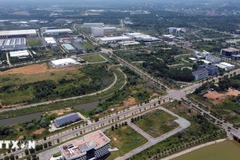
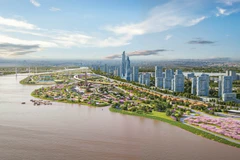
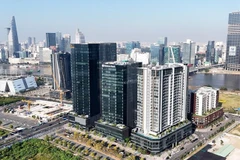
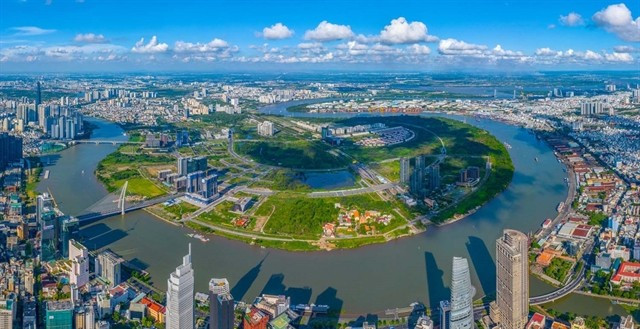
A view of Thu Thiem New Urban Area in Thu Duc city seen from downtown District 1. HCM City will begin construction of a seven-billion-USD IFC this month. (Photo: VNA)

HCM City (VNS/VNA) – Ho Chi Minh City will begin construction of a long-planned international financial centre (IFC) in September, part of Vietnam’s push to position itself as a regional financial hub alongside Singapore and Hong Kong.

The municipal government said it is accelerating procedures so work can start on the first phase of the project, which will anchor Vietnam’s financial ambitions in both HCM City and Da Nang.

The plan follows a resolution passed by the National Assembly in June with overwhelming support.

The IFC in HCM City will cover 783ha across downtown Ben Thanh ward and the Thu Thiem New Urban Area. A 9.2-ha “core zone” in Thu Thiem will be built first, housing financial regulators, supervisory bodies and specialised courts.

Total investment is estimated at 172 trillion VND (7 billion USD).

About 16 trillion VND will be spent in the first two to three years, including 2 trillion VND from the State budget to build offices for government agencies, with the rest expected from domestic and foreign strategic investors.

Under the plan, HCM City’s IFC will focus on banking, asset management, capital markets, fintech and derivatives trading. Da Nang will specialise in green finance, digital financial services and controlled pilot projects in crypto-assets.

The Government aims for the HCM City centre to begin operations in 2025 and be completed within five years, in what officials describe as a "cornerstone of Vietnam’s economic modernisation strategy".

Vietnam has debated the creation of an international financial hub for more than a decade, but earlier efforts stalled due to unclear regulations and competition from established regional centres.

HCM City, which generates nearly a quarter of Vietnam’s GDP, has long been seen as the most suitable location given its fast-growing middle class, expanding banking sector, and status as the country’s commercial capital.

HCM City already hosts the Ho Chi Minh Stock Exchange (HOSE), the country’s largest equities market, but foreign participation remains limited by ownership caps and underdeveloped capital markets.

Officials hope that a dedicated financial centre with clearer rules, sandbox regimes for fintech, and incentives for foreign investors will help attract global banks, funds and insurers.

Analysts note that while the ambition is bold, Vietnam will face stiff competition from Singapore and Hong Kong, both of which are deeply entrenched as Asia’s financial gateways.

Success will depend on whether the nation can deliver regulatory reforms, deepen its capital markets, and build trust with international investors, they add./.

VNA
See more

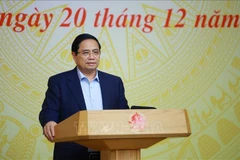
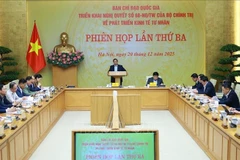
Prime Minister Pham Minh Chinh addresses he third meeting of the National Steering Committee implementing the Politburo’s Resolution 68 in Hanoi on December 20. (Photo: VNA)

PM pushes trust, breakthroughs to accelerate private sector growth

Prime Minister Pham Minh Chinh noted that since the rollout of Resolution 68, alongside supporting resolutions from the National Assembly (NA) and Government, there has been a marked change in understanding the private sector’s critical position and role in Vietnam’s socialist-oriented market economy.

PM Pham Minh Chinh chairs the meeting (Photo: VNA)

Private sector thrives eight months after Resolution 68’s launch: PM

The private sector has shown marked progress eight months after the launch of Resolution 68, registering about 18,000 new enterprises monthly and pushing the nationwide total to nearly 1.1 million, Prime Minister Pham Minh Chinh told the third meeting of the National Steering Committee in Hanoi on December 20.

Phin Ho Tra – a national five-star OCOP product. (Illustrative photo: VNA)

Hanoi to host Vietnam OCOP Festival 2025

The festival is seen a practical activity celebrating the achievements made by the capital and the country in 2025, affirming OCOP’s role in rural economic development, contributing to realising Vietnam’s aspiration for strong economic growth in the context of deep integration.

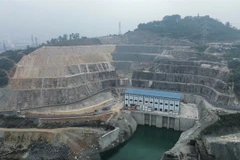
The expanded Hoa Binh Hydropower Plant (Photo baochinhphu.vn)

EVN launches major power projects

Among the flagship projects inaugurated was the expanded Hoa Binh Hydropower Plant with a total installed capacity of 480MW per year and average annual output of about 488 million kWh.

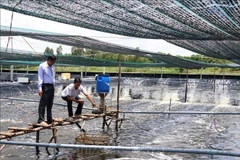
An ultra-intensive shrimp farming model linked with environmental protection in Ca Mau province. (Photo: VNA)

Fisheries take the lead in the Mekong Delta’s green transition

Across the Mekong Delta, leading aquaculture producers, processors and exporters, along with suppliers of inputs, are transitioning to circular, high-tech and clean production models that cut greenhouse gas emissions and comply with international certification standards.

A perspective view of the Red River Landscape Boulevard project in Hanoi (Photo: VNA)

Works starts on Hanoi’s Red River Landscape Boulevard Axis project

The project is among the 234 key works and projects being launched, inaugurated or technically opened simultaneously across 34 cities and provinces nationwide to mark the 14th National Party Congress. Its launch contributes to implementing the country’s strategic development orientations while concretising Hanoi’s development goals in the new period.

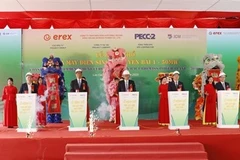
The ground-breaking ceremony of the Yen Bai 1 biomass power plant in Lao Cai province on December 19. (Photo: VNA)

Work starts on 114-million-USD biomass power plant in Lao Cai

The project, developed by Erex Yen Bai Biomass Power Co. Ltd. is located in Dong Cuong commune, Lao Cai province. It is backed by Japan’s Erex Group and falls under the Joint Crediting Mechanism, a bilateral initiative between Vietnam and Japan to reduce greenhouse gas emissions.

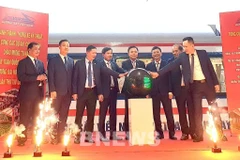
At the inauguration ceremony (Photo: VNA)

Vietnam Railways Corporation unveils upgraded coaches, digital tools

These moves reflect the VNR's commitment to fulfilling six priority tasks set by the Prime Minister, including leading in innovation and digital transformation, applying sci-tech in line with the Politburo’s Resolution No. 57-NQ/TW, and spearheading advances in digital, green and circular economy.

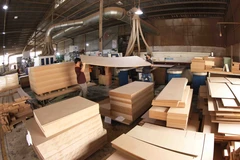
Producing MDF panels for export at Hai Duong MDF Construction and Manufacturing Co., Ltd., in Ho Chi Minh City (Photo: VNA)

HCM City targets 15 billion USD in wood exports by 2035

The merger of HCM City with Binh Duong and Ba Ria – Vung Tau is expected to give the local wood industry a strong boost into a phase of high-quality growth driven by linkages, innovation, sustainability, and deeper integration into global value chains.

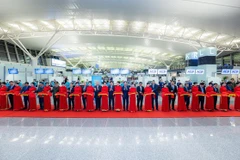
Delegates cut a ribbon to inaugurate the expanded Terminal T2 at Noi Bai International Airport in Hanoi on December 19, 2025. (Photo: VNA)

Expanded Terminal T2 at Noi Bai International Airport makes debut

The project expands the terminal’s floor area to over 200,000 sq.m, increases passenger capacity from 10 million to 15 million, even up to 18 million per year, and boosts operational capacity with boarding gates rising from 17 to 30 and jet bridges from 14 to 27, meeting strong growth in international travel demand.