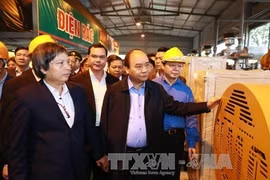
Inside a factory that turns plastic waste into electricity in Vietnam (Photo: VNA)
Hanoi (VNA) – Several Vietnamese citiesare striving to recycle and reuse waste, with waste a growing concern in thecountry and around the world.
Waste is an environmental problem, especially inbig cities, and as living standards improve, more waste is generated.
Economic development and population growth areincreasing household and medical waste in Vietnam’s cities more rapidly than inmany other countries.
About 5,400 tonnes of solid household waste aregenerated in Hanoi each day, with the figure in Ho Chi Minh City some 8,300tonnes per day, which forecasts say will hit 13,000 tonnes by 2025.
However, up to 90 percent of solid householdwaste in Hanoi and 76 percent in HCM City is still buried. The rest is burned,recycled or converted into organic fertiliser.
Temporary landfill sites are already overloaded,and the environment will be seriously affected unless advanced technologies areapplied.
In Hanoi, the municipal Party Committee isaiming to treat some more solid waste with technology and to bury less waste.
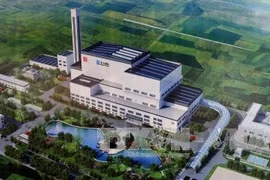
The capital city plans to start construction ofa waste treatment factory using high technology in Bac Son commune of Soc Sondistrict in the third quarter of 2017. This plant is set to treat 4,000 tonnesof waste a day.
Also, the Construction Department of Hanoi plansto submit a roadmap for applying advanced solid waste treatment technology tothe municipal People’s Committee in the first quarter of next year, aiming at alower volume of buried waste.
HCM City authorities meanwhile encourageinvestors to use modern waste treatment technologies to reduce the rate ofburied waste to 50 percent in 2020 and 20 percent in 2025.
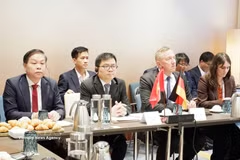
At a recent meeting with Governor of Sweden’sOstergotland county Elisabeth Nilsson, Chairman of the Hanoi People’s CommitteeNguyen Duc Chung said one of his city’s top priorities is to apply modernEuropean technologies in environmental improvement.
Hanoi plans to have a waste-to-energy plant in2019, and it will seek private investment in waste treatment, he noted.-VNA
VNA